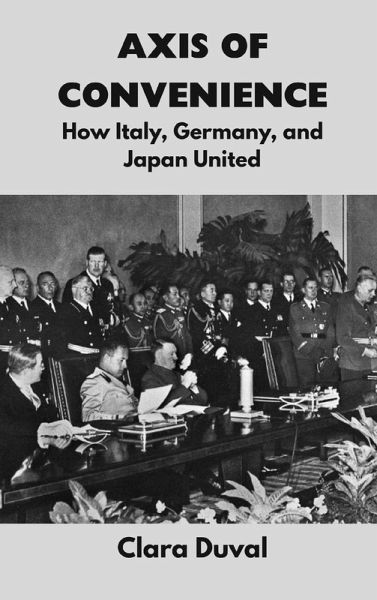
A photograph can lie. The smiling diplomats, the choreographed handshakes-everything suggested a single will. Yet behind the stage lights, three different wars ran on incompatible clocks. This book takes you inside the machinery of World War II alliances, showing how Italy Germany Japan entered an alliance of convenience that publicised unity while privately pursuing separate, colliding plans. Through vivid case studies and clear explanations, you'll see how treaties like the Tripartite Pact, Pact of Steel, and Anti-Comintern Pact offered legal costume without logistical choreography. You'll…mehr
A photograph can lie. The smiling diplomats, the choreographed handshakes-everything suggested a single will. Yet behind the stage lights, three different wars ran on incompatible clocks. This book takes you inside the machinery of World War II alliances, showing how Italy Germany Japan entered an alliance of convenience that publicised unity while privately pursuing separate, colliding plans. Through vivid case studies and clear explanations, you'll see how treaties like the Tripartite Pact, Pact of Steel, and Anti-Comintern Pact offered legal costume without logistical choreography. You'll watch resource scarcity and shipping maths-what the author calls "resource clocks"-reshape strategy more than slogans ever could. And you'll meet leaders trapped by their own narratives, a study in authoritarian leadership psychology that is as contemporary as today's news. - Understand the hard constraints-oil, rubber, sea lanes-that turned ambition into resource wars - Learn why propaganda can coordinate audiences but not armies - Apply a four-part diagnostic to any coalition: clock alignment, theatre fit, resource arithmetic, narrative cost For readers of military history, geopolitics, and anyone curious about the geopolitics of the 1930s, this is a bracing, accessible guide to how coalitions actually work-and why they often don't. If you want a sharper lens on the Axis powers and a usable model for judging alliances today, start here.
Clara Duval writes about the fault-lines where grand narratives crack and human choices show through. Raised on family stories of a Europe rebuilt from rubble and radio, she is drawn to the brittle promises of alliances, the seductions of propaganda, and the quiet arithmetic of logistics that outlasts slogans. Her work blends close reading of documents with a feel for memory's half-truths, asking what nations decide to forget in order to go on. In this book, she treats the Axis not as a single will but as a fragile choreography of prestige, scarcity, and impatience-an approach shaped by years spent translating between languages, archives, and living rooms. Duval's guiding conviction is simple: history is most useful when it gives us tests we can apply in the present, not just stories we can admire at a distance.
Es gelten unsere Allgemeinen Geschäftsbedingungen: www.buecher.de/agb
Impressum
www.buecher.de ist ein Internetauftritt der buecher.de internetstores GmbH
Geschäftsführung: Monica Sawhney | Roland Kölbl | Günter Hilger
Sitz der Gesellschaft: Batheyer Straße 115 - 117, 58099 Hagen
Postanschrift: Bürgermeister-Wegele-Str. 12, 86167 Augsburg
Amtsgericht Hagen HRB 13257
Steuernummer: 321/5800/1497
USt-IdNr: DE450055826