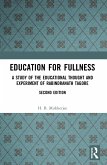
This book takes the works of Mikhail Bakhtin as its inspiration in the contemplation of the potential of dialogic scholarship for philosophy of education. The chapters in this book were published in Educational Philosophy and Theory.
This book takes the works of Mikhail Bakhtin as its inspiration in the contemplation of the potential of dialogic scholarship for philosophy of education. The chapters in this book were published in Educational Philosophy and Theory.
Craig Brandist is Professor of Cultural Theory and Intellectual History at the University of Sheffield, UK. He has written extensively on the work of the Bakhtin Circle, including the monograph The Bakhtin Circle: Philosophy, Culture and Politics (2002); early Soviet theories of language, including the collection Politics and the Theory of Language in the USSR 1919-1938 (2010); and more widely on the intellectual history of the early USSR. His most recent monograph is Dimensions of Hegemony: Language, Culture and Politics in the USSR (2015; 2016). He is currently exploring relations between radical Indian and Russian intellectuals in the 1920s and 1930s. Michael E. Gardiner is Professor of Sociology at the University of Western Ontario, Canada. His research interests include the political economy of affect, everyday life and utopianism. Author of several books and numerous journal articles and book chapters, his latest books include Weak Messianism: Studies in Everyday Utopianism (2013) and Boredom Studies Reader: Frameworks and Perspectives (co-edited with Julian Jason Haladyn) (2017). E. Jayne White crosses multi-disciplinary and theoretical barriers to negotiate historical and contemporary limitations that cast young children as little more than objects for adult scrutiny. In her role as inaugural co-editor of the Video Journal of Education and Pedagogy, President of the Association for Visual Pedagogies and Director of the recently established PoPLab at RMIT, Australia, she promotes visual modes of knowledge production and dissemination. She is also a fellow of the Philosophy of Education Society of Australasia (PESA) and life member of L'Organisation Pour Le Mondiale Pour L'Prescholaire (OMEP). Carl Mika is M¿ori of the Tuhourangi tribe, and is Associate Professor in the Division of Education, University of Waikato, New Zealand. He works almost entirely in the area of M¿ori thought/philosophy, with a particular focus on its revitalisation within a colonised reality. He also has an interest in current debates on apparent crossovers between M¿ori thought/philosophy and science. He is Director of the Centre for Global Studies, University of Waikato.
Inhaltsangabe
Introduction: Bakhtin in the fullness of time: Bakhtinian theory and the process of social education 1. Tawhiao's Unstated Heteroglossia: Conversations with Bakhtin 2. Bakhtinian Bildung and the Educational Process: Some Historical Considerations 3. Chronotopoi of the Good Life and Utopia: Bakhtin on Goethe's Bildungsroman Wilhelm Meister and the carnivalesque 4. Bakhtin and the 'general intellect' 5. Dialogic Ruptures: An Ethical Imperative 6. Bakhtin and the Russian Avant Garde in Vitebsk: Creative understanding and the collective dialogue 7. Bakhtin and Freire: Dialogue, dialectic and boundary learning 8. Bakhtinian dialogic and Vygotskian dialectic: Compatibilities and contradictions in the classroom? 9. 'Are you 'avin a laff?': A pedagogical response to Bakhtinian carnivalesque in early childhood education
Introduction: Bakhtin in the fullness of time: Bakhtinian theory and the process of social education 1. Tawhiao's Unstated Heteroglossia: Conversations with Bakhtin 2. Bakhtinian Bildung and the Educational Process: Some Historical Considerations 3. Chronotopoi of the Good Life and Utopia: Bakhtin on Goethe's Bildungsroman Wilhelm Meister and the carnivalesque 4. Bakhtin and the 'general intellect' 5. Dialogic Ruptures: An Ethical Imperative 6. Bakhtin and the Russian Avant Garde in Vitebsk: Creative understanding and the collective dialogue 7. Bakhtin and Freire: Dialogue, dialectic and boundary learning 8. Bakhtinian dialogic and Vygotskian dialectic: Compatibilities and contradictions in the classroom? 9. 'Are you 'avin a laff?': A pedagogical response to Bakhtinian carnivalesque in early childhood education
Es gelten unsere Allgemeinen Geschäftsbedingungen: www.buecher.de/agb
Impressum
www.buecher.de ist ein Internetauftritt der buecher.de internetstores GmbH
Geschäftsführung: Monica Sawhney | Roland Kölbl | Günter Hilger
Sitz der Gesellschaft: Batheyer Straße 115 - 117, 58099 Hagen
Postanschrift: Bürgermeister-Wegele-Str. 12, 86167 Augsburg
Amtsgericht Hagen HRB 13257
Steuernummer: 321/5800/1497
USt-IdNr: DE450055826