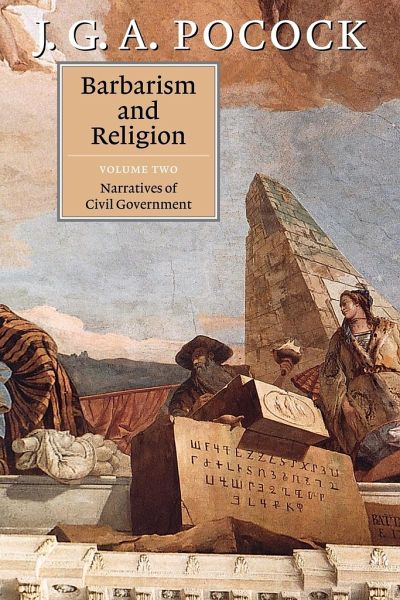
A major new sequence of works from one of the world's leading historians of ideas. The second volume of Barbarism and Religion explores the historiography of Enlightenment, and looks at Gibbon's intellectual relationship with writers like Voltaire, Hume and Smith. John Pocock shows how the Decline and Fall is both akin to but distinct from the historiographical context within which Gibbon wrote his great work.
A major new sequence of works from one of the world's leading historians of ideas.The second volume of Barbarism and Religion explores the historiography of Enlightenment, and looks at Gibbon's intellectual relationship with writers like Voltaire, Hume and Smith. John Pocock shows how the Decline and Fall is both akin to but distinct from the historiographical context within which Gibbon wrote his great work.
Introduction; Prelude: the varieties of early modern historiography: Part I. Constructing The Enlightened Narrative: Section I. Pietro Giannone: Jurist and Libertin in the Central Mediterranean; 1. Civil and ecclesiastical history; 2. Popes and emperors: from the Isaurians to the Hohenstaufen; 3. Angevins, Spaniards and Gallicans: to the brink of enlightenment; 4. Gibbon and Giannone: narrative, philosophy, erudition; Section II. Voltaire: Neo-Classicst and Philosophe in the Enlightened World-Picture; 1. On the horizons of Europe: the kings of the north; 2. Courtly monarchy as the instrument of Englightenment: the Siecle de Louis XIV; 3. Asia and the dechristianisation of history: the Siecle and the Essai sur les Moeurs; 4. The Christian millennium in Europe: the Essai sur les Moeurs; 5. The recovery of civil government, the rebirth of fanaticism, and the return to the Siecle; 6. Voltaire: the exasperating predecessor; Part II. The Historical Age and the Historical Nation: Section III. David Hume and the Philosophical History of England; 1. The problems of history in the Hanoverian kingdoms; 2. David Hume: the Essays as contemporary history; 3. The History of Great Britain: Hume's modern history; 4. England under the House of the Tudor: monarchy, Europe and enthusiasm; 5. Hume's History of England: the Enlightened narrative in retrospect; Section IV. William Robertson and the History of Europe; 1. The problems of history: the Scottish perspective; 2. Scotland and the progress of society; 3. The Reign of Charles V and the emergence of the European States; 4. Robertson: histories written and unwritten; Part III. The Progress of Civil Society: Section V. Adam Smith: Jurisprudence into History; 1. Moral philosophy and the stages of society; 2. Smith's Glasgow lectures: narrative and philosophical history; Section IV. Adam Ferguson: the Moderate as Machiavellian; 1. Ferguson's Essay: Siberia as the cradle of World history; 2. The Memoires Litteraires and the Remains of Japhet; 3. Scottish narrative: theoretical and civil history; Part IV. Intending the Decline and Fall: 1. The Enlightened narrative and the project of 1776; 2. 'Gibbon's dark ages:' the writings of 1765-72; 3. Beginning to write: the evidence of the autobiographies; Bibliographies; Index.
Introduction; Prelude: the varieties of early modern historiography: Part I. Constructing The Enlightened Narrative: Section I. Pietro Giannone: Jurist and Libertin in the Central Mediterranean; 1. Civil and ecclesiastical history; 2. Popes and emperors: from the Isaurians to the Hohenstaufen; 3. Angevins, Spaniards and Gallicans: to the brink of enlightenment; 4. Gibbon and Giannone: narrative, philosophy, erudition; Section II. Voltaire: Neo-Classicst and Philosophe in the Enlightened World-Picture; 1. On the horizons of Europe: the kings of the north; 2. Courtly monarchy as the instrument of Englightenment: the Siecle de Louis XIV; 3. Asia and the dechristianisation of history: the Siecle and the Essai sur les Moeurs; 4. The Christian millennium in Europe: the Essai sur les Moeurs; 5. The recovery of civil government, the rebirth of fanaticism, and the return to the Siecle; 6. Voltaire: the exasperating predecessor; Part II. The Historical Age and the Historical Nation: Section III. David Hume and the Philosophical History of England; 1. The problems of history in the Hanoverian kingdoms; 2. David Hume: the Essays as contemporary history; 3. The History of Great Britain: Hume's modern history; 4. England under the House of the Tudor: monarchy, Europe and enthusiasm; 5. Hume's History of England: the Enlightened narrative in retrospect; Section IV. William Robertson and the History of Europe; 1. The problems of history: the Scottish perspective; 2. Scotland and the progress of society; 3. The Reign of Charles V and the emergence of the European States; 4. Robertson: histories written and unwritten; Part III. The Progress of Civil Society: Section V. Adam Smith: Jurisprudence into History; 1. Moral philosophy and the stages of society; 2. Smith's Glasgow lectures: narrative and philosophical history; Section IV. Adam Ferguson: the Moderate as Machiavellian; 1. Ferguson's Essay: Siberia as the cradle of World history; 2. The Memoires Litteraires and the Remains of Japhet; 3. Scottish narrative: theoretical and civil history; Part IV. Intending the Decline and Fall: 1. The Enlightened narrative and the project of 1776; 2. 'Gibbon's dark ages:' the writings of 1765-72; 3. Beginning to write: the evidence of the autobiographies; Bibliographies; Index.
Rezensionen
'Pocock manages to place Gibbon within these larger cosmopolitan movements without diminishing the historian's extraordinary accomplishment.' Tim Breen, New York Times Review of Books
Es gelten unsere Allgemeinen Geschäftsbedingungen: www.buecher.de/agb
Impressum
www.buecher.de ist ein Internetauftritt der buecher.de internetstores GmbH
Geschäftsführung: Monica Sawhney | Roland Kölbl | Günter Hilger
Sitz der Gesellschaft: Batheyer Straße 115 - 117, 58099 Hagen
Postanschrift: Bürgermeister-Wegele-Str. 12, 86167 Augsburg
Amtsgericht Hagen HRB 13257
Steuernummer: 321/5800/1497
USt-IdNr: DE450055826