
Andere Kunden interessierten sich auch für
 The Basic Points of Branding and Media Planning24,99 €
 Exploring Professional Communication165,99 €
 Political communication and ethics27,99 €
 Studies on political communication40,99 €
 Political communication and lobbying for human rights associations29,99 €
 Institutional Communication27,99 €
 Communication by public enterprises in Beni: OCC, DGI and INSS27,99 €
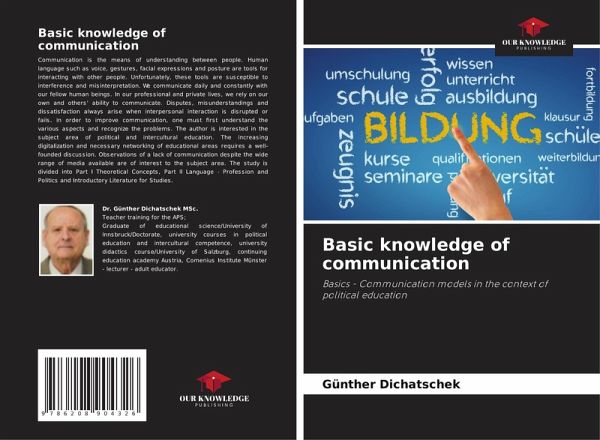
Communication is the means of understanding between people. Human language such as voice, gestures, facial expressions and posture are tools for interacting with other people. Unfortunately, these tools are susceptible to interference and misinterpretation. We communicate daily and constantly with our fellow human beings. In our professional and private lives, we rely on our own and others' ability to communicate. Disputes, misunderstandings and dissatisfaction always arise when interpersonal interaction is disrupted or fails. In order to improve communication, one must first understand the various aspects and recognize the problems. The author is interested in the subject area of political and intercultural education. The increasing digitalization and necessary networking of educational areas requires a well-founded discussion. Observations of a lack of communication despite the wide range of media available are of interest to the subject area. The study is divided into Part I Theoretical Concepts, Part II Language - Profession and Politics and Introductory Literature for Studies.