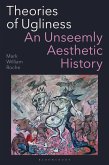
This book probes the intersection of the beautiful and the ugly, offering a systematic framework to understand, interpret, and evaluate how ugliness can contribute to beautiful art. Many great artworks include elements of ugliness: repugnant content, disproportionate forms, unresolved dissonance, and unintegrated parts. Mark William Roche's authoritative monograph Beautiful Ugliness: Christianity, Modernity, and the Arts challenges current practices of the dominant aesthetic schools by exploring the role of ugliness in art and literature. Roche offers a comprehensive and unique framework that…mehr
This book probes the intersection of the beautiful and the ugly, offering a systematic framework to understand, interpret, and evaluate how ugliness can contribute to beautiful art. Many great artworks include elements of ugliness: repugnant content, disproportionate forms, unresolved dissonance, and unintegrated parts. Mark William Roche's authoritative monograph Beautiful Ugliness: Christianity, Modernity, and the Arts challenges current practices of the dominant aesthetic schools by exploring the role of ugliness in art and literature. Roche offers a comprehensive and unique framework that integrates philosophical and theological reflection, intellectual-historical analysis, and interpretations of a large number of works from the arts. The study is driven by the recognition that, though ugliness is usually understood as the opposite of beauty, ugliness nonetheless contributes significantly to the beauty of many artworks. Roche's analysis unfolds in three parts. The first offers a refreshing conceptual analysis of ugliness in art. The second considers the history of ugliness in art and literature, with special attention to its role in Christian art and its central place in modern and contemporary art. The third synthesizes earlier material, offering a taxonomy of beautiful ugliness derived from Hegelian philosophical categories. Roche mesmerizes the reader with an extraordinary range of literary scholarship and expertise, with a particular focus on English, Latin, and German literature, and with a broad range of analyzed phenomena, including fine arts, architecture, and music. Including 63 color illustrations, Beautiful Ugliness will draw in readers from multiple disciplines as well as those from beyond the academy who wish to make sense of today's complex art world.
Mark William Roche is the Rev. Edmund P. Joyce, C.S.C., Professor of German Language and Literature, concurrent professor of philosophy, and former dean of the College of Arts and Letters at the University of Notre Dame. He is the author of many books, including Realizing the Distinctive University (University of Notre Dame Press, 2017) and Why Choose the Liberal Arts? (University of Notre Dame Press, 2010), which won the Frederic W. Ness Book Award.
Inhaltsangabe
List of Illustrations Acknowledgments Abbreviations and Translations Introduction Part One. Conceptual Framework 1. Unveiling Ugliness 2. Aesthetic Categories 3. Intellectual Resources 4. Imperial Rome 5. Late Medieval Christianity 6. The Theological Rationale for Christianity's Immersion in Ugliness Part Two. Historical Interlude 7. Modernity 8. Modernity's Ontological and Aesthetic Shift Part Three. Forms of Beautiful Ugliness Styles of Beautiful Ugliness 9. Repugnant Beauty 10. Fractured Beauty 11. Aischric Beauty 12. Beauty Dwelling in Ugliness 13. Dialectical Beauty 14. Speculative Beauty Conclusion Works Cited Index
List of Illustrations Acknowledgments Abbreviations and Translations Introduction Part One. Conceptual Framework 1. Unveiling Ugliness 2. Aesthetic Categories 3. Intellectual Resources 4. Imperial Rome 5. Late Medieval Christianity 6. The Theological Rationale for Christianity's Immersion in Ugliness Part Two. Historical Interlude 7. Modernity 8. Modernity's Ontological and Aesthetic Shift Part Three. Forms of Beautiful Ugliness Styles of Beautiful Ugliness 9. Repugnant Beauty 10. Fractured Beauty 11. Aischric Beauty 12. Beauty Dwelling in Ugliness 13. Dialectical Beauty 14. Speculative Beauty Conclusion Works Cited Index
Es gelten unsere Allgemeinen Geschäftsbedingungen: www.buecher.de/agb
Impressum
www.buecher.de ist ein Internetauftritt der buecher.de internetstores GmbH
Geschäftsführung: Monica Sawhney | Roland Kölbl | Günter Hilger
Sitz der Gesellschaft: Batheyer Straße 115 - 117, 58099 Hagen
Postanschrift: Bürgermeister-Wegele-Str. 12, 86167 Augsburg
Amtsgericht Hagen HRB 13257
Steuernummer: 321/5800/1497
USt-IdNr: DE450055826