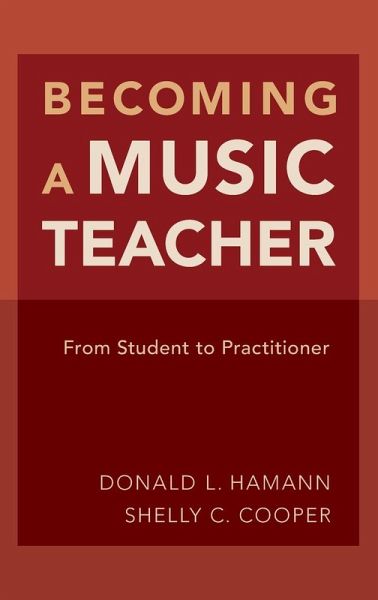
New music teachers often struggle to find a way to connect the content learned in college classes with the content that will be taught in the classroom, since the nature of their work demands a high level of both musical and educational ability, while also the skills to switch from tuning an orchestra to leading a marching band or practicing voice parts with a chorus. Becoming a Music Teacher: Student to Practitioner focuses on making the connections between the college music classroom and public school music classroom transparent, visible, and relevant. Award-winning music educators Donald L.…mehr
New music teachers often struggle to find a way to connect the content learned in college classes with the content that will be taught in the classroom, since the nature of their work demands a high level of both musical and educational ability, while also the skills to switch from tuning an orchestra to leading a marching band or practicing voice parts with a chorus. Becoming a Music Teacher: Student to Practitioner focuses on making the connections between the college music classroom and public school music classroom transparent, visible, and relevant. Award-winning music educators Donald L. Hamann and Shelly Cooper have created a versatile text for music teacher education, and one that will provide a significant resource for music education students across the US. Based around an innovative organization and approach, Becoming a Music Teacher is made up of 40 short modules that focus on increasing a teacher's comfort and confidence level when instructing or leading groups. Each module is broken down into four individual components that demonstrate real life transfers from classes to classroom through the components of Personal Awareness, Personal Musicianship, Pre-Conducting, and Professional Knowledge. The Personal Awareness component gives a lesson on good teaching skills by focusing on body awareness, body language, and communication styles rather than abstract theories of education. Personal Musicianship provides a guided learning approach to teaching sight-singing and opportunities to create both vocal and instrumental accompaniments with the songs that are included in the modules. Pre-conducting discusses ways in which certain gestures or concepts could be used in rehearsing a school ensemble through the development of hand/arm independence, posture, and gestures. Professional knowledge links the module to the real world and places it in the context of the workplace, offering advice on how to work with other teachers and administrators, and includes characteristics of successful teachers, the role of schools in contemporary society, and diverse learners. When taken together, these components help the student develop a genuinely rounded skill set for the classroom. The lessons are activity-based and interactive, allowing readers to experiment, communicate, and provide feedback. The modules are also flexible and have been designed to be easily integrated into a music education classroom and applied to specific age groups, includingadult learners, a demographic many music education students encounter but one rarely discussed in music education classrooms. Each module stands alone, allowing instructors to customize their lesson plans by selecting or highlighting the modules most relevant to their class. This text also includes exercises that promote reflection on professionalism, collegiality, and legal factors that affect both students and teachers, not found in most education texts.
Donald L. Hamann is Professor of Music Education at the University of Arizona, where he teaches string pedagogy, graduate research, teacher education, and statistics courses. The author of Strategies for Teaching Strings: Building a Successful String and Orchestra Program (OUP, third edition, 2012) and On Staff: A Practical Guide to Starting Your Career in a University Music Department (OUP, 2013), he has also published extensively in national and international string, education, and research journals. Dr. Shelly Cooper, Professor of Music Education has been an active music educator for more than 30 years. As a researcher and general music specialist, she has presented at numerous local, state, and national music and general education conferences and in-service workshops. At the University of Arizona, she teaches music education courses and serves the Desert Skies Symposium Co-Director. Cooper is the editor of General Music Today and teachers Kodály certification courses at Arizona State University and the University of New Mexico.
Inhaltsangabe
* Preface * An Introduction to the Modules * 1: Posture Kodály Conducting Posture and Rebound Our Profession and Decision Making * 2: Eye Contact Sight Singing Steps Conducting Rebound and Hand/Arm Independence School Community * 3: Establishing Carriage Rhythmic Duration Syllable Systems Hand/Arm Independence Classroom Word Choice * 4: Facial Expression Sight Singing Hand/Arm Conducting Independence Ethics in Teaching * 5: Receiving Facial Expression Messages Body Posture and Singing Conducting Independence and Rebounds Diverse Learners * 6: Facial Gestures with Hands Breathing and Singing Conductor Cueing Classroom Modeling * 7: Visual Scanning Vocal Exploration Conducting Crescendos and Diminuendos Teaching Adolescents * 8: Visual Scanning Vocal Exploration Conducting Cut Off Gestures Teaching Music in Childhood * 9: Connective Eye Contact Improvisation in Singing Conducting Cut Off Gestures Communicating with Students * 10: Visual Awareness and Facial Gestures Singing Intervals Conducting the 4/4 Pattern Goals and Objectives * 11: Reading Individuals Lip Trills in Vocal Warm Up Conducting the 3/4 Pattern Lesson Planning * 12: Identifying Facial Gestures Solfège Syllables Conducting the 2/4 Pattern Assessment * 13: Emotions Resonance Through Humming Preparatory Gestures in 4/4 Motivation * 14: Identifying Expressions Building Triads Preparatory Gestures in 3/4 Learning Theories * 15: Identifying Expressions Triads Using Inversions Preparatory Gestures in 2/4 Jean Piaget * 16: Facial and Body Gesture Awareness Chord Building Preparatory Gestures in 4/4 Jerome Bruner * 17: Identifying Facial and Body Expressions Singing Ascending Leaps Preparatory Gestures in 3/4 Asking Good Questions * 18: Body Expression Awareness Singing Large Ascending Leaps Preparatory Gestures in 2/4 Teaching Flexibility * 19: Upper and Lower Body Gestures Breath Support Preparatory Gestures in 4/4 Emotions in the Classroom * 20: Mixed or Congruent Messages Articulators in Vocal Production Preparatory Gestures in 4/4 Teacher Emotions * 21: Wind Instrument Body Gestures Raising the Soft Palate Conducting Preparatory Gestures Learning Communities * 22: Body Gestures Soft Palate Independence While Conducting Advocacy Statements * 23: Body Gestures Playing Bowed String Instruments Relaxed Vocal Tone Independence in Conducting 3/4 Applying Knowledge in the Classroom * 24: Body Gestures Playing Bowed String Instruments Outlining Tonic Independence in Conducting 2/4 Public Speaking Skills * 25: Body Gestures in a Full Orchestra Setting Singing in la based Minor Cueing on the Downbeat Improving Public Speaking * 26: Continued Body Gesture Awareness la based Minor Cueing on Beat 2 Music Performance Anxiety * 27: Proximity and Gestures Breath Management Cueing on Beat 3 Avoiding Performance Injury * 28: Gesture Identification Hydration Cueing on Beat 4 Classroom Management * 29: Identifying and Initiating Gestures Building Triads in la based minor Cueing on the Downbeat in 3/4 Positive Management Techniques * 30: Facial and Physical Gestures Voice Leading Patterns Cueing on Beat 2 in 3/4 Implementing Classroom Management * 31: Non verbal Music Directives Diction Cueing on Beat 3 in 3/4 Adult Learners * 32: Speechless Lessons Pure Vowels Cueing on the Downbeat in 2/4 Analogies and Metaphors * 33: Speech Comprehension and Projection Warming Up on Pure Vowels Cueing on Beat 2 in 2/4 Traits of an Effective Teacher * 34: Speech Comprehension Mental Imagery Crescendos and Diminuendos Examining Effective Teacher Traits * 35: Pauses in Speech Vocal Health Indicating Crescendos and Diminuendos in 3/4 Importance of Personal Resilience * 36: Varying Speaking Tempi Consist Body Warm up Sequence Indicating Crescendos and Diminuendos in 2/4 Legal Issues in the Classroom * 37: Vocal Emotion Diaphragmatic Action A Cut Off Gesture in 4/4 Continuation of Legal Issues * 38: Vocal Inflection Diaphragmatic Action Performing a Cut Off Gesture in 4/4 Collegiality within the Profession * 39: Combining Verbal and Non Verbal Elements Moving Toward Artistry Performing a Cut off Gesture in 4/4 Formulating a Philosophy of Music * 40: Verbal and Nonverbal Elements in a Speech Defining Artistry Performing Cut Off Gestures in Various Meters A Successful Music Education Career * Index
* Preface * An Introduction to the Modules * 1: Posture Kodály Conducting Posture and Rebound Our Profession and Decision Making * 2: Eye Contact Sight Singing Steps Conducting Rebound and Hand/Arm Independence School Community * 3: Establishing Carriage Rhythmic Duration Syllable Systems Hand/Arm Independence Classroom Word Choice * 4: Facial Expression Sight Singing Hand/Arm Conducting Independence Ethics in Teaching * 5: Receiving Facial Expression Messages Body Posture and Singing Conducting Independence and Rebounds Diverse Learners * 6: Facial Gestures with Hands Breathing and Singing Conductor Cueing Classroom Modeling * 7: Visual Scanning Vocal Exploration Conducting Crescendos and Diminuendos Teaching Adolescents * 8: Visual Scanning Vocal Exploration Conducting Cut Off Gestures Teaching Music in Childhood * 9: Connective Eye Contact Improvisation in Singing Conducting Cut Off Gestures Communicating with Students * 10: Visual Awareness and Facial Gestures Singing Intervals Conducting the 4/4 Pattern Goals and Objectives * 11: Reading Individuals Lip Trills in Vocal Warm Up Conducting the 3/4 Pattern Lesson Planning * 12: Identifying Facial Gestures Solfège Syllables Conducting the 2/4 Pattern Assessment * 13: Emotions Resonance Through Humming Preparatory Gestures in 4/4 Motivation * 14: Identifying Expressions Building Triads Preparatory Gestures in 3/4 Learning Theories * 15: Identifying Expressions Triads Using Inversions Preparatory Gestures in 2/4 Jean Piaget * 16: Facial and Body Gesture Awareness Chord Building Preparatory Gestures in 4/4 Jerome Bruner * 17: Identifying Facial and Body Expressions Singing Ascending Leaps Preparatory Gestures in 3/4 Asking Good Questions * 18: Body Expression Awareness Singing Large Ascending Leaps Preparatory Gestures in 2/4 Teaching Flexibility * 19: Upper and Lower Body Gestures Breath Support Preparatory Gestures in 4/4 Emotions in the Classroom * 20: Mixed or Congruent Messages Articulators in Vocal Production Preparatory Gestures in 4/4 Teacher Emotions * 21: Wind Instrument Body Gestures Raising the Soft Palate Conducting Preparatory Gestures Learning Communities * 22: Body Gestures Soft Palate Independence While Conducting Advocacy Statements * 23: Body Gestures Playing Bowed String Instruments Relaxed Vocal Tone Independence in Conducting 3/4 Applying Knowledge in the Classroom * 24: Body Gestures Playing Bowed String Instruments Outlining Tonic Independence in Conducting 2/4 Public Speaking Skills * 25: Body Gestures in a Full Orchestra Setting Singing in la based Minor Cueing on the Downbeat Improving Public Speaking * 26: Continued Body Gesture Awareness la based Minor Cueing on Beat 2 Music Performance Anxiety * 27: Proximity and Gestures Breath Management Cueing on Beat 3 Avoiding Performance Injury * 28: Gesture Identification Hydration Cueing on Beat 4 Classroom Management * 29: Identifying and Initiating Gestures Building Triads in la based minor Cueing on the Downbeat in 3/4 Positive Management Techniques * 30: Facial and Physical Gestures Voice Leading Patterns Cueing on Beat 2 in 3/4 Implementing Classroom Management * 31: Non verbal Music Directives Diction Cueing on Beat 3 in 3/4 Adult Learners * 32: Speechless Lessons Pure Vowels Cueing on the Downbeat in 2/4 Analogies and Metaphors * 33: Speech Comprehension and Projection Warming Up on Pure Vowels Cueing on Beat 2 in 2/4 Traits of an Effective Teacher * 34: Speech Comprehension Mental Imagery Crescendos and Diminuendos Examining Effective Teacher Traits * 35: Pauses in Speech Vocal Health Indicating Crescendos and Diminuendos in 3/4 Importance of Personal Resilience * 36: Varying Speaking Tempi Consist Body Warm up Sequence Indicating Crescendos and Diminuendos in 2/4 Legal Issues in the Classroom * 37: Vocal Emotion Diaphragmatic Action A Cut Off Gesture in 4/4 Continuation of Legal Issues * 38: Vocal Inflection Diaphragmatic Action Performing a Cut Off Gesture in 4/4 Collegiality within the Profession * 39: Combining Verbal and Non Verbal Elements Moving Toward Artistry Performing a Cut off Gesture in 4/4 Formulating a Philosophy of Music * 40: Verbal and Nonverbal Elements in a Speech Defining Artistry Performing Cut Off Gestures in Various Meters A Successful Music Education Career * Index
Es gelten unsere Allgemeinen Geschäftsbedingungen: www.buecher.de/agb
Impressum
www.buecher.de ist ein Internetauftritt der buecher.de internetstores GmbH
Geschäftsführung: Monica Sawhney | Roland Kölbl | Günter Hilger
Sitz der Gesellschaft: Batheyer Straße 115 - 117, 58099 Hagen
Postanschrift: Bürgermeister-Wegele-Str. 12, 86167 Augsburg
Amtsgericht Hagen HRB 13257
Steuernummer: 321/5800/1497
USt-IdNr: DE450055826