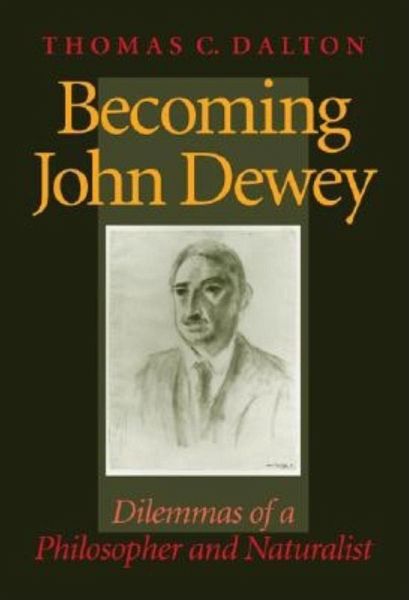
As one of America's "public intellectuals," John Dewey was engaged in a lifelong struggle to understand the human mind and the nature of human inquiry. According to Thomas C. Dalton, the successful pursuit of this mission demanded that Dewey become more than just a philosopher; it compelled him to become thoroughly familiar with the theories and methods of physics, psychology, and neurosciences, as well as become engaged in educational and social reform. Tapping archival sources and Dewey's extensive correspondence, Dalton reveals that Dewey had close personal and intellectual ties to…mehr
As one of America's "public intellectuals," John Dewey was engaged in a lifelong struggle to understand the human mind and the nature of human inquiry. According to Thomas C. Dalton, the successful pursuit of this mission demanded that Dewey become more than just a philosopher; it compelled him to become thoroughly familiar with the theories and methods of physics, psychology, and neurosciences, as well as become engaged in educational and social reform. Tapping archival sources and Dewey's extensive correspondence, Dalton reveals that Dewey had close personal and intellectual ties to scientists and scholars who helped form the mature expression of his thought. Dewey's relationships with F. M. Alexander, Henri Matisse, Niels Bohr, Myrtle McGraw, and Lawrence K. Frank, among others, show how Dewey dispersed pragmatism throughout American thought and culture.
Thomas C. Dalton is Senior Research Associate with the Office of the Dean of the College of Liberal Arts at California Polytechnic State University, San Luis Obispo. He is co-author (with V. W. Bergenn) of Early Experience and the Brain: An Historical and Interdisciplinary Synthesis, and co-editor (with Rand Evans) of Reflections in the Mirror of Psychology's Past: Understanding Prominence and the Dynamics of Intellectual Change and (with V. W. Bergenn) of Beyond Heredity and Environment: Myrtle McGraw and the Maturation Controversy. His scholarly research interests include historical studies of the developmental sciences, theoretical studies of consciousness, and the philosophy of mind.
Inhaltsangabe
Preliminary Table of Contents: Acknowledgments Introduction: Originality in Social Context Part 1. Sublime Reason and the Comforts of Doubt 1. From Calvinism to Evolutionism 2. Healing an "Inward Laceration" 3. Experimentalist in the Making Part 2. Rendezvous with the New York Avant Garde 4. Contrasting Strategies of Educational Innovation 5. Cultural Disillusionment 6. The Evolution of Mind in Nature Part 3. The Transformational Potential of Consciousness in Art, Politics, and Science 7. Post-Impressionism, Quantum Mechanics, and the Triumph of Phenomenal Experience 8. Communities of Intelligence and the Politics of Spirit 9. The Function of Judgment in Inquiry 10. Locomotion as a Metaphor for Mind Part 4. Naturalism Lost and Found 11. Cultural Pragmatism and the Disappearance of Dewey's Naturalism Conclusion: The Revival of Dewey's Naturalism Notes Bibliography Index
Preliminary Table of Contents: Acknowledgments Introduction: Originality in Social Context Part 1. Sublime Reason and the Comforts of Doubt 1. From Calvinism to Evolutionism 2. Healing an "Inward Laceration" 3. Experimentalist in the Making Part 2. Rendezvous with the New York Avant Garde 4. Contrasting Strategies of Educational Innovation 5. Cultural Disillusionment 6. The Evolution of Mind in Nature Part 3. The Transformational Potential of Consciousness in Art, Politics, and Science 7. Post-Impressionism, Quantum Mechanics, and the Triumph of Phenomenal Experience 8. Communities of Intelligence and the Politics of Spirit 9. The Function of Judgment in Inquiry 10. Locomotion as a Metaphor for Mind Part 4. Naturalism Lost and Found 11. Cultural Pragmatism and the Disappearance of Dewey's Naturalism Conclusion: The Revival of Dewey's Naturalism Notes Bibliography Index
Es gelten unsere Allgemeinen Geschäftsbedingungen: www.buecher.de/agb
Impressum
www.buecher.de ist ein Internetauftritt der buecher.de internetstores GmbH
Geschäftsführung: Monica Sawhney | Roland Kölbl | Günter Hilger
Sitz der Gesellschaft: Batheyer Straße 115 - 117, 58099 Hagen
Postanschrift: Bürgermeister-Wegele-Str. 12, 86167 Augsburg
Amtsgericht Hagen HRB 13257
Steuernummer: 321/5800/1497
USt-IdNr: DE450055826