106,99 €
inkl. MwSt.
Versandkostenfrei*Erscheint vorauss. März 2026
Melden Sie sich
hier
hier
für den Produktalarm an, um über die Verfügbarkeit des Produkts informiert zu werden.

53 °P sammeln
Andere Kunden interessierten sich auch für
 Ethology and Behavioral Ecology of Phocids174,99 €
 Ethology and Behavioral Ecology of Sirenia113,99 €
 Behavioral Budgets and Feeding Ecology of Japanese Macaques32,99 €
 Ethology and Behavioral Ecology of Sirenia113,99 €
 Ethology and Behavioral Ecology of Phocids174,99 €
 Ethology and Behavioral Ecology of Sea Otters and Polar Bears130,99 €
 Ethology and Behavioral Ecology of Mysticetes121,99 €







Behavioral Ecology is a rapidly evolving field that integrates the study of animal behavior with ecological and evolutionary processes. By examining how organisms interact with each other and their environments, this discipline provides essential insights into the mechanisms that shape biodiversity and influence the dynamics of ecosystems.
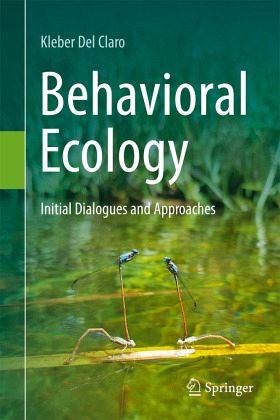
Behavioral Ecology: Initial Dialogues and Approaches offers an accessible introduction to the key concepts, tools, and methods used in Behavioral Ecology. Rather than serving as a comprehensive textbook, it is designed to complement teaching in Animal Behavior and Behavioral Ecology courses, while also guiding undergraduate and graduate students who are beginning to explore this area of science.
Grounded in decades of teaching experience across institutions in Brazil and abroad, the author presents the field through a combination of theoretical foundations, methodological approaches, and case studies. The text highlights the relevance of Behavioral Ecology in advancing scientific knowledge, while also addressing its role in professional development, research opportunities, and international collaboration. Clear, structured, and informed by practical experience, Behavioral Ecology: Initial Dialogues and Approaches provides readers with the analytical tools necessary to design and interpret behavioral studies. It emphasizes hypothesis-driven research, experimental design, and the interpretation of behavioral data, making it a valuable resource for biologists, veterinarians, animal scientists, and experimental psychologists.
Behavioral Ecology: Initial Dialogues and Approaches offers an accessible introduction to the key concepts, tools, and methods used in Behavioral Ecology. Rather than serving as a comprehensive textbook, it is designed to complement teaching in Animal Behavior and Behavioral Ecology courses, while also guiding undergraduate and graduate students who are beginning to explore this area of science.
Grounded in decades of teaching experience across institutions in Brazil and abroad, the author presents the field through a combination of theoretical foundations, methodological approaches, and case studies. The text highlights the relevance of Behavioral Ecology in advancing scientific knowledge, while also addressing its role in professional development, research opportunities, and international collaboration. Clear, structured, and informed by practical experience, Behavioral Ecology: Initial Dialogues and Approaches provides readers with the analytical tools necessary to design and interpret behavioral studies. It emphasizes hypothesis-driven research, experimental design, and the interpretation of behavioral data, making it a valuable resource for biologists, veterinarians, animal scientists, and experimental psychologists.