

Andere Kunden interessierten sich auch für
 Reciprocity in International Law121,99 €
 Law and Economics of Justice151,99 €
 The Developnent of Belligerent Occupation27,99 €
 Reciprocity in International Law177,99 €
 The Fundamental Principles of EEA Law91,99 €
 The Law and Politics of Belligerent Occupation54,00 €
 Belligerent Right On the High Seas27,99 €







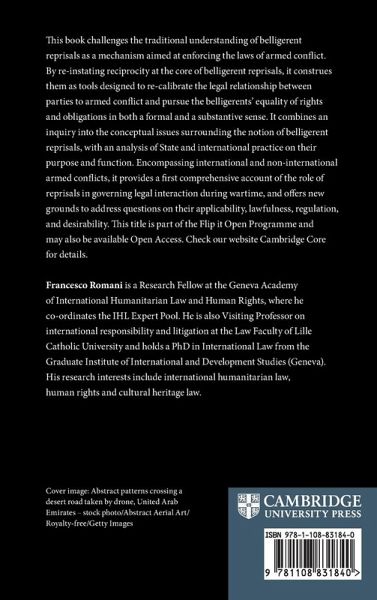
This book challenges the traditional understanding of belligerent reprisals as a mechanism aimed at enforcing the laws of armed conflict. By re-instating reciprocity at the core of belligerent reprisals, it construes them as tools designed to re-calibrate the legal relationship between parties to armed conflict and pursue the belligerents' equality of rights and obligations in both a formal and a substantive sense. It combines an inquiry into the conceptual issues surrounding the notion of belligerent reprisals, with an analysis of State and international practice on their purpose and function. Encompassing international and non-international armed conflicts, it provides a first comprehensive account of the role of reprisals in governing legal interaction during wartime, and offers new grounds to address questions on their applicability, lawfulness, regulation, and desirability. This title is part of the Flip it Open Programme and may also be available Open Access. Check our website Cambridge Core for details.