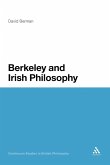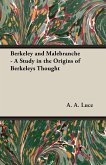

Berkeley's Principles of Human Knowledge is a key text in the history of British Empiricism and 18th-century thought. As a free-standing systematic exposition of Berkeley's ideas, this is a hugely important and influential text, central to any undergraduate's study of the history of philosophy.
Preface Note on the Text of the Principles Abbreviations 1. Context i. Biography ii. Berkeley's Philosophical Background 2. Overview of Themes 3. Reading the Text The Principles - Introduction (§§1-25) The Principles - Part One (§§1-156) The Objects and Subject of Knowledge: Ideas and Spirit (§§1-3) Unperceived Existence: "a nicer strain of abstraction" (§§4-7) Problems for Materialism (§§8-17) A Cartesian 'Dream' Argument (§§18-21) The 'Master Argument' (§§22-24) From the Inertness of Ideas to the Existence of God (§§25-33) Philosophical Objections to Immaterialism, and Replies (§§34-81) Religious Objections to Immaterialism and Replies (§§82-4) Further Advantages of Immaterialism (§§85-100) "Two great provinces of speculative science" (§§101-107) The Attack on Absolute Space (§§108-17) Mathematics (§§118-34) Other Minds (§§135-47) The Divine Language of Nature (§§148-156) 4) Reception and Influence 5) Guide to Further Reading Index Notes
Es gelten unsere Allgemeinen Geschäftsbedingungen: www.buecher.de/agb
Impressum
www.buecher.de ist ein Internetauftritt der buecher.de internetstores GmbH
Geschäftsführung: Monica Sawhney | Roland Kölbl | Günter Hilger
Sitz der Gesellschaft: Batheyer Straße 115 - 117, 58099 Hagen
Postanschrift: Bürgermeister-Wegele-Str. 12, 86167 Augsburg
Amtsgericht Hagen HRB 13257
Steuernummer: 321/5800/1497
USt-IdNr: DE450055826