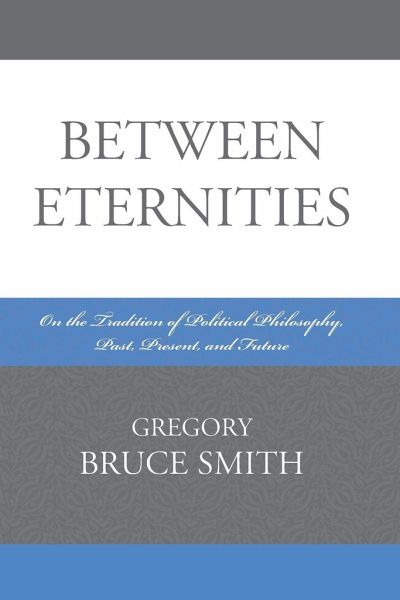
Between Eternities deals with the future of the tradition of political philosophy. The author argues that this tradition can only progress after the postmodernist fragmentation of political philosophy has been realized as part of the grander scheme of the history of Western thought.
Between Eternities deals with the future of the tradition of political philosophy. The author argues that this tradition can only progress after the postmodernist fragmentation of political philosophy has been realized as part of the grander scheme of the history of Western thought.
Gregory B. Smith is professor of political science and philosophy affiliated with the Departments of Political Science and Philosophy at Trinity College in Hartford, Conn.
Inhaltsangabe
Chapter 1 Introduction: Political Philosophy; Is There a Future Tradition? Part 2 Modern Constructivism or Phenomenology Chapter 3 Preface: Modernity and Its Closure Chapter 4 The "End of History" or a Portal to the Future Chapter 5 What is Political Philosophy: A Phenomenological Approach Chapter 6 Cacophony of Silence: Derrida's Deconstructionism and the Possibility of Political Philosophy Chapter 7 Machiavelli's The Prince and the Essence of Modernity Chapter 8 Phenomenology or Constructivism: Robert Pippin's Modernity Part 9 Leo Strauss and the Tradition: An Engagement Chapter 10 Preface: Remembrance and Tradition Chapter 11 Who Was Leo Strauss? Chapter 12 Leo Strauss and the Straussians: An Anti-Democratic Cult? Chapter 13 Athens and Washington: Leo Strauss and the American Regime Chapter 14 On a Possible Epicurean Garden for Philosophy Chapter 15 On Cropsey's World: Joseph Cropsey and the Tradition of Political Philosophy Chapter 16 Between Platonism and Postmodernism: Plato's Emendation of Socratism in the Trilogy Chapter 17 Leo Strauss and Martin Heidegger Part 18 The Non-Metaphysical Plato: Second Beginnings? Chapter 19 Preface: Plato, Platonism, and a Second Beginning Chapter 20 Dialogue and Dialectic in Plato's Phaedo Chapter 21 Political Philosophy and Eros: Plato's Socrates in the Symposium Chapter 22 Plato's Parmenides: Socratism and the Origins of Platonic Political Philosophy Chapter 23 Aristotle on Reason and Its Limits Part 24 Political Philosophy After Modernity? Chapter 25 Preface: Openings Toward the Postmodern Chapter 26 Legitimacy, International Morality, and the Postmodern Global Future Chapter 27 Jerusalem and Washington: Political Philosophy and Theology Chapter 28 Ontology, Technology, Poetry, or Mandarin Pastime? Chapter 29 The Queen of the Sciences: Political Philosophy or Biology Chapter 30 Political Philosophy and Environmentalism: Recovering the Phenomenon "Nature" Chapter 31 Conclusion: Is There a Future?
Chapter 1 Introduction: Political Philosophy; Is There a Future Tradition? Part 2 Modern Constructivism or Phenomenology Chapter 3 Preface: Modernity and Its Closure Chapter 4 The "End of History" or a Portal to the Future Chapter 5 What is Political Philosophy: A Phenomenological Approach Chapter 6 Cacophony of Silence: Derrida's Deconstructionism and the Possibility of Political Philosophy Chapter 7 Machiavelli's The Prince and the Essence of Modernity Chapter 8 Phenomenology or Constructivism: Robert Pippin's Modernity Part 9 Leo Strauss and the Tradition: An Engagement Chapter 10 Preface: Remembrance and Tradition Chapter 11 Who Was Leo Strauss? Chapter 12 Leo Strauss and the Straussians: An Anti-Democratic Cult? Chapter 13 Athens and Washington: Leo Strauss and the American Regime Chapter 14 On a Possible Epicurean Garden for Philosophy Chapter 15 On Cropsey's World: Joseph Cropsey and the Tradition of Political Philosophy Chapter 16 Between Platonism and Postmodernism: Plato's Emendation of Socratism in the Trilogy Chapter 17 Leo Strauss and Martin Heidegger Part 18 The Non-Metaphysical Plato: Second Beginnings? Chapter 19 Preface: Plato, Platonism, and a Second Beginning Chapter 20 Dialogue and Dialectic in Plato's Phaedo Chapter 21 Political Philosophy and Eros: Plato's Socrates in the Symposium Chapter 22 Plato's Parmenides: Socratism and the Origins of Platonic Political Philosophy Chapter 23 Aristotle on Reason and Its Limits Part 24 Political Philosophy After Modernity? Chapter 25 Preface: Openings Toward the Postmodern Chapter 26 Legitimacy, International Morality, and the Postmodern Global Future Chapter 27 Jerusalem and Washington: Political Philosophy and Theology Chapter 28 Ontology, Technology, Poetry, or Mandarin Pastime? Chapter 29 The Queen of the Sciences: Political Philosophy or Biology Chapter 30 Political Philosophy and Environmentalism: Recovering the Phenomenon "Nature" Chapter 31 Conclusion: Is There a Future?
Es gelten unsere Allgemeinen Geschäftsbedingungen: www.buecher.de/agb
Impressum
www.buecher.de ist ein Internetauftritt der buecher.de internetstores GmbH
Geschäftsführung: Monica Sawhney | Roland Kölbl | Günter Hilger
Sitz der Gesellschaft: Batheyer Straße 115 - 117, 58099 Hagen
Postanschrift: Bürgermeister-Wegele-Str. 12, 86167 Augsburg
Amtsgericht Hagen HRB 13257
Steuernummer: 321/5800/1497
USt-IdNr: DE450055826