
Nicht lieferbar
§'On the kibbutz it's hard to know. We're all supposed to be friends but very few really are.'
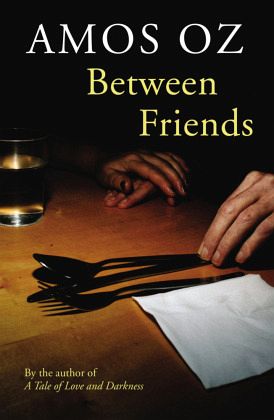
Amos Oz's compelling new fiction offers revelatory glimpses into the secrets and frustrations of the human heart, played out by a community of misfits united by political disagreement, intense dissatisfaction and lifetimes of words left unspoken.
Ariella, unhappy in love, confides in the woman whose husband she stole; Nahum, a devoted father, can't find the words to challenge his daughter's promiscuous lover; the old idealists deplore the apathy of the young, while the young are so used to kibbutz life that they can't work out if they're impassioned or indifferent. Arguments about war, government, travel and children are feverishly taken up and quickly abandoned - and amid this group of people unwilling and unable to say what they mean, Martin attempts to teach Esperanto.
At the heart of each drama is a desire to be better, more principled and worthy of the community's respect. With his trademark compassion and sharp-eyed wit, Amos Oz leaves us with the feeling that what matters most between friends is the invisible tie of our shared humanity.
By the winner of the 2013 Franz Kafka Prize, previous winners of which include Philip Roth, Ivan Klima, Elfriede Jelinek, Harold Pinter and John Banville.
Amos Oz's compelling new fiction offers revelatory glimpses into the secrets and frustrations of the human heart, played out by a community of misfits united by political disagreement, intense dissatisfaction and lifetimes of words left unspoken.
Ariella, unhappy in love, confides in the woman whose husband she stole; Nahum, a devoted father, can't find the words to challenge his daughter's promiscuous lover; the old idealists deplore the apathy of the young, while the young are so used to kibbutz life that they can't work out if they're impassioned or indifferent. Arguments about war, government, travel and children are feverishly taken up and quickly abandoned - and amid this group of people unwilling and unable to say what they mean, Martin attempts to teach Esperanto.
At the heart of each drama is a desire to be better, more principled and worthy of the community's respect. With his trademark compassion and sharp-eyed wit, Amos Oz leaves us with the feeling that what matters most between friends is the invisible tie of our shared humanity.
By the winner of the 2013 Franz Kafka Prize, previous winners of which include Philip Roth, Ivan Klima, Elfriede Jelinek, Harold Pinter and John Banville.
Oz, Amos§Born in Jerusalem in 1939, Amos Oz was the internationally acclaimed author of many novels and essay collections, translated into over forty languages, including his brilliant semi-autobiographical work, A Tale of Love and Darkness. His last novel, Judas, was shortlisted for the Man Booker International Prize 2017 and won the Yasnaya Polyana Foreign Fiction Award. He received several international awards, including the Prix Femina, the Israel Prize, the Goethe Prize, the Frankfurt Peace Prize and the 2013 Franz Kafka Prize. He died in December 2018.
jerrybauer_s.jpg "Amos Oz")
© Jerry Bauer / Suhrkamp Verlag
Lucid and heartbreaking... Explores the always uncertain relationships between men and women, parents and children, friends and enemies, in a clear, clipped language perfectly suited to the laconic tone of the narrative and impeccably rendered into English by Sondra Silverston Alberto Manguel Guardian