
Andere Kunden interessierten sich auch für
 Race, Ethnicity and Law163,99 €
 Reimagining Probation Practice149,99 €
 Probation in the Republic of Moldova24,99 €
 Justice, Crime, and Ethics230,99 €
 Transforming probation40,99 €
![Thinking Skills Workbook [Probation Series]]( "Thinking Skills Workbook [Probation Series]") Thinking Skills Workbook [Probation Series]20,99 €
Thinking Skills Workbook [Probation Series]20,99 € Reoffending28,99 €


![Thinking Skills Workbook [Probation Series]](https://bilder.buecher.de/produkte/38/38097/38097708m.jpg "Thinking Skills Workbook [Probation Series]")

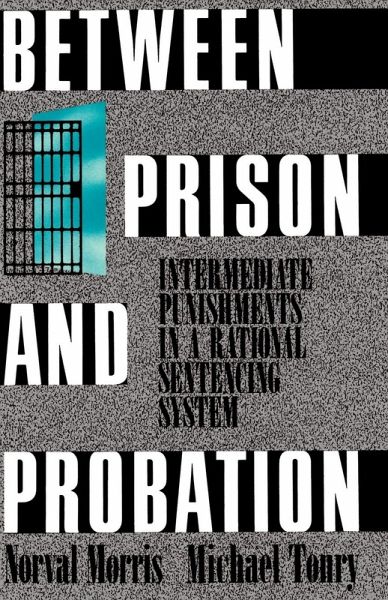
Used in rational combinations, these "intermediate" punishments would better serve the community than our present polarised choice. Serious consideration of these punishments has been hindered by the widespread perception that they are therapeutic rather than punitive. The reality, however, Morris and Tonry argue, "is that the American criminal justice system is both too severe and too lenient-almost randomly." Systematically implemented and rigorously enforced, intermediate punishments can "better and more economically serve the community, the victim, and the criminal than the prison terms and probation orders they supplant." Between Prison and Probation goes beyond mere advocacy of an increasing use of interdediate punishments; the book also addresses the difficult task of fitting these punishments into a comprehensive, fair and community-protective sentencing system.
In this work two leading American criminologists argue that fundamental sentencing reforms are needed before the US corrections system can contend with an escalating crime rate. They recommend the adoption of intermediate punishments - community-based sanctions of increasing severity - which can fill the gap between costly and punitive incarceration currently reserved for a minority of convicted offenders and parole served by the majority of offenders. The authors first analyse the evolution of sentencing in America and consider why intermediate punishments successfully applied in other countries have failed in the US. The authors examine a range of intermediate punishments such as intensive probation, fines, community service orders, and drug treatment programmes, as well as the types of criminals they are applicable for, their enforceability and effectiveness, and the major objections to their use.
In this work two leading American criminologists argue that fundamental sentencing reforms are needed before the US corrections system can contend with an escalating crime rate. They recommend the adoption of intermediate punishments - community-based sanctions of increasing severity - which can fill the gap between costly and punitive incarceration currently reserved for a minority of convicted offenders and parole served by the majority of offenders. The authors first analyse the evolution of sentencing in America and consider why intermediate punishments successfully applied in other countries have failed in the US. The authors examine a range of intermediate punishments such as intensive probation, fines, community service orders, and drug treatment programmes, as well as the types of criminals they are applicable for, their enforceability and effectiveness, and the major objections to their use.