

Andere Kunden interessierten sich auch für
 Beyond Words36,99 €
 Dance Words168,99 €
 Dance on the American Musical Theatre Stage150,99 €
 Dance History186,99 €
 Teaching Dance Improvisation169,99 €
 Moving Words169,99 €
 The Art and Science of Ballet Dancing and Teaching166,99 €
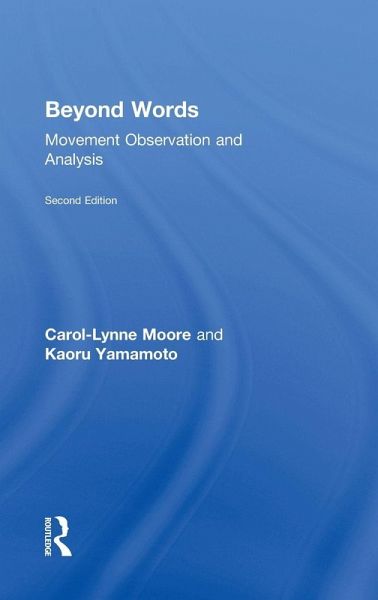
"Beyond Words presents movement observation and analysis techniques to examine every day human interactions, allowing performers to understand them in a new light. Carol-Lynne Moore and Kaoru Yamamoto build on the techniques they expertly displayed in the first edition of the book, maintaining a focus on the process of movement as opposed to discussions of static body language. The authors combine textual discussion with a new set of website-hosted video instructions to help readers develop an in-depth understanding of nonverbal communication. This new second edition is fully revised with a new introduction, and is illustrated throughout. It presents a fascinating insight into this vital field of study and will be an invaluable resource for scholars and practitioners in many areas of performance analysis, choreography and actor training"--
Beyond Words presents a range of illuminating approaches to examining every day social interactions, to help the reader understand human movement in new ways. Carol-Lynne Moore and Kaoru Yamamoto build on the principles that they expertly explored in the first edition of the book, maintaining a focus on the processes of movement as opposed to discussions of static body language. It presents a fascinating insight into this vital field of study, and will be an invaluable resource for scholars and practitioners in many fields.
Beyond Words presents a range of illuminating approaches to examining every day social interactions, to help the reader understand human movement in new ways. Carol-Lynne Moore and Kaoru Yamamoto build on the principles that they expertly explored in the first edition of the book, maintaining a focus on the processes of movement as opposed to discussions of static body language. It presents a fascinating insight into this vital field of study, and will be an invaluable resource for scholars and practitioners in many fields.
'A clearly presented and richly referenced synthesis of theories from anthropology, psychology, and neuropsychology supports their approach to movement analysis. This analysis also considers biological, socio-cultural, individual, and situational influences on human action. The text and accompanying videotape include thought-provoking theoretical discussions, challenging exercises in assessing one's own prejudices and preferences of perception, guidelines for designing observation tasks, and an introductory training in movement observation.' - Carlotta J. Willis, University of Massachusetts, Amherst, USA