

Andere Kunden interessierten sich auch für
 River East, River West8,49 €
 River East, River West14,99 €
 Braised Pork7,99 €
 A Concise Chinese-English Dictionary for Lovers8,99 €
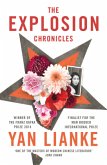
 The Explosion Chronicles27,99 €
 The Tea Girl of Hummingbird Lane22,99 €
 Exciting Times24,99 €
In a country where men dominate, this epic novel is first and foremost about women. As the title implies, the female body serves as the book's most important image and metaphor. The protagonist, Mother, is born in 1900. Married at 17 into the Shangguan family, she has nine children, only one of whom is a boy, the narrator of the book, a spoiled and ineffectual child who stands in stark contrast to his eight strong and forceful female siblings. Mother, a survivor, is the quintessential strong woman, who risks her life to save the lives of several of her children and grandchildren. The writing is full of life-picturesque, bawdy, shocking, imaginative. Each of the seven chapters represents a different time period, from the end of the Qing dynasty up through the Japanese invasion in the 1930s, the civil war, the Cultural Revolution, and the post-Mao years. In sum, this stunning novel is Mo Yan's searing vision of 20th-century China.
Mo Yan kam1955 als Bauernsohn in der Provinz Shandong zur Welt. Während der Kulturrevolution verließ er die Schule, um in einer Fabrik zu arbeiten. Mit 20 Jahren trat er in die Volksbefreiungsarmee ein, wo er noch als Soldat sein literarisches Schaffen begann. Zu Beginn der 80er Jahre fiel er dann mit ersten Veröffentlichungen auf. Als erstes erschien von ihm eine Sammlung von Erzählungen Der kristallene Rettich, deutsch in Auszügen 1997 als "Trockener Fluss" erschienen. 1984 begann er, an der Literaturabteilung der Kulturakademie der Armee zu unterrichten. Im Jahr 1986 schloss er das Studium an der Kunsthochschule der Volksbefreiungsarmee ab. Der literarische Durchbruch gelang ihm 1987 mit der Veröffentlichung des Novellenzyklus Die rote Sorghumhirse, der als Das rote Kornfeld im deutschsprachigen Raum bekannt wurde. Der Roman zählt zur chinesischen Literatur der Wurzelsuche und fand auch internationale Anerkennung durch die Verfilmung Rotes Kornfeld von Zhang Yimou. Mo Yan kann
als Schriftsteller des ungeschminkten Lebens der chinesischen ländlichen Provinz betrachtet werden, der schon früh die Zwänge des offiziell sanktionierten Realismus hinter sich ließ, und dessen literarisches Schaffen unverkennbar und zunehmend von der Strömung des magischen Realismus beeinflusst ist. 2012 erhielt Mo Yan den Nobelpreis für Literatur
Mo Yan ist ein Pseudonym und heißt sinngemäß "der Sprachlose"; sein wirklicher Name ist Guan Moye.
als Schriftsteller des ungeschminkten Lebens der chinesischen ländlichen Provinz betrachtet werden, der schon früh die Zwänge des offiziell sanktionierten Realismus hinter sich ließ, und dessen literarisches Schaffen unverkennbar und zunehmend von der Strömung des magischen Realismus beeinflusst ist. 2012 erhielt Mo Yan den Nobelpreis für Literatur
Mo Yan ist ein Pseudonym und heißt sinngemäß "der Sprachlose"; sein wirklicher Name ist Guan Moye.
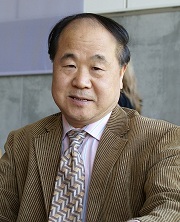
© Johannes Kolfhaus