
- Broschiertes Buch
- Merkliste
- Auf die Merkliste
- Bewerten Bewerten
- Teilen
- Produkt teilen
- Produkterinnerung
- Produkterinnerung
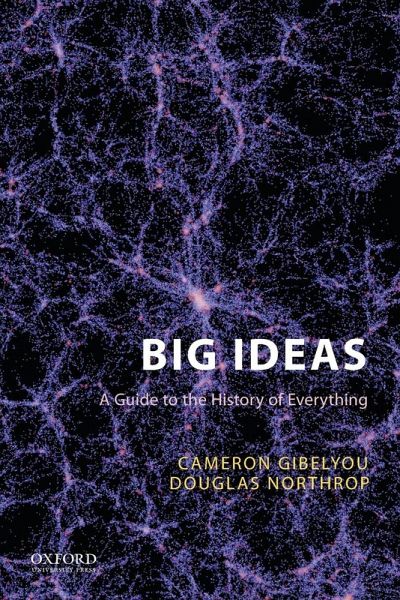
Big Ideas: A Guide to the History of Everything narrates the history of the universe, Earth, life, and humanity while analyzing how grand stories about the past, present, and future are crafted and framed. In Big Ideas, authors Cameron Gibelyou and Douglas Northrop create a novel framework for thinking about the history and future of everything. They grapple throughout the book with issues at the intersection of the natural sciences, history, literature, philosophy, religion, and the humanities. In nine elegantly written chapters, they attempt to make a reasoned analysis of worldviews that…mehr
Andere Kunden interessierten sich auch für
 Ideas of Good and Evil") William Butler YeatsThe Collected Works in Verse and Prose of William Butler Yeats, (Volume VI) Ideas of Good and Evil18,99 €
William Butler YeatsThe Collected Works in Verse and Prose of William Butler Yeats, (Volume VI) Ideas of Good and Evil18,99 € Ranger / SlackEpidemics and Ideas54,99 €
 Holbrook JacksonThe eighteen nineties; a review of art and ideas at the close of the nineteenth century24,99 €
 Edwin HatchThe Hibbert Lectures, 1888: The Influence of Greek Ideas and Usages Upon the Christian Church23,99 €
 William M. BryantHegel's Educational Ideas17,99 €
 AnonymousThe Library of Original Sources: Ideas That Have Influenced Civilization, in the Original Documents; Volume 825,99 €
 Walter W. RossIdeas for boys18,99 €
-
-
-







Big Ideas: A Guide to the History of Everything narrates the history of the universe, Earth, life, and humanity while analyzing how grand stories about the past, present, and future are crafted and framed. In Big Ideas, authors Cameron Gibelyou and Douglas Northrop create a novel framework for thinking about the history and future of everything. They grapple throughout the book with issues at the intersection of the natural sciences, history, literature, philosophy, religion, and the humanities. In nine elegantly written chapters, they attempt to make a reasoned analysis of worldviews that underlie historical writing across many fields. Throughout the course of their broad and deep explorations, the authors bring a wide range of voices to bear on fascinating questions of where everything--from the universe as a whole to any particular thing within it--came from, how it got to be the way it is today, and where things might be headed in the future. Big Ideas invites readers to think about genuinely big questions carefully and rigorously, separating received narratives about the "history of everything" from the basic facts discovered by scientific and historical study. The book treats scientific explanation and humanistic interpretation as partners: inviting those with primarily scientific interests into a humanistic discussion about science and history, and encouraging those with core interests in the humanities into a discussion of how humanities-based ways of thinking might connect with and apply to the natural sciences. This engagement helps readers learn a basic narrative of the "history of everything" while constantly provoking thought about big questions and the field of Big History.
Produktdetails
- Produktdetails
- Verlag: OXFORD UNIV PR
- Seitenzahl: 466
- Erscheinungstermin: 31. Juli 2020
- Englisch
- Abmessung: 234mm x 156mm x 25mm
- Gewicht: 702g
- ISBN-13: 9780190201210
- ISBN-10: 0190201215
- Artikelnr.: 60000829
- Herstellerkennzeichnung
- Libri GmbH
- Europaallee 1
- 36244 Bad Hersfeld
- gpsr@libri.de
- Verlag: OXFORD UNIV PR
- Seitenzahl: 466
- Erscheinungstermin: 31. Juli 2020
- Englisch
- Abmessung: 234mm x 156mm x 25mm
- Gewicht: 702g
- ISBN-13: 9780190201210
- ISBN-10: 0190201215
- Artikelnr.: 60000829
- Herstellerkennzeichnung
- Libri GmbH
- Europaallee 1
- 36244 Bad Hersfeld
- gpsr@libri.de
Cameron Gibelyou is a faculty member at the University of Michigan, where he develops and teaches original, innovative multidisciplinary courses, including "Popular Science," "Predicting the Future," and "Tours of the Past." He has taught Big History at both the high-school and college levels and serves as science advisor and teacher consultant for the Big History Project. His PhD is in physics, with a specialization in astrophysics and cosmology. Douglas Northrop is Professor of History and Middle East Studies at the University of Michigan, where he teaches world/global and Big History, Central Asian studies, and the history of empire, environment, and culture. His other books include An Imperial World: Empires and Colonies Since 1750 (Pearson, 2013), A Companion to World History (Wiley-Blackwell, 2012), and the prize-winning Veiled Empire: Gender and Power in Stalinist Central Asia (Cornell University Press, 2004). He is now working on a study of natural disasters along the Eurasian frontier.
* Acknowledgments
* Preface
* About the Authors
* CHAPTER 1: Introduction
* Introduction
* A Brief History of Histories of Everything
* Information and Interpretation
* Themes
* Organization and Layout
* Points and Purposes
* Creation
* A Quick Tour of Ideas About Creation
* Creation Myths and Universal Histories
* Discipline
* The Challenges of Integrating Different Disciplines
* Example: What Counts as an Explanation? Simplicity vs. Complexity
* Integrating the Humanities and Sciences: The Interpretive Level
* Scale
* Sidebar: Powers of Ten
* Space and Time Tell a Story
* Sidebar: We Are Intermediate-Scaled
* Value, Significance, and Scale: Small Matters Too
* CHAPTER 2: Universe
* Universe
* The Size of the Universe
* The Centrality of the Earth
* The Moral Meaning of the Universe
* Defining the Universe
* Big Bang
* The Story
* The Evidence
* Sidebar: The Lithium Problem
* Levels of Confidence
* Gravity
* Gravity in the History of the Universe: Galaxies, Stars, Elements,
Planets
* Ideas About Gravity
* Observational Challenges: Dark Matter and Dark Energy
* Sidebar: Unseen Matter and Gravity
* Gravity as a Metaphor
* Entropy
* What Is Entropy?
* Entropy, Order, and Complexity
* Entropy in an Expanding Universe, Past and Future
* Mathematics
* Laws of Physics
* Limitations of Laws
* Laws and Discipline
* Why the Unreasonable Effectiveness?
* Physical Laws and the Nature of Explanations in Physics
* Fine-Tuning
* CHAPTER 3: Earth
* Earth
* Forming the Earth
* Earth as a Planet
* Earth as a Set of Systems
* Earth as Alive
* Plate Tectonics
* The Idea and the Evidence
* Plate Tectonics and the Earth's Interior
* Sidebar: Does Plate Tectonics Itself Have a History?
* Shifting the Conceptual Ground
* To Ponder: Plate Tectonics as a Metaphor
* Deep Time
* A Brief History of Earth
* How Do We Know?
* Sidebar: How Did the Moon Form?
* Telling the Story of Deep Time
* To Ponder: The Anthropocene
* Ordering by Separating
* Accretion and Differentiation
* Sedimentation and Isotope Fractionation
* Ordering by Separating, Past and Present
* Reductionism
* What Is Reductionism?
* Scale and (Anti-)Reductionism in Universal Histories
* Contextual Emergence
* To Ponder: Wholes and Parts
* Discipline, Reductionism, and the Overall Shape of Knowledge
* CHAPTER 4: Life
* Life
* Life and Levels of Biological Organization
* Sidebar: Scales of Life
* Life: Discipline and Reductionism
* Sidebar: The Same Entity Can Be Treated at Multiple Levels
* Evolution
* The History of Evolution: Darwin's Time and Before
* Natural Selection
* Modern Evolutionary Synthesis
* Extended Sidebar: Evidence for Evolution
* Evolution as Information, Evolution as Interpretation
* Evolution, Progress, and the Value of Animals
* Evolution, Progress, and the Value of Human Beings
* Survival, Struggle, and the Nature of Nature
* Evolution: Interpret With Care
* Biosphere
* The Beginnings of the Biosphere: 3+ Billion Years Ago
* A World of Microbes: 3-1.5 Billion Years Ago
* A World of Microbes ... Plus Other Stuff: 1.5 Billion Years Ago to
the Present
* How Historians Can Help Scientists
* Sidebar: Stromatolites and Hunter-Gatherers
* The Place of Humans in Life's History
* Biochemistry
* The Beginnings of Life: How, Where, Why?
* How.
* Where.
* Why.
* Life's History - a Biochemical Story?
* What Is Life?
* Science
* Science Is Philosophical
* Sidebar: How the Philosophy of Statistics Influences Cosmology
* Science Is Social
* To Ponder: Crackpots
* Science Has Limits
* CHAPTER 5: Humanity
* Humanity
* Human Ancestry
* The Search for Human Origins and the Anthropologist's Proxies for
Humanity
* To Ponder: What Does It Mean to Be Human?
* Culture
* Biology and Culture
* Sidebar: Cultural Evolution
* Biology and Culture as Interpretive Framing
* Technology
* Stone Tools
* Hunting and Extinction of the Megafauna
* Agriculture
* Progress Narratives and the Interpretation of Prehistoric
Technologies
* Language
* Some Basic Properties of Language
* Origins of Language: When?
* Origins of Language: How?
* Sidebar: Language and Thinking
* Origins of Language: Why?
* Mind
* Mind, Consciousness, Physicalism
* Sidebar: Other Minds
* Integrating the Human Sciences: Human Beings and Being Human
* CHAPTER 6: History
* History
* Universal Histories in the Context of History-Writing
* To Ponder: A History of You
* Evidence, Deep Time, and World History
* To Ponder: Southeast Asian Inscriptions
* Information and Interpretation in World History
* Sidebar: Following Up on Your Essay
* Large Scales and the Individual
* Contingency
* Contingency in History
* Contingency in the History of Life
* Chance, Laws, and Contingency in Historical Explanation
* Sidebar: Counterfactuals
* Context
* A Brief History of the World in Three Parts
* Foraging Era: "Many Worlds."
* Sidebar: Evolutionary Psychology
* Agrarian Era: "Few Worlds."
* Industrial Era: "One World."
* The Multiple Contexts of Universal Histories
* Sidebar: Social Constructs
* Population
* Population Dynamics in the Era of Foragers, the Agrarian Era, and the
Modern Era
* Malthusian Thinking About Population Dynamics
* Sidebar: State Formation in Sumer
* Sidebar: Easter Island
* Biological Reductionism in Universal Histories
* To Ponder: Population and Culture in Other Animals
* Causation
* Multi-Causal History
* Determinisms, Free Will, and the Writing of History
* Relationships Between Causation, Context, and Contingency
* CHAPTER 7: Modernity
* Modernity
* Modern Changes: As Seen From the Informational Level
* Sidebar: Sociology
* Modernity as Interpretation and Storytelling
* Connection
* Connection Goes Far Back
* Global Connections
* The Limitations of Connection
* Systems
* The Idea of a System, and How It Structures Universal Histories
* Advantages and Limitations of "Systems Thinking"
* Statistics
* Statistics, the Social Sciences, and Modern Concepts
* Sidebar: Eugenics and Theoretical Statistics
* Projecting Numerical Information Wherever We Look
* Purpose
* Sidebar: Philosophy in Modernity
* A Brief History of Purpose in (Western) Philosophy
* Purpose in Biology
* The Advantages and Disadvantages of Including Purpose
* Purpose, the Universe, and Emergence
* CHAPTER 8: Future
* Future
* What Makes Something Predictable?
* Sidebar: Futurologists
* Causality and Scale
* An Example of Short-Term Prediction: Climate Change
* Medium-Term Futures
* Long-Term Futures
* Wildcards and Interactions Between Trends
* Interpreting the Future
* Progress
* Problems With Progress
* The Future as a Site for Discussing Present Moral Standards
* Sustainability
* Universal History as Context for the Anthropocene
* Sustainability in the Anthropocene
* Environmental Sustainability as a Matter of Social Organization and
* Infrastructure
* Sidebar: The Aral Sea
* Environmental Tradeoffs and the Future
* Transhumanism
* Technology and the Future of Human Evolution
* Technologies and Technical Limits of Human Modification
* Universal Histories and Transhumanism
* Criticisms of Transhumanism
* Time
* To Ponder: Experiencing a Radically Extended Lifespan
* Philosophy, Physics, and Time
* Time in Other Disciplines
* CHAPTER 9: Interpretation
* Interpretation
* What Is Interpretation?
* Interpretation and the Integration of Disciplines, Worldviews, and
People
* Interpretation and Universal Histories
* Complexity
* Measuring Complexity
* Complexity in the Physical, Biological, and Social Worlds
* Evaluating Complexity
* Religion
* Naturalism as One Worldview Among Several
* Religious Worldviews and the Foundations of Universal History
* The Reasonability of Religious Worldviews
* Incorporating Religion in Universal History
* Narrative
* The Atheist and the Orthodox Jew: Visions of Reality
* Metanarrative
* A Many-Branched Stream
* Endnotes
* Index
* Preface
* About the Authors
* CHAPTER 1: Introduction
* Introduction
* A Brief History of Histories of Everything
* Information and Interpretation
* Themes
* Organization and Layout
* Points and Purposes
* Creation
* A Quick Tour of Ideas About Creation
* Creation Myths and Universal Histories
* Discipline
* The Challenges of Integrating Different Disciplines
* Example: What Counts as an Explanation? Simplicity vs. Complexity
* Integrating the Humanities and Sciences: The Interpretive Level
* Scale
* Sidebar: Powers of Ten
* Space and Time Tell a Story
* Sidebar: We Are Intermediate-Scaled
* Value, Significance, and Scale: Small Matters Too
* CHAPTER 2: Universe
* Universe
* The Size of the Universe
* The Centrality of the Earth
* The Moral Meaning of the Universe
* Defining the Universe
* Big Bang
* The Story
* The Evidence
* Sidebar: The Lithium Problem
* Levels of Confidence
* Gravity
* Gravity in the History of the Universe: Galaxies, Stars, Elements,
Planets
* Ideas About Gravity
* Observational Challenges: Dark Matter and Dark Energy
* Sidebar: Unseen Matter and Gravity
* Gravity as a Metaphor
* Entropy
* What Is Entropy?
* Entropy, Order, and Complexity
* Entropy in an Expanding Universe, Past and Future
* Mathematics
* Laws of Physics
* Limitations of Laws
* Laws and Discipline
* Why the Unreasonable Effectiveness?
* Physical Laws and the Nature of Explanations in Physics
* Fine-Tuning
* CHAPTER 3: Earth
* Earth
* Forming the Earth
* Earth as a Planet
* Earth as a Set of Systems
* Earth as Alive
* Plate Tectonics
* The Idea and the Evidence
* Plate Tectonics and the Earth's Interior
* Sidebar: Does Plate Tectonics Itself Have a History?
* Shifting the Conceptual Ground
* To Ponder: Plate Tectonics as a Metaphor
* Deep Time
* A Brief History of Earth
* How Do We Know?
* Sidebar: How Did the Moon Form?
* Telling the Story of Deep Time
* To Ponder: The Anthropocene
* Ordering by Separating
* Accretion and Differentiation
* Sedimentation and Isotope Fractionation
* Ordering by Separating, Past and Present
* Reductionism
* What Is Reductionism?
* Scale and (Anti-)Reductionism in Universal Histories
* Contextual Emergence
* To Ponder: Wholes and Parts
* Discipline, Reductionism, and the Overall Shape of Knowledge
* CHAPTER 4: Life
* Life
* Life and Levels of Biological Organization
* Sidebar: Scales of Life
* Life: Discipline and Reductionism
* Sidebar: The Same Entity Can Be Treated at Multiple Levels
* Evolution
* The History of Evolution: Darwin's Time and Before
* Natural Selection
* Modern Evolutionary Synthesis
* Extended Sidebar: Evidence for Evolution
* Evolution as Information, Evolution as Interpretation
* Evolution, Progress, and the Value of Animals
* Evolution, Progress, and the Value of Human Beings
* Survival, Struggle, and the Nature of Nature
* Evolution: Interpret With Care
* Biosphere
* The Beginnings of the Biosphere: 3+ Billion Years Ago
* A World of Microbes: 3-1.5 Billion Years Ago
* A World of Microbes ... Plus Other Stuff: 1.5 Billion Years Ago to
the Present
* How Historians Can Help Scientists
* Sidebar: Stromatolites and Hunter-Gatherers
* The Place of Humans in Life's History
* Biochemistry
* The Beginnings of Life: How, Where, Why?
* How.
* Where.
* Why.
* Life's History - a Biochemical Story?
* What Is Life?
* Science
* Science Is Philosophical
* Sidebar: How the Philosophy of Statistics Influences Cosmology
* Science Is Social
* To Ponder: Crackpots
* Science Has Limits
* CHAPTER 5: Humanity
* Humanity
* Human Ancestry
* The Search for Human Origins and the Anthropologist's Proxies for
Humanity
* To Ponder: What Does It Mean to Be Human?
* Culture
* Biology and Culture
* Sidebar: Cultural Evolution
* Biology and Culture as Interpretive Framing
* Technology
* Stone Tools
* Hunting and Extinction of the Megafauna
* Agriculture
* Progress Narratives and the Interpretation of Prehistoric
Technologies
* Language
* Some Basic Properties of Language
* Origins of Language: When?
* Origins of Language: How?
* Sidebar: Language and Thinking
* Origins of Language: Why?
* Mind
* Mind, Consciousness, Physicalism
* Sidebar: Other Minds
* Integrating the Human Sciences: Human Beings and Being Human
* CHAPTER 6: History
* History
* Universal Histories in the Context of History-Writing
* To Ponder: A History of You
* Evidence, Deep Time, and World History
* To Ponder: Southeast Asian Inscriptions
* Information and Interpretation in World History
* Sidebar: Following Up on Your Essay
* Large Scales and the Individual
* Contingency
* Contingency in History
* Contingency in the History of Life
* Chance, Laws, and Contingency in Historical Explanation
* Sidebar: Counterfactuals
* Context
* A Brief History of the World in Three Parts
* Foraging Era: "Many Worlds."
* Sidebar: Evolutionary Psychology
* Agrarian Era: "Few Worlds."
* Industrial Era: "One World."
* The Multiple Contexts of Universal Histories
* Sidebar: Social Constructs
* Population
* Population Dynamics in the Era of Foragers, the Agrarian Era, and the
Modern Era
* Malthusian Thinking About Population Dynamics
* Sidebar: State Formation in Sumer
* Sidebar: Easter Island
* Biological Reductionism in Universal Histories
* To Ponder: Population and Culture in Other Animals
* Causation
* Multi-Causal History
* Determinisms, Free Will, and the Writing of History
* Relationships Between Causation, Context, and Contingency
* CHAPTER 7: Modernity
* Modernity
* Modern Changes: As Seen From the Informational Level
* Sidebar: Sociology
* Modernity as Interpretation and Storytelling
* Connection
* Connection Goes Far Back
* Global Connections
* The Limitations of Connection
* Systems
* The Idea of a System, and How It Structures Universal Histories
* Advantages and Limitations of "Systems Thinking"
* Statistics
* Statistics, the Social Sciences, and Modern Concepts
* Sidebar: Eugenics and Theoretical Statistics
* Projecting Numerical Information Wherever We Look
* Purpose
* Sidebar: Philosophy in Modernity
* A Brief History of Purpose in (Western) Philosophy
* Purpose in Biology
* The Advantages and Disadvantages of Including Purpose
* Purpose, the Universe, and Emergence
* CHAPTER 8: Future
* Future
* What Makes Something Predictable?
* Sidebar: Futurologists
* Causality and Scale
* An Example of Short-Term Prediction: Climate Change
* Medium-Term Futures
* Long-Term Futures
* Wildcards and Interactions Between Trends
* Interpreting the Future
* Progress
* Problems With Progress
* The Future as a Site for Discussing Present Moral Standards
* Sustainability
* Universal History as Context for the Anthropocene
* Sustainability in the Anthropocene
* Environmental Sustainability as a Matter of Social Organization and
* Infrastructure
* Sidebar: The Aral Sea
* Environmental Tradeoffs and the Future
* Transhumanism
* Technology and the Future of Human Evolution
* Technologies and Technical Limits of Human Modification
* Universal Histories and Transhumanism
* Criticisms of Transhumanism
* Time
* To Ponder: Experiencing a Radically Extended Lifespan
* Philosophy, Physics, and Time
* Time in Other Disciplines
* CHAPTER 9: Interpretation
* Interpretation
* What Is Interpretation?
* Interpretation and the Integration of Disciplines, Worldviews, and
People
* Interpretation and Universal Histories
* Complexity
* Measuring Complexity
* Complexity in the Physical, Biological, and Social Worlds
* Evaluating Complexity
* Religion
* Naturalism as One Worldview Among Several
* Religious Worldviews and the Foundations of Universal History
* The Reasonability of Religious Worldviews
* Incorporating Religion in Universal History
* Narrative
* The Atheist and the Orthodox Jew: Visions of Reality
* Metanarrative
* A Many-Branched Stream
* Endnotes
* Index
* Acknowledgments
* Preface
* About the Authors
* CHAPTER 1: Introduction
* Introduction
* A Brief History of Histories of Everything
* Information and Interpretation
* Themes
* Organization and Layout
* Points and Purposes
* Creation
* A Quick Tour of Ideas About Creation
* Creation Myths and Universal Histories
* Discipline
* The Challenges of Integrating Different Disciplines
* Example: What Counts as an Explanation? Simplicity vs. Complexity
* Integrating the Humanities and Sciences: The Interpretive Level
* Scale
* Sidebar: Powers of Ten
* Space and Time Tell a Story
* Sidebar: We Are Intermediate-Scaled
* Value, Significance, and Scale: Small Matters Too
* CHAPTER 2: Universe
* Universe
* The Size of the Universe
* The Centrality of the Earth
* The Moral Meaning of the Universe
* Defining the Universe
* Big Bang
* The Story
* The Evidence
* Sidebar: The Lithium Problem
* Levels of Confidence
* Gravity
* Gravity in the History of the Universe: Galaxies, Stars, Elements,
Planets
* Ideas About Gravity
* Observational Challenges: Dark Matter and Dark Energy
* Sidebar: Unseen Matter and Gravity
* Gravity as a Metaphor
* Entropy
* What Is Entropy?
* Entropy, Order, and Complexity
* Entropy in an Expanding Universe, Past and Future
* Mathematics
* Laws of Physics
* Limitations of Laws
* Laws and Discipline
* Why the Unreasonable Effectiveness?
* Physical Laws and the Nature of Explanations in Physics
* Fine-Tuning
* CHAPTER 3: Earth
* Earth
* Forming the Earth
* Earth as a Planet
* Earth as a Set of Systems
* Earth as Alive
* Plate Tectonics
* The Idea and the Evidence
* Plate Tectonics and the Earth's Interior
* Sidebar: Does Plate Tectonics Itself Have a History?
* Shifting the Conceptual Ground
* To Ponder: Plate Tectonics as a Metaphor
* Deep Time
* A Brief History of Earth
* How Do We Know?
* Sidebar: How Did the Moon Form?
* Telling the Story of Deep Time
* To Ponder: The Anthropocene
* Ordering by Separating
* Accretion and Differentiation
* Sedimentation and Isotope Fractionation
* Ordering by Separating, Past and Present
* Reductionism
* What Is Reductionism?
* Scale and (Anti-)Reductionism in Universal Histories
* Contextual Emergence
* To Ponder: Wholes and Parts
* Discipline, Reductionism, and the Overall Shape of Knowledge
* CHAPTER 4: Life
* Life
* Life and Levels of Biological Organization
* Sidebar: Scales of Life
* Life: Discipline and Reductionism
* Sidebar: The Same Entity Can Be Treated at Multiple Levels
* Evolution
* The History of Evolution: Darwin's Time and Before
* Natural Selection
* Modern Evolutionary Synthesis
* Extended Sidebar: Evidence for Evolution
* Evolution as Information, Evolution as Interpretation
* Evolution, Progress, and the Value of Animals
* Evolution, Progress, and the Value of Human Beings
* Survival, Struggle, and the Nature of Nature
* Evolution: Interpret With Care
* Biosphere
* The Beginnings of the Biosphere: 3+ Billion Years Ago
* A World of Microbes: 3-1.5 Billion Years Ago
* A World of Microbes ... Plus Other Stuff: 1.5 Billion Years Ago to
the Present
* How Historians Can Help Scientists
* Sidebar: Stromatolites and Hunter-Gatherers
* The Place of Humans in Life's History
* Biochemistry
* The Beginnings of Life: How, Where, Why?
* How.
* Where.
* Why.
* Life's History - a Biochemical Story?
* What Is Life?
* Science
* Science Is Philosophical
* Sidebar: How the Philosophy of Statistics Influences Cosmology
* Science Is Social
* To Ponder: Crackpots
* Science Has Limits
* CHAPTER 5: Humanity
* Humanity
* Human Ancestry
* The Search for Human Origins and the Anthropologist's Proxies for
Humanity
* To Ponder: What Does It Mean to Be Human?
* Culture
* Biology and Culture
* Sidebar: Cultural Evolution
* Biology and Culture as Interpretive Framing
* Technology
* Stone Tools
* Hunting and Extinction of the Megafauna
* Agriculture
* Progress Narratives and the Interpretation of Prehistoric
Technologies
* Language
* Some Basic Properties of Language
* Origins of Language: When?
* Origins of Language: How?
* Sidebar: Language and Thinking
* Origins of Language: Why?
* Mind
* Mind, Consciousness, Physicalism
* Sidebar: Other Minds
* Integrating the Human Sciences: Human Beings and Being Human
* CHAPTER 6: History
* History
* Universal Histories in the Context of History-Writing
* To Ponder: A History of You
* Evidence, Deep Time, and World History
* To Ponder: Southeast Asian Inscriptions
* Information and Interpretation in World History
* Sidebar: Following Up on Your Essay
* Large Scales and the Individual
* Contingency
* Contingency in History
* Contingency in the History of Life
* Chance, Laws, and Contingency in Historical Explanation
* Sidebar: Counterfactuals
* Context
* A Brief History of the World in Three Parts
* Foraging Era: "Many Worlds."
* Sidebar: Evolutionary Psychology
* Agrarian Era: "Few Worlds."
* Industrial Era: "One World."
* The Multiple Contexts of Universal Histories
* Sidebar: Social Constructs
* Population
* Population Dynamics in the Era of Foragers, the Agrarian Era, and the
Modern Era
* Malthusian Thinking About Population Dynamics
* Sidebar: State Formation in Sumer
* Sidebar: Easter Island
* Biological Reductionism in Universal Histories
* To Ponder: Population and Culture in Other Animals
* Causation
* Multi-Causal History
* Determinisms, Free Will, and the Writing of History
* Relationships Between Causation, Context, and Contingency
* CHAPTER 7: Modernity
* Modernity
* Modern Changes: As Seen From the Informational Level
* Sidebar: Sociology
* Modernity as Interpretation and Storytelling
* Connection
* Connection Goes Far Back
* Global Connections
* The Limitations of Connection
* Systems
* The Idea of a System, and How It Structures Universal Histories
* Advantages and Limitations of "Systems Thinking"
* Statistics
* Statistics, the Social Sciences, and Modern Concepts
* Sidebar: Eugenics and Theoretical Statistics
* Projecting Numerical Information Wherever We Look
* Purpose
* Sidebar: Philosophy in Modernity
* A Brief History of Purpose in (Western) Philosophy
* Purpose in Biology
* The Advantages and Disadvantages of Including Purpose
* Purpose, the Universe, and Emergence
* CHAPTER 8: Future
* Future
* What Makes Something Predictable?
* Sidebar: Futurologists
* Causality and Scale
* An Example of Short-Term Prediction: Climate Change
* Medium-Term Futures
* Long-Term Futures
* Wildcards and Interactions Between Trends
* Interpreting the Future
* Progress
* Problems With Progress
* The Future as a Site for Discussing Present Moral Standards
* Sustainability
* Universal History as Context for the Anthropocene
* Sustainability in the Anthropocene
* Environmental Sustainability as a Matter of Social Organization and
* Infrastructure
* Sidebar: The Aral Sea
* Environmental Tradeoffs and the Future
* Transhumanism
* Technology and the Future of Human Evolution
* Technologies and Technical Limits of Human Modification
* Universal Histories and Transhumanism
* Criticisms of Transhumanism
* Time
* To Ponder: Experiencing a Radically Extended Lifespan
* Philosophy, Physics, and Time
* Time in Other Disciplines
* CHAPTER 9: Interpretation
* Interpretation
* What Is Interpretation?
* Interpretation and the Integration of Disciplines, Worldviews, and
People
* Interpretation and Universal Histories
* Complexity
* Measuring Complexity
* Complexity in the Physical, Biological, and Social Worlds
* Evaluating Complexity
* Religion
* Naturalism as One Worldview Among Several
* Religious Worldviews and the Foundations of Universal History
* The Reasonability of Religious Worldviews
* Incorporating Religion in Universal History
* Narrative
* The Atheist and the Orthodox Jew: Visions of Reality
* Metanarrative
* A Many-Branched Stream
* Endnotes
* Index
* Preface
* About the Authors
* CHAPTER 1: Introduction
* Introduction
* A Brief History of Histories of Everything
* Information and Interpretation
* Themes
* Organization and Layout
* Points and Purposes
* Creation
* A Quick Tour of Ideas About Creation
* Creation Myths and Universal Histories
* Discipline
* The Challenges of Integrating Different Disciplines
* Example: What Counts as an Explanation? Simplicity vs. Complexity
* Integrating the Humanities and Sciences: The Interpretive Level
* Scale
* Sidebar: Powers of Ten
* Space and Time Tell a Story
* Sidebar: We Are Intermediate-Scaled
* Value, Significance, and Scale: Small Matters Too
* CHAPTER 2: Universe
* Universe
* The Size of the Universe
* The Centrality of the Earth
* The Moral Meaning of the Universe
* Defining the Universe
* Big Bang
* The Story
* The Evidence
* Sidebar: The Lithium Problem
* Levels of Confidence
* Gravity
* Gravity in the History of the Universe: Galaxies, Stars, Elements,
Planets
* Ideas About Gravity
* Observational Challenges: Dark Matter and Dark Energy
* Sidebar: Unseen Matter and Gravity
* Gravity as a Metaphor
* Entropy
* What Is Entropy?
* Entropy, Order, and Complexity
* Entropy in an Expanding Universe, Past and Future
* Mathematics
* Laws of Physics
* Limitations of Laws
* Laws and Discipline
* Why the Unreasonable Effectiveness?
* Physical Laws and the Nature of Explanations in Physics
* Fine-Tuning
* CHAPTER 3: Earth
* Earth
* Forming the Earth
* Earth as a Planet
* Earth as a Set of Systems
* Earth as Alive
* Plate Tectonics
* The Idea and the Evidence
* Plate Tectonics and the Earth's Interior
* Sidebar: Does Plate Tectonics Itself Have a History?
* Shifting the Conceptual Ground
* To Ponder: Plate Tectonics as a Metaphor
* Deep Time
* A Brief History of Earth
* How Do We Know?
* Sidebar: How Did the Moon Form?
* Telling the Story of Deep Time
* To Ponder: The Anthropocene
* Ordering by Separating
* Accretion and Differentiation
* Sedimentation and Isotope Fractionation
* Ordering by Separating, Past and Present
* Reductionism
* What Is Reductionism?
* Scale and (Anti-)Reductionism in Universal Histories
* Contextual Emergence
* To Ponder: Wholes and Parts
* Discipline, Reductionism, and the Overall Shape of Knowledge
* CHAPTER 4: Life
* Life
* Life and Levels of Biological Organization
* Sidebar: Scales of Life
* Life: Discipline and Reductionism
* Sidebar: The Same Entity Can Be Treated at Multiple Levels
* Evolution
* The History of Evolution: Darwin's Time and Before
* Natural Selection
* Modern Evolutionary Synthesis
* Extended Sidebar: Evidence for Evolution
* Evolution as Information, Evolution as Interpretation
* Evolution, Progress, and the Value of Animals
* Evolution, Progress, and the Value of Human Beings
* Survival, Struggle, and the Nature of Nature
* Evolution: Interpret With Care
* Biosphere
* The Beginnings of the Biosphere: 3+ Billion Years Ago
* A World of Microbes: 3-1.5 Billion Years Ago
* A World of Microbes ... Plus Other Stuff: 1.5 Billion Years Ago to
the Present
* How Historians Can Help Scientists
* Sidebar: Stromatolites and Hunter-Gatherers
* The Place of Humans in Life's History
* Biochemistry
* The Beginnings of Life: How, Where, Why?
* How.
* Where.
* Why.
* Life's History - a Biochemical Story?
* What Is Life?
* Science
* Science Is Philosophical
* Sidebar: How the Philosophy of Statistics Influences Cosmology
* Science Is Social
* To Ponder: Crackpots
* Science Has Limits
* CHAPTER 5: Humanity
* Humanity
* Human Ancestry
* The Search for Human Origins and the Anthropologist's Proxies for
Humanity
* To Ponder: What Does It Mean to Be Human?
* Culture
* Biology and Culture
* Sidebar: Cultural Evolution
* Biology and Culture as Interpretive Framing
* Technology
* Stone Tools
* Hunting and Extinction of the Megafauna
* Agriculture
* Progress Narratives and the Interpretation of Prehistoric
Technologies
* Language
* Some Basic Properties of Language
* Origins of Language: When?
* Origins of Language: How?
* Sidebar: Language and Thinking
* Origins of Language: Why?
* Mind
* Mind, Consciousness, Physicalism
* Sidebar: Other Minds
* Integrating the Human Sciences: Human Beings and Being Human
* CHAPTER 6: History
* History
* Universal Histories in the Context of History-Writing
* To Ponder: A History of You
* Evidence, Deep Time, and World History
* To Ponder: Southeast Asian Inscriptions
* Information and Interpretation in World History
* Sidebar: Following Up on Your Essay
* Large Scales and the Individual
* Contingency
* Contingency in History
* Contingency in the History of Life
* Chance, Laws, and Contingency in Historical Explanation
* Sidebar: Counterfactuals
* Context
* A Brief History of the World in Three Parts
* Foraging Era: "Many Worlds."
* Sidebar: Evolutionary Psychology
* Agrarian Era: "Few Worlds."
* Industrial Era: "One World."
* The Multiple Contexts of Universal Histories
* Sidebar: Social Constructs
* Population
* Population Dynamics in the Era of Foragers, the Agrarian Era, and the
Modern Era
* Malthusian Thinking About Population Dynamics
* Sidebar: State Formation in Sumer
* Sidebar: Easter Island
* Biological Reductionism in Universal Histories
* To Ponder: Population and Culture in Other Animals
* Causation
* Multi-Causal History
* Determinisms, Free Will, and the Writing of History
* Relationships Between Causation, Context, and Contingency
* CHAPTER 7: Modernity
* Modernity
* Modern Changes: As Seen From the Informational Level
* Sidebar: Sociology
* Modernity as Interpretation and Storytelling
* Connection
* Connection Goes Far Back
* Global Connections
* The Limitations of Connection
* Systems
* The Idea of a System, and How It Structures Universal Histories
* Advantages and Limitations of "Systems Thinking"
* Statistics
* Statistics, the Social Sciences, and Modern Concepts
* Sidebar: Eugenics and Theoretical Statistics
* Projecting Numerical Information Wherever We Look
* Purpose
* Sidebar: Philosophy in Modernity
* A Brief History of Purpose in (Western) Philosophy
* Purpose in Biology
* The Advantages and Disadvantages of Including Purpose
* Purpose, the Universe, and Emergence
* CHAPTER 8: Future
* Future
* What Makes Something Predictable?
* Sidebar: Futurologists
* Causality and Scale
* An Example of Short-Term Prediction: Climate Change
* Medium-Term Futures
* Long-Term Futures
* Wildcards and Interactions Between Trends
* Interpreting the Future
* Progress
* Problems With Progress
* The Future as a Site for Discussing Present Moral Standards
* Sustainability
* Universal History as Context for the Anthropocene
* Sustainability in the Anthropocene
* Environmental Sustainability as a Matter of Social Organization and
* Infrastructure
* Sidebar: The Aral Sea
* Environmental Tradeoffs and the Future
* Transhumanism
* Technology and the Future of Human Evolution
* Technologies and Technical Limits of Human Modification
* Universal Histories and Transhumanism
* Criticisms of Transhumanism
* Time
* To Ponder: Experiencing a Radically Extended Lifespan
* Philosophy, Physics, and Time
* Time in Other Disciplines
* CHAPTER 9: Interpretation
* Interpretation
* What Is Interpretation?
* Interpretation and the Integration of Disciplines, Worldviews, and
People
* Interpretation and Universal Histories
* Complexity
* Measuring Complexity
* Complexity in the Physical, Biological, and Social Worlds
* Evaluating Complexity
* Religion
* Naturalism as One Worldview Among Several
* Religious Worldviews and the Foundations of Universal History
* The Reasonability of Religious Worldviews
* Incorporating Religion in Universal History
* Narrative
* The Atheist and the Orthodox Jew: Visions of Reality
* Metanarrative
* A Many-Branched Stream
* Endnotes
* Index