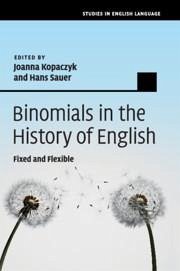
Binomials in the History of English
Herausgeber: Kopaczyk, Joanna; Sauer, Hans
Binomials in the History of English
Herausgeber: Kopaczyk, Joanna; Sauer, Hans
- Broschiertes Buch
Andere Kunden interessierten sich auch für
Further Studies in the Lesser-Known Varieties of English45,99 €
Lilo MoessnerThe History of the Present English Subjunctive36,99 €
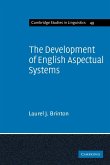
Laurel J. BrintonThe Development of English Aspectual Systems61,99 €
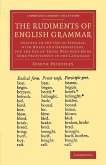
Joseph PriestleyThe Rudiments of English Grammar38,99 €
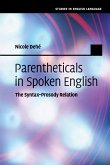
Nicole DehéParentheticals in Spoken English42,99 €
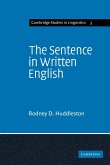
Rodney D. HuddlestonThe Sentence in Written English55,99 €
Arne LohmannEnglish Coordinate Constructions41,99 €-
-
-
Produktdetails
- Verlag: Cambridge University Press
- Seitenzahl: 396
- Erscheinungstermin: 2. April 2020
- Englisch
- Abmessung: 229mm x 152mm x 21mm
- Gewicht: 526g
- ISBN-13: 9781107544260
- ISBN-10: 1107544262
- Artikelnr.: 59357859
- Herstellerkennzeichnung
- Libri GmbH
- Europaallee 1
- 36244 Bad Hersfeld
- gpsr@libri.de
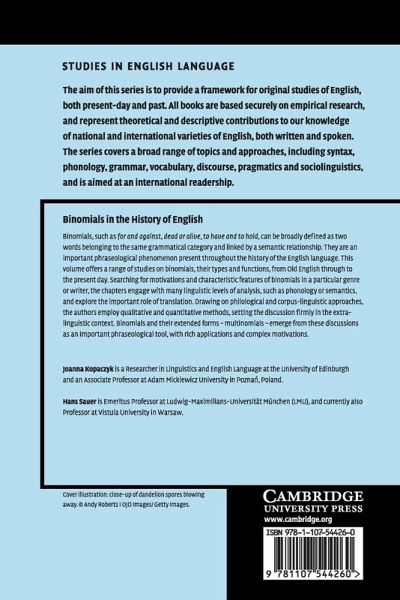
1. Defining and exploring binomials Joanna Kopaczyk and Hans Sauer; Part I.
Old English: 2. Pragmatic and stylistic functions of binomials in Old
English R. D. Fulk; 3. Fixity and flexibility in Wulfstan's binomials Don
Chapman; 4. Binomials, word pairs and variation as a feature of style in
Old English poetry Michiko Ogura; 5. Binomials or not? Double glosses in
Farman's gloss to the Rushworth Gospels Tadashi Kotake; 6. Lexical pairs
and their function in the Eadwine Psalter manuscript Paulina Zagórska; Part
II. Middle English: 7. Binomials in Middle English poetry: Havelok, Ywain
and Gawain, The Canterbury Tales Ulrike Schenk; 8. Binomials in Caxton's
Ovid (Book I) Elisabeth Kubaschewski; 9. Binomial glosses in translation:
the case of the Wycliffite Bible Marcin Krygier; Part III. Early Modern
English: 10. Binomials in several editions of the Kalender of Shepherdes,
an Early Modern English almanac Hanna Rutkowska; 11. Binomials and
multinomials in Sir Thomas Elyot's The Boke Named The Gouernour Melanie
Sprau; 12. 'I do make and ordayne this my last wyll and testament in maner
and forme Folowing': functions of binomials in Early Modern English
Protestant wills Ulrich Bach; 13. 'Shee gave Selfe both Soule and body to
the Devill': the use of binomials in the Salem witchcraft trials of 1692
Kathleen L. Doty and Mark Wicklund; 14. Binomials and multinomials in early
modern English parliamentary acts Anu Lehto; Part IV. To the Present: 15.
Developments in the frequency of English binomials, 1600-2000 Sandra
Mollin; 16. Binomials in English novels of the late modern period:
fixedness, formulaicity and style Jukka Tyrkkö; 17. On the linguistic and
social development of a binomial: the example of to have and to hold Ursula
Schaefer.

Old English: 2. Pragmatic and stylistic functions of binomials in Old
English R. D. Fulk; 3. Fixity and flexibility in Wulfstan's binomials Don
Chapman; 4. Binomials, word pairs and variation as a feature of style in
Old English poetry Michiko Ogura; 5. Binomials or not? Double glosses in
Farman's gloss to the Rushworth Gospels Tadashi Kotake; 6. Lexical pairs
and their function in the Eadwine Psalter manuscript Paulina Zagórska; Part
II. Middle English: 7. Binomials in Middle English poetry: Havelok, Ywain
and Gawain, The Canterbury Tales Ulrike Schenk; 8. Binomials in Caxton's
Ovid (Book I) Elisabeth Kubaschewski; 9. Binomial glosses in translation:
the case of the Wycliffite Bible Marcin Krygier; Part III. Early Modern
English: 10. Binomials in several editions of the Kalender of Shepherdes,
an Early Modern English almanac Hanna Rutkowska; 11. Binomials and
multinomials in Sir Thomas Elyot's The Boke Named The Gouernour Melanie
Sprau; 12. 'I do make and ordayne this my last wyll and testament in maner
and forme Folowing': functions of binomials in Early Modern English
Protestant wills Ulrich Bach; 13. 'Shee gave Selfe both Soule and body to
the Devill': the use of binomials in the Salem witchcraft trials of 1692
Kathleen L. Doty and Mark Wicklund; 14. Binomials and multinomials in early
modern English parliamentary acts Anu Lehto; Part IV. To the Present: 15.
Developments in the frequency of English binomials, 1600-2000 Sandra
Mollin; 16. Binomials in English novels of the late modern period:
fixedness, formulaicity and style Jukka Tyrkkö; 17. On the linguistic and
social development of a binomial: the example of to have and to hold Ursula
Schaefer.
1. Defining and exploring binomials Joanna Kopaczyk and Hans Sauer; Part I.
Old English: 2. Pragmatic and stylistic functions of binomials in Old
English R. D. Fulk; 3. Fixity and flexibility in Wulfstan's binomials Don
Chapman; 4. Binomials, word pairs and variation as a feature of style in
Old English poetry Michiko Ogura; 5. Binomials or not? Double glosses in
Farman's gloss to the Rushworth Gospels Tadashi Kotake; 6. Lexical pairs
and their function in the Eadwine Psalter manuscript Paulina Zagórska; Part
II. Middle English: 7. Binomials in Middle English poetry: Havelok, Ywain
and Gawain, The Canterbury Tales Ulrike Schenk; 8. Binomials in Caxton's
Ovid (Book I) Elisabeth Kubaschewski; 9. Binomial glosses in translation:
the case of the Wycliffite Bible Marcin Krygier; Part III. Early Modern
English: 10. Binomials in several editions of the Kalender of Shepherdes,
an Early Modern English almanac Hanna Rutkowska; 11. Binomials and
multinomials in Sir Thomas Elyot's The Boke Named The Gouernour Melanie
Sprau; 12. 'I do make and ordayne this my last wyll and testament in maner
and forme Folowing': functions of binomials in Early Modern English
Protestant wills Ulrich Bach; 13. 'Shee gave Selfe both Soule and body to
the Devill': the use of binomials in the Salem witchcraft trials of 1692
Kathleen L. Doty and Mark Wicklund; 14. Binomials and multinomials in early
modern English parliamentary acts Anu Lehto; Part IV. To the Present: 15.
Developments in the frequency of English binomials, 1600-2000 Sandra
Mollin; 16. Binomials in English novels of the late modern period:
fixedness, formulaicity and style Jukka Tyrkkö; 17. On the linguistic and
social development of a binomial: the example of to have and to hold Ursula
Schaefer.
Old English: 2. Pragmatic and stylistic functions of binomials in Old
English R. D. Fulk; 3. Fixity and flexibility in Wulfstan's binomials Don
Chapman; 4. Binomials, word pairs and variation as a feature of style in
Old English poetry Michiko Ogura; 5. Binomials or not? Double glosses in
Farman's gloss to the Rushworth Gospels Tadashi Kotake; 6. Lexical pairs
and their function in the Eadwine Psalter manuscript Paulina Zagórska; Part
II. Middle English: 7. Binomials in Middle English poetry: Havelok, Ywain
and Gawain, The Canterbury Tales Ulrike Schenk; 8. Binomials in Caxton's
Ovid (Book I) Elisabeth Kubaschewski; 9. Binomial glosses in translation:
the case of the Wycliffite Bible Marcin Krygier; Part III. Early Modern
English: 10. Binomials in several editions of the Kalender of Shepherdes,
an Early Modern English almanac Hanna Rutkowska; 11. Binomials and
multinomials in Sir Thomas Elyot's The Boke Named The Gouernour Melanie
Sprau; 12. 'I do make and ordayne this my last wyll and testament in maner
and forme Folowing': functions of binomials in Early Modern English
Protestant wills Ulrich Bach; 13. 'Shee gave Selfe both Soule and body to
the Devill': the use of binomials in the Salem witchcraft trials of 1692
Kathleen L. Doty and Mark Wicklund; 14. Binomials and multinomials in early
modern English parliamentary acts Anu Lehto; Part IV. To the Present: 15.
Developments in the frequency of English binomials, 1600-2000 Sandra
Mollin; 16. Binomials in English novels of the late modern period:
fixedness, formulaicity and style Jukka Tyrkkö; 17. On the linguistic and
social development of a binomial: the example of to have and to hold Ursula
Schaefer.