
Andere Kunden interessierten sich auch für
 Evaluation of the effects of limestone powder and NPK 17-17-1729,99 €
 in seed treatment") Neem extracts (Azadirachta indica A. Juss) in seed treatment27,99 €
Neem extracts (Azadirachta indica A. Juss) in seed treatment27,99 € Alternative control of whitefly nymphs with neem extracts24,99 €
 Effects of pyrethrum extracts on black bean aphids27,99 €
 Effect of cultivation practices on two bioindicators in market gardening27,99 €
 VEGETABLE EXTRACTS IN THE CONTROL OF THE BUTTON FLY40,99 €
 Soil and nematodes: study in the communes of Andranofasika and Marosakoa29,99 €
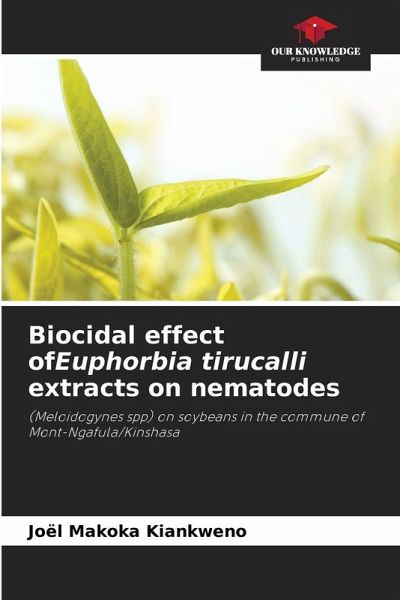
For almost five millennia, soya has fed millions of people, but it remains vulnerable to root-knot nematodes (Meloidogyne spp.), a fearsome pest. In the face of this scourge, the massive use of chemical pesticides is damaging both health and the environment. This book explores organic pesticides as a sustainable and affordable alternative. The study, carried out in Kinshasa (commune of Mont-Ngafula) using a randomized complete block design, compares four treatments: Euphorbia tirucalli extracts, fresh Panicum maximum leaves buried in the soil, the chemical nematicide Nema B2, and an unprotected control. Results show that E. tirucalli extracts and Nema B2 significantly reduce the gall index (0.4 and 0.3), while P. maximum and the control show higher indices (1.05 and 1.65). Over and above protection against pests, these organic solutions improve growth and yield, offering farmers an effective means of sustainable production.