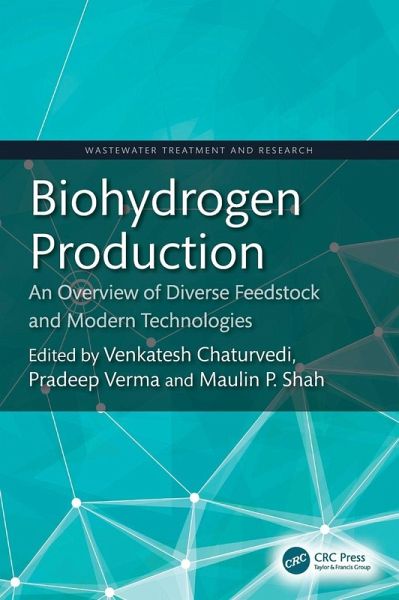
Rapid accumulation of pollutants and waste has resulted in a persistent demand for environmental clean-up through sustainable microbial technologies that combine biodegradation with bioenergy generation. Biohydrogen has emerged as a popular biofuel because it produces zero-carbon emissions and is environmentally friendly. This volume in the Wastewater Treatment and Research series delves into the various ways in which biohydrogen can be produced. This includes photosynthetic biohydrogen production, where cyanobacteria decompose water to hydrogen under anaerobic conditions using photosynthesis,…mehr
Rapid accumulation of pollutants and waste has resulted in a persistent demand for environmental clean-up through sustainable microbial technologies that combine biodegradation with bioenergy generation. Biohydrogen has emerged as a popular biofuel because it produces zero-carbon emissions and is environmentally friendly. This volume in the Wastewater Treatment and Research series delves into the various ways in which biohydrogen can be produced. This includes photosynthetic biohydrogen production, where cyanobacteria decompose water to hydrogen under anaerobic conditions using photosynthesis, anaerobic dark fermentation where hydrogen is produced by decomposition of organic matter by anaerobic microorganisms, and light and dark fermentation. With special emphasis on cell immobilization strategies, membrane processes, and nanomaterials, this book also highlights recent innovations in biohydrogen production such as culture enrichment, pretreatment of wastes, metabolic and genetic engineering, and the coupling process of light and dark fermentation. By providing an ecofriendly roadmap to turning waste into bioenergy, this book serves as an instrumental guide to averting one of the most pressing environmental crises of our times. Professors, researchers, students, and science enthusiasts will appreciate this holistic overview of biohydrogen production, especially in terms of its long-term viability, cost, and environmental implications.
Venkatesh Chaturvedi attained his M.Sc. degree in Biochemistry in 2004, and Ph.D. degree in Biotechnology in 2011, from, Banaras Hindu University, Varanasi, Uttar Pradesh, India. Dr. Chaturvedi has more than twelve years of teaching experience in government/ private teaching institutions. Dr. Chaturvedi is currently working as Assistant Professor at School of Biotechnology, Institute of Science, Banaras Hindu University since 2019. Dr. Chaturvedi is a Group leader of Bioremediation and Environmental Biotechnology laboratory at School of Biotechnology, Banaras Hindu University. His area of expertise involves Environmental Biotechnology, Bioremediation, and Industrial Biotechnology. Pradeep Verma completed his PhD from Sardar Patel University Gujarat, India in 2002. In the same year, he was selected as a UNESCO fellow and joined the Czech Academy of Sciences Prague, Czech Republic. He later moved to Charles University, Prague to work as postdoctoral fellow. In 2004 he worked as a visiting scientist at UFZ Centre for Environmental Research, Halle, Germany. He was awarded a DFG fellowship that provided him with another opportunity to work as a postdoctoral fellow at Gottingen University, Germany. Later in 2007 he returned to India and joined Reliance Life Sciences, Mumbai, and worked extensively on biobutanol production, which attributed a few patents to his name. Maulin P. Shah is an active researcher and scientific writer in his field for over 20 years. He earned a B.Sc. degree (1999) in Microbiology from Gujarat University, Godhra (Gujarat), India. He also earned his Ph.D. degree (2005) in Environmental Microbiology from Sardar Patel University, Vallabh Vidyanagar (Gujarat), India. He is Chief Scientist & Head of the Industrial Wastewater Research Lab, Division of Applied and Environmental Microbiology Lab at Enviro Technology Ltd., Ankleshwar, Gujarat, India. His work focuses on the impact of industrial pollution on the microbial diversity of wastewater and genetically engineering high-impact microbes for the degradation of hazardous materials. His research interests include Biological Wastewater Treatment, Environmental Microbiology, Biodegradation, Bioremediation, & Phytoremediation of Environmental Pollutants from Industrial Wastewaters.
Inhaltsangabe
1. Valorization of microalgal biomass for biohydrogen production 2. Biohydrogen Production from Organic Wastes: Types of Microorganisms, Diverse Pathways, Enhanced Production, and Future Prospects 3. Cell immobilisation technologies for efficient biohydrogen production: entrapment, encapsulation and adsorption, types of carriers, nano-based immobilisation and its prospects 4. Recent membrane based technologies for biohydrogen production: types of bioreactors, materials, techno-economic analyses and its future prospects. 5.Biohydrogen Production Via Valorization of Microalgal Biomass: Microalgal Strains, Cultivation and Harvesting, Biomass Pretreatment and Genetic Engineering-Based Strategies for Enhanced Production 6. Cell Immobilization Strategies for Biohydrogen: Methods, Carriers, and Nano Approaches 7.Recent advances in photo-fermentative biohydrogen production: Substrate pretreatment, strain improvement, bioreactor optimization 8. Advancements in nanotechnology and the use of nanomaterials in valorizing biohydrogen production by biomass conversion 9. Integrated biohydrogen production strategies involving combination of dark and photo-fermentation to convert Lignocellulosic biomass to hydrogen 10. Microbial Biohydrogen Production Using Organic Wastes: Current Advances and Future Opportunities 11. Enhanced Biohydrogen Production from Microalgae: Strategies and Advances 12. Unlocking the Potential of Microalgae for Sustainable Biohydrogen Production 13. Integrated Dark and Photo-Fermentation of Lignocellulosic Biomass for Hydrogen Production 14. Bio-hydrogen production from food waste via fungal and yeast species 15. Nanoparticle Conjugated Enzyme Mediated Enhanced Saccharification of Lignocellulosic Biomass for Biohydrogen Generation 16. Techniques for enhanced production of biohydrogen from microalgal biomass
1. Valorization of microalgal biomass for biohydrogen production 2. Biohydrogen Production from Organic Wastes: Types of Microorganisms, Diverse Pathways, Enhanced Production, and Future Prospects 3. Cell immobilisation technologies for efficient biohydrogen production: entrapment, encapsulation and adsorption, types of carriers, nano-based immobilisation and its prospects 4. Recent membrane based technologies for biohydrogen production: types of bioreactors, materials, techno-economic analyses and its future prospects. 5.Biohydrogen Production Via Valorization of Microalgal Biomass: Microalgal Strains, Cultivation and Harvesting, Biomass Pretreatment and Genetic Engineering-Based Strategies for Enhanced Production 6. Cell Immobilization Strategies for Biohydrogen: Methods, Carriers, and Nano Approaches 7.Recent advances in photo-fermentative biohydrogen production: Substrate pretreatment, strain improvement, bioreactor optimization 8. Advancements in nanotechnology and the use of nanomaterials in valorizing biohydrogen production by biomass conversion 9. Integrated biohydrogen production strategies involving combination of dark and photo-fermentation to convert Lignocellulosic biomass to hydrogen 10. Microbial Biohydrogen Production Using Organic Wastes: Current Advances and Future Opportunities 11. Enhanced Biohydrogen Production from Microalgae: Strategies and Advances 12. Unlocking the Potential of Microalgae for Sustainable Biohydrogen Production 13. Integrated Dark and Photo-Fermentation of Lignocellulosic Biomass for Hydrogen Production 14. Bio-hydrogen production from food waste via fungal and yeast species 15. Nanoparticle Conjugated Enzyme Mediated Enhanced Saccharification of Lignocellulosic Biomass for Biohydrogen Generation 16. Techniques for enhanced production of biohydrogen from microalgal biomass
Es gelten unsere Allgemeinen Geschäftsbedingungen: www.buecher.de/agb
Impressum
www.buecher.de ist ein Internetauftritt der buecher.de internetstores GmbH
Geschäftsführung: Monica Sawhney | Roland Kölbl | Günter Hilger
Sitz der Gesellschaft: Batheyer Straße 115 - 117, 58099 Hagen
Postanschrift: Bürgermeister-Wegele-Str. 12, 86167 Augsburg
Amtsgericht Hagen HRB 13257
Steuernummer: 321/5800/1497
USt-IdNr: DE450055826