
Andere Kunden interessierten sich auch für
 Biological Inorganic Chemistry93,99 €
 Biological Inorganic Chemistry80,99 €
 The Group 13 Metals Aluminium, Gallium, Indium and Thallium284,99 €
 Metals in Cells210,99 €
 Bioinorganic Chemistry -- Inorganic Elements in the Chemistry of Life184,99 €
 Copper-Oxygen Chemistry154,99 €
 Chemistry of Metalloproteins128,99 €
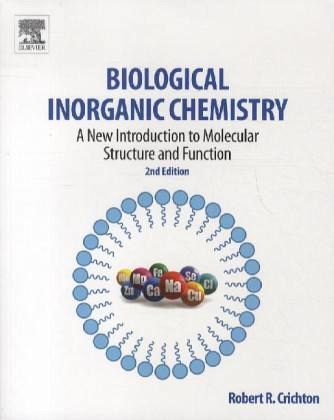
Biological Inorganic Chemistry: A New Introduction to Molecular Structure and Function, Second Edition, provides a comprehensive discussion of the biochemical aspects of metals in living systems. Beginning with an overview of metals and selected nonmetals in biology, the book then discusses the following concepts: basic coordination chemistry for biologists; structural and molecular biology for chemists; biological ligands for metal ions; intermediary metabolism and bioenergetics; and methods to study metals in biological systems. The book also covers metal assimilation pathways; transport, storage, and homeostasis of metal ions; sodium and potassium channels and pumps; magnesium phosphate metabolism and photoreceptors; calcium and cellular signaling; the catalytic role of several classes of mononuclear zinc enzymes; the biological chemistry of iron; and copper chemistry and biochemistry. In addition, the book discusses nickel and cobalt enzymes; manganese chemistry and biochemistry; molybdenum, tungsten, vanadium, and chromium; non-metals in biology; biomineralization; metals in the brain; metals and neurodegeneration; metals in medicine and metals as drugs; and metals in the environment.
".a fine scholarly text written in a reader-friendly style to describe the various roles of metals in biological systems, human health, and the environment. It also considers the mechanisms and experimental methods for studying biological processes involving metals.I would highly recommend it to all interested biology, and biochemistry students and researchers." --Science Progress, vol 97, issue 1, 2014
".a fine scholarly text written in a reader-friendly style to describe the various roles of metals in biological systems, human health, and the environment.The material of the second edition of this book has been updated, and new chapters have been included.I would highly recommend it to all interested biology, and biochemistry students and researchers." --Science Progress, February 18, 2014
"Crichton.offers this detailed and extensively illustrated text on inorganic components of biochemistry. Three introductory chapters explain the basic importance of metals in biology and orient biologists to coordination chemistry and chemists to molecular biology, respectively. General features of metal function are covered, including common ligands, their role in metabolism, assimilation and transport, and methods of study." --Reference & Research Book News, December 2013
"At first blush, inorganic biochemistry might sound like an oxymoron, but that is not the case here.Crichton's book will be useful resource for students or researchers who want to understand the exciting world of inorganic biochemistry." --CHOICE, October 2012, Vol. 50, No. 02
"Robert Crichton has blended an element-centric approach to the subject with a biological thread that is engaging and helpful in exploring the topics in detail. The text is both accessible and detailed, but pitched at undergraduate level." --Chemistry World
".a fine scholarly text written in a reader-friendly style to describe the various roles of metals in biological systems, human health, and the environment.The material of the second edition of this book has been updated, and new chapters have been included.I would highly recommend it to all interested biology, and biochemistry students and researchers." --Science Progress, February 18, 2014
"Crichton.offers this detailed and extensively illustrated text on inorganic components of biochemistry. Three introductory chapters explain the basic importance of metals in biology and orient biologists to coordination chemistry and chemists to molecular biology, respectively. General features of metal function are covered, including common ligands, their role in metabolism, assimilation and transport, and methods of study." --Reference & Research Book News, December 2013
"At first blush, inorganic biochemistry might sound like an oxymoron, but that is not the case here.Crichton's book will be useful resource for students or researchers who want to understand the exciting world of inorganic biochemistry." --CHOICE, October 2012, Vol. 50, No. 02
"Robert Crichton has blended an element-centric approach to the subject with a biological thread that is engaging and helpful in exploring the topics in detail. The text is both accessible and detailed, but pitched at undergraduate level." --Chemistry World