
Andere Kunden interessierten sich auch für
 Materials Development and Processing for Biomedical Applications95,99 €
 Advanced Materials for Biomedical Applications75,99 €
 Assessment of Polymeric Materials for Biomedical Applications74,99 €
 Magnesium Alloys for Biomedical Applications71,99 €
 Additive Manufacturing Processes in Biomedical Engineering62,99 €
 Innovations and Applications of Advanced Biomaterials in Healthcare and Engineering171,99 €
 Toxicity-Pathway-Based Risk Assessment44,99 €




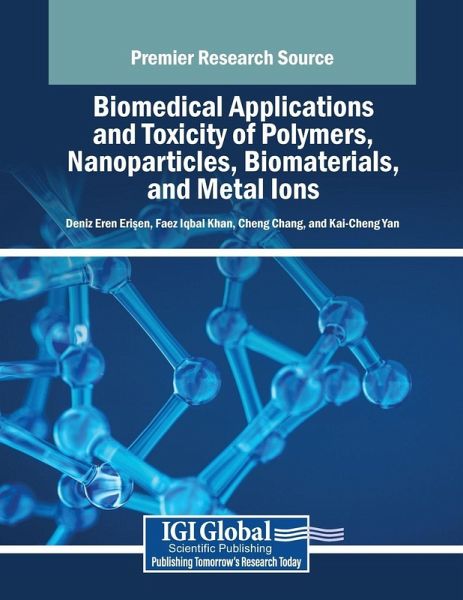
The rapid advancements in materials science are transforming the biomedical engineering and medical fields, leading to innovations like polymers, nanoparticles, biomaterials, and metal ions that hold great promise for drug delivery, tissue engineering, and diagnostic imaging. These materials offer groundbreaking potential but raise important concerns about their toxicity and biocompatibility, which must be addressed to ensure their safe integration into medical applications. Understanding how these materials interact with the human body is critical for developing effective, safe therapies and technologies. The ongoing research in this area has the potential to revolutionize healthcare, enhancing the treatment and prevention of various diseases while minimizing harmful side effects. Biomedical Applications and Toxicity of Polymers, Nanoparticles, Biomaterials, and Metal Ions provides a comprehensive overview of the biomedical applications and potential toxicity of various materials used in the field. It bridges the gap between laboratory research and clinical practice, facilitating the translation of research into practical solutions. Covering topics such as biomaterials, nanotechnology, and targeted therapy, this book is an excellent resource for researchers, scientists, medical professionals, policymakers, students, academicians, and more.