
Andere Kunden interessierten sich auch für
 Bleak House37,99 €
 The Works Of Charles Dickens: Bleak House37,99 €
 Bleak House28,99 €
 Bleak House41,99 €
") Bleak House (World Classics, Unabridged)33,99 €
Bleak House (World Classics, Unabridged)33,99 € Bleak House34,99 €
 Bleak House41,99 €

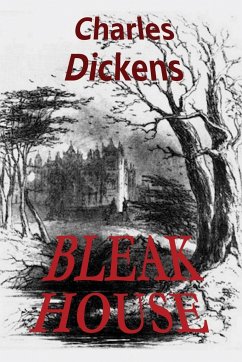

Bleak Housecharles dickensBleak House is a novel by English author Charles Dickens, first published as a serial between March 1852 and September 1853. The novel has many characters and several sub-plots, and the story is told partly by the novel's heroine, Esther Summerson, and partly by an omniscient narrator. At the centre of Bleak House is a long-running legal case, Jarndyce and Jarndyce, which came about because someone wrote several conflicting wills. Dickens uses this case to satirise the English judicial system. Though the legal profession criticised Dickens' satire as exaggerated, this novel helped support a judicial reform movement, which culminated in the enactment of legal reform in the 1870s.There is some debate among scholars as to when Bleak House is set. The English legal historian Sir William Holdsworth sets the action in 1827 however, reference to preparation for the building of a railway in Chapter LV suggests the 1830s.about the novel At the centre of Bleak House is the long-running legal case, Jarndyce and Jarndyce, inspired by a real-life Chancery case, which came about because someone wrote several conflicting wills, which than led to numerous family feuds, schemes and murder.Charles Dickens (1812-1870) was an English writer and social critic. He created some of the world's best-known fictional characters and is regarded as the greatest novelist of the Victorian era.