
Andere Kunden interessierten sich auch für
 IT Governance for Cloud Computing27,99 €
 Computer Application to Help Handicapped People Use Gmail27,99 €
 People Of The Web19,99 €
 Attitudes Of People Who Use Medical Services About Privacy Of EHR32,99 €
 Smart Glasses For Blind People33,99 €
 User-Centred Design for e-Health Applications for Elderly People43,99 €
 Weaving Services and People on the World Wide Web76,99 €






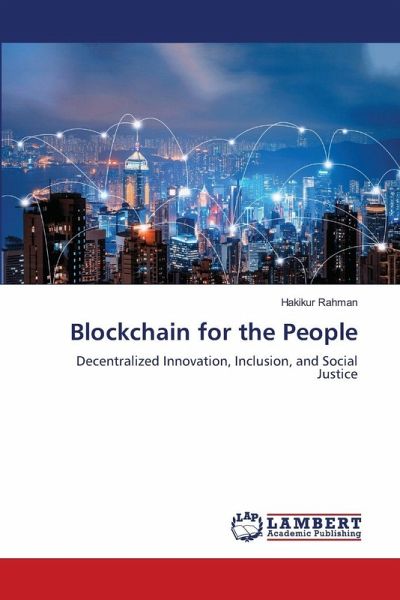
The twenty-first century's digital transformation has elevated blockchain as a technology of both promise and debate. Often reduced to cryptocurrencies, blockchain more broadly reimagines how trust, transparency, and accountability can be organized without central intermediaries. Yet its impact depends on who benefits and who is excluded. Blockchain for the People examines this technology through a people-centered lens, highlighting the gap between innovation narratives and the lived realities of marginalized communities. While blockchain is promoted for inclusion, identity, and governance, its adoption often reflects the interests of powerful actors, risking new forms of concentration. Building on my earlier work on AI in the Global South, this book approaches blockchain as a socio-technical system embedded in questions of power and justice. It explores theoretical foundations, policy frameworks, practical applications, and regional experiences, while addressing ethical and environmental challenges. Aimed at policymakers, scholars, and practitioners, the book encourages critical dialogue about designing and governing technologies for equitable and democratic futures.