
66,99 €
inkl. MwSt.
Versandkostenfrei*Erscheint vorauss. März 2026
Melden Sie sich
hier
hier
für den Produktalarm an, um über die Verfügbarkeit des Produkts informiert zu werden.

33 °P sammeln
Andere Kunden interessierten sich auch für
 Boccaccio's Last Fiction85,99 €
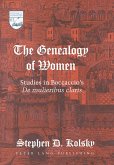
 The Genealogy of Women68,95 €
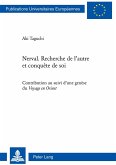
 Nerval. Recherche de l'autre et conquête de soi108,15 €
 Die maurische Kultur und Gesellschaft. Inwiefern wird dem Orient in Madame de Lafayettes "Zayde" ein negatives Bild zugeschrieben?15,95 €
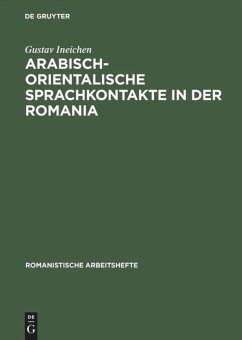
 Arabisch-orientalische Sprachkontakte in der Romania78,99 €
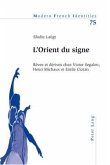
 L'Orient du signe55,95 €
 Der Orient in den französischen Briefromanen des 18. Jahrhunderts84,90 €



This book investigates representations of Other and spaces of Otherness in Boccaccio's works. Its first part is dedicated to Christian-Muslim relationships in the Decameron, then shifts to female characters crossing the sea in other people's clothes or denying their faith and culture. Rarely a place where conflicts are resolved, the Mediterranean is ultimately the "third space" in Bhabha's terms: its uniqueness is to be a place of hybridity rather than of homogeneity. It is a space of dissent where Boccaccio can narrate the darkest pages of the medieval trade in women and slaves.
The second part of the book explores Boccaccio's De Maumeth propheta Saracenorum (life of Muhammad), that has never been published before in English. Unlike his contemporaries - mainly religious writers like the Franciscan Paolino Veneto -, Boccaccio moved away from a moralistic condemnation of the cultural "Other" to invent a literary figure: Muhammad is the character of a story, and Islam the literary space in which that story unfolds.
The second part of the book explores Boccaccio's De Maumeth propheta Saracenorum (life of Muhammad), that has never been published before in English. Unlike his contemporaries - mainly religious writers like the Franciscan Paolino Veneto -, Boccaccio moved away from a moralistic condemnation of the cultural "Other" to invent a literary figure: Muhammad is the character of a story, and Islam the literary space in which that story unfolds.