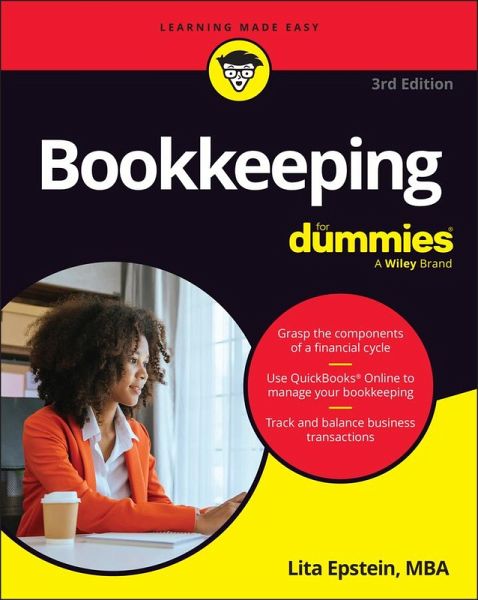
Practical bookkeeping for small businesses Bookkeeping For Dummies is your crash course on managing small business finances. You'll learn all about managing invoices, receipts, and payments; maintaining ledgers; reconciling bank statements; and doing everything else you need to ensure accurate and up-to-date financial records. Plus, the up-to-date tax information and accounting software changes in this guide helps keep you current and penalty-free. Inside... * Grasping bookkeeping basics * Understanding financial cycles * Depreciating assets * Preparing accurate reports * Streamlining payroll…mehr
Practical bookkeeping for small businesses Bookkeeping For Dummies is your crash course on managing small business finances. You'll learn all about managing invoices, receipts, and payments; maintaining ledgers; reconciling bank statements; and doing everything else you need to ensure accurate and up-to-date financial records. Plus, the up-to-date tax information and accounting software changes in this guide helps keep you current and penalty-free. Inside... * Grasping bookkeeping basics * Understanding financial cycles * Depreciating assets * Preparing accurate reports * Streamlining payroll * Figuring out balance sheets * Using accounting software * Keeping accounts secure
Lita Epstein, MBA, is a financial writer who focuses on career growth and business topics. She earned her MBA from Emory University and her BA from Rutgers University. Lita has written more than 50 books, including Reading Financial Reports For Dummies.
Inhaltsangabe
Introduction 1 Part 1: Basic Bookkeeping: Why You Need It 5 Chapter 1: So, You Want to Do the Books 7 Chapter 2: Getting Down to Bookkeeping Basics 17 Chapter 3: Outlining Your Financial Road Map with a Chart of Accounts. 29 Part 2: Keeping a Paper Trail 45 Chapter 4: Ledgers: A One-Stop Summary of Your Business Transactions 47 Chapter 5: Keeping Journals 59 Chapter 6: Computer Options for Your Bookkeeping 77 Chapter 7: Controlling Your Books, Your Records, and Your Money 87 Chapter 8: Securing Your Online Bookkeeping 105 Part 3: Tracking Your Day-to-Day Operations with Your Books 111 Chapter 9: Buying and Tracking Your Purchases 113 Chapter 10: Counting Your Sales 125 Chapter 11: Employee Payroll and Benefits 143 Chapter 12: Employer-Paid Taxes and Government Payroll Reporting 165 Part 4: Preparing the Books for Year's (or Month's) End 177 Chapter 13: Depreciating Your Assets 179 Chapter 14: Paying and Collecting Interest 189 Chapter 15: Proving Out the Cash 199 Chapter 16: Closing the Journals 213 Chapter 17: Checking Your Accuracy - By Trial and (Hopefully) No Error. 225 Chapter 18: Adjusting the Books 237 Part 5: Reporting Results and Starting Over 247 Chapter 19: Developing a Balance Sheet 249 Chapter 20: Producing an Income Statement 263 Chapter 21: Completing Year-End Payroll and Reports 277 Chapter 22: Satisfying the Tax Man 289 Chapter 23: Prepping the Books for a New Accounting Cycle 305 Part 6: The Part of Tens 311 Chapter 24: Top Ten Ways to Manage Your Business Cash with Your Books 313 Chapter 25: Top Ten (Okay, Eleven) Most Important Accounts for Any Bookkeeper 317 Glossary 321 Index 325
Introduction 1 Part 1: Basic Bookkeeping: Why You Need It 5 Chapter 1: So, You Want to Do the Books 7 Chapter 2: Getting Down to Bookkeeping Basics 17 Chapter 3: Outlining Your Financial Road Map with a Chart of Accounts. 29 Part 2: Keeping a Paper Trail 45 Chapter 4: Ledgers: A One-Stop Summary of Your Business Transactions 47 Chapter 5: Keeping Journals 59 Chapter 6: Computer Options for Your Bookkeeping 77 Chapter 7: Controlling Your Books, Your Records, and Your Money 87 Chapter 8: Securing Your Online Bookkeeping 105 Part 3: Tracking Your Day-to-Day Operations with Your Books 111 Chapter 9: Buying and Tracking Your Purchases 113 Chapter 10: Counting Your Sales 125 Chapter 11: Employee Payroll and Benefits 143 Chapter 12: Employer-Paid Taxes and Government Payroll Reporting 165 Part 4: Preparing the Books for Year's (or Month's) End 177 Chapter 13: Depreciating Your Assets 179 Chapter 14: Paying and Collecting Interest 189 Chapter 15: Proving Out the Cash 199 Chapter 16: Closing the Journals 213 Chapter 17: Checking Your Accuracy - By Trial and (Hopefully) No Error. 225 Chapter 18: Adjusting the Books 237 Part 5: Reporting Results and Starting Over 247 Chapter 19: Developing a Balance Sheet 249 Chapter 20: Producing an Income Statement 263 Chapter 21: Completing Year-End Payroll and Reports 277 Chapter 22: Satisfying the Tax Man 289 Chapter 23: Prepping the Books for a New Accounting Cycle 305 Part 6: The Part of Tens 311 Chapter 24: Top Ten Ways to Manage Your Business Cash with Your Books 313 Chapter 25: Top Ten (Okay, Eleven) Most Important Accounts for Any Bookkeeper 317 Glossary 321 Index 325
Es gelten unsere Allgemeinen Geschäftsbedingungen: www.buecher.de/agb
Impressum
www.buecher.de ist ein Internetauftritt der buecher.de internetstores GmbH
Geschäftsführung: Monica Sawhney | Roland Kölbl | Günter Hilger
Sitz der Gesellschaft: Batheyer Straße 115 - 117, 58099 Hagen
Postanschrift: Bürgermeister-Wegele-Str. 12, 86167 Augsburg
Amtsgericht Hagen HRB 13257
Steuernummer: 321/5800/1497
USt-IdNr: DE450055826