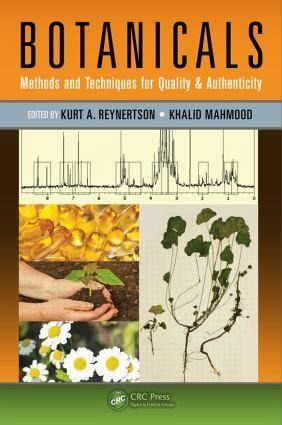
The international trade in plants is growing steadily as the worldwide demand for natural and botanical raw materials increases. In order to build assurance into the sourcing of natural ingredients, R&D organizations must have valid scientific matrices to authenticate the quality of those ingredients, provide traceability, and minimize risk. An assemblage of insight from expert contributors, this book compiles a range of methods and techniques that can be used to assure the quality, authenticity, and traceability of botanical raw materials for dietary supplements, cosmetics, and natural products research.…mehr
The international trade in plants is growing steadily as the worldwide demand for natural and botanical raw materials increases. In order to build assurance into the sourcing of natural ingredients, R&D organizations must have valid scientific matrices to authenticate the quality of those ingredients, provide traceability, and minimize risk. An assemblage of insight from expert contributors, this book compiles a range of methods and techniques that can be used to assure the quality, authenticity, and traceability of botanical raw materials for dietary supplements, cosmetics, and natural products research.
Kurt A. Reynertson has worked in natural products chemistry for over 15 years and published numerous research articles in international journals. He completed his PhD in phytochemistry at the City University of New York and worked as a postdoctoral researcher in cancer pharmacology at Weill Cornell Medical College before joining the Naturals Platform team at Johnson & Johnson Consumer Products, Inc. His work is primarily focused on early discovery R&D, which puts him on the front lines of botanical quality and authenticity issues. Khalid Mahmood earned a PhD in organic synthesis chemistry from the University of Karachi in Pakistan. Since his arrival in the United States, he has accumulated significant exposure in the areas of brain receptor research at University of Pittsburgh and consumer products research working for small-sized companies in Illinois and California. For the past eight years, Dr. Mahmood has been the Naturals Platform leader at Johnson & Johnson Consumer Products, Inc. His combined experience from various sectors has helped him obtain inventorships on eight patents and multiple patent applications for natural technologies useful for personal care products.
Inhaltsangabe
The Importance of Quality and Authenticity for Botanical R&D. The Importance of Proper Selection of Product Quality Specifications and Methods of Analysis for Botanical Product Evaluation. Cultivating Botanicals for Sensory Quality: From Good Agricultural Practices to Taste Discernment by Smallholder Tea Farmers. Using Traditional Taxonomy and Vouchers in Authentication and Quality Control. The DNA Toolkit: A Practical User's Guide to Genetic Methods of Botanical Authentication. Metabolic Profiling and Proper Identification of Botanicals: A Case Study of Black Cohosh. A Model for Nontargeted Detection of Adulterants. The Promise of Class Prediction: How Multivariate Statistics Can Help Determine Botanical Quality and Authenticity. Conformation of Botanical or Bio- Based Materials by Radiocarbon and Stable Isotope Ratio Analysis. Botanical Isoscapes: Emerging Stable Isotope Tools for Authentication and Geographic Sourcing. Nuclear Magnetic Resonance: A Revolutionary Tool for Nutraceutical Analysis. Quality and Authenticity of Complex Natural Mixtures: Analysis of Honey Using NMR Spectroscopy and Statistics. Application of CRAFT to Data Reduction of NMR Spectra of Botanical Samples. Practical Use of FT-NIR for Identification and Qualification of Botanicals: A Fit-for-Purpose Approach. High-Performance Thin-Layer Chromatography for the Identification of Botanical Materials and the Detection of Adulteration. Sensory and Chemical Fingerprinting Aids Quality and Authentication of Ingredients and Raw Materials of Vegetal Origin. The Hidden Face of Botanical Identity: An Industrial Perspective on Challenges from Natural Variability and Commercial Processes on Botanical Authenticity. Aspects of Quality Issues Faced by Botanicals Used as Cosmetic Ingredients. Index.
The Importance of Quality and Authenticity for Botanical R&D. The Importance of Proper Selection of Product Quality Specifications and Methods of Analysis for Botanical Product Evaluation. Cultivating Botanicals for Sensory Quality: From Good Agricultural Practices to Taste Discernment by Smallholder Tea Farmers. Using Traditional Taxonomy and Vouchers in Authentication and Quality Control. The DNA Toolkit: A Practical User's Guide to Genetic Methods of Botanical Authentication. Metabolic Profiling and Proper Identification of Botanicals: A Case Study of Black Cohosh. A Model for Nontargeted Detection of Adulterants. The Promise of Class Prediction: How Multivariate Statistics Can Help Determine Botanical Quality and Authenticity. Conformation of Botanical or Bio- Based Materials by Radiocarbon and Stable Isotope Ratio Analysis. Botanical Isoscapes: Emerging Stable Isotope Tools for Authentication and Geographic Sourcing. Nuclear Magnetic Resonance: A Revolutionary Tool for Nutraceutical Analysis. Quality and Authenticity of Complex Natural Mixtures: Analysis of Honey Using NMR Spectroscopy and Statistics. Application of CRAFT to Data Reduction of NMR Spectra of Botanical Samples. Practical Use of FT-NIR for Identification and Qualification of Botanicals: A Fit-for-Purpose Approach. High-Performance Thin-Layer Chromatography for the Identification of Botanical Materials and the Detection of Adulteration. Sensory and Chemical Fingerprinting Aids Quality and Authentication of Ingredients and Raw Materials of Vegetal Origin. The Hidden Face of Botanical Identity: An Industrial Perspective on Challenges from Natural Variability and Commercial Processes on Botanical Authenticity. Aspects of Quality Issues Faced by Botanicals Used as Cosmetic Ingredients. Index.
Es gelten unsere Allgemeinen Geschäftsbedingungen: www.buecher.de/agb
Impressum
www.buecher.de ist ein Internetauftritt der buecher.de internetstores GmbH
Geschäftsführung: Monica Sawhney | Roland Kölbl | Günter Hilger
Sitz der Gesellschaft: Batheyer Straße 115 - 117, 58099 Hagen
Postanschrift: Bürgermeister-Wegele-Str. 12, 86167 Augsburg
Amtsgericht Hagen HRB 13257
Steuernummer: 321/5800/1497
USt-IdNr: DE450055826