
- Gebundenes Buch
- Merkliste
- Auf die Merkliste
- Bewerten Bewerten
- Teilen
- Produkt teilen
- Produkterinnerung
- Produkterinnerung
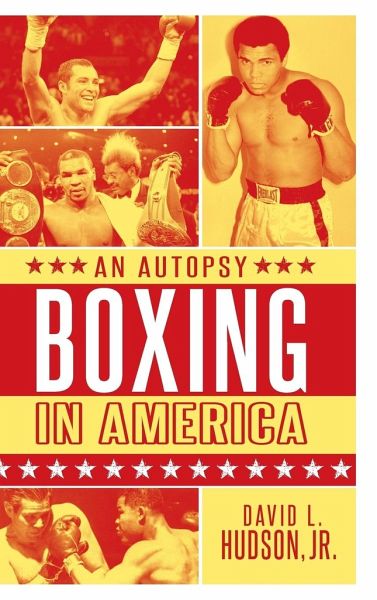
This book presents a sweeping view of boxing in the United States and the influence of the sport on American culture. Boxing has long been a popular fixture of American sport and culture, despite its decidedly seedy side (the fact that numerous boxing champions acquired their skills in prison or reform schools, the corruption and greed of certain boxing promoters, and the involvement of the mob in fixing the outcome of many big fights). Yet boxing remains an iconic and widely popular spectator sport, even in light of its decline as a result of the recent burgeoning interest in mixed martial…mehr
Andere Kunden interessierten sich auch für
 Rob BeamishSteroids53,99 €
 James B. DworkinOwners Versus Players89,99 €
 Harold VanderzwaagPolicy Development in Sport Management101,99 €
 Outdoor Recreation Policy89,99 €
 Daniel MarburgerStee-Rike Four! What's Wrong with the Business of Baseball?88,99 €
 Daniel RosenDope53,99 €
 Martin VinokurMore Than a Game70,99 €
-
-
-



This book presents a sweeping view of boxing in the United States and the influence of the sport on American culture. Boxing has long been a popular fixture of American sport and culture, despite its decidedly seedy side (the fact that numerous boxing champions acquired their skills in prison or reform schools, the corruption and greed of certain boxing promoters, and the involvement of the mob in fixing the outcome of many big fights). Yet boxing remains an iconic and widely popular spectator sport, even in light of its decline as a result of the recent burgeoning interest in mixed martial arts (MMA) contests. What had made this sport so enthralling to our nation for such a long period of time? This book contains much more than simple documentation of the significant dates, people, and bouts in the history of American boxing. It reveals why boxing became one of America's leading spectator sports at the turn of the century and examines the factors that have swayed the public's perception of it, thereby affecting its popularity. In Boxing in America, the author provides a compelling view of not only the pugilist sport, but also of our country, our sources of entertainment, and ourselves.
Produktdetails
- Produktdetails
- Verlag: Praeger
- Seitenzahl: 216
- Erscheinungstermin: 21. Juni 2012
- Englisch
- Abmessung: 240mm x 161mm x 16mm
- Gewicht: 493g
- ISBN-13: 9780313379727
- ISBN-10: 0313379726
- Artikelnr.: 30883264
- Herstellerkennzeichnung
- Libri GmbH
- Europaallee 1
- 36244 Bad Hersfeld
- gpsr@libri.de
- Verlag: Praeger
- Seitenzahl: 216
- Erscheinungstermin: 21. Juni 2012
- Englisch
- Abmessung: 240mm x 161mm x 16mm
- Gewicht: 493g
- ISBN-13: 9780313379727
- ISBN-10: 0313379726
- Artikelnr.: 30883264
- Herstellerkennzeichnung
- Libri GmbH
- Europaallee 1
- 36244 Bad Hersfeld
- gpsr@libri.de
David L. Hudson Jr. is an award-winning professor at Belmont University College of Law, USA, where he teaches constitutional law and First Amendment law.
The sport of boxing possesses a primal power that seeps into one's soul.
Perhaps it appeals to innate violent instincts. Perhaps it compels
attention because of its naked drama. Two men-or women-attempt to batter
each other senseless, to render the opponent unconscious. For whatever
reason, it creates addicts out of its aficionados, who crave another high.
Think of the epic "Thrilla in Manila"-the fatalistic, fistic encounter
between Muhammad Ali and Joe Frazier that concluded their trilogy. Consider
"Irish" Micky Ward and the late Arturo Gatti, who waged their own
trilogy-albeit on a lesser plane. Think of Jose Luis Castillo and the late
warrior Diego Corrales, who beat each other senseless.
No doubt, boxing suffers from certain woes. Some wish that it would be
abolished as barbaric baseness. The medical community and others urge its
abolition, the underworld has seized it as its own, and the greedy have
sought to exploit its participants.
For all its warts, boxing remains a beautiful art when practiced at its
finest. There remains no more superbly conditioned athlete than a
top-flight professional boxer. The best boxers-those who have mastered the
science of pugilism-possess an uncanny, almost unnatural power over others.
But, at its heart, the sport of boxing attracts-or demands-attention
because of its brutal simplicity.
It has inspired the best of writers to tap deep into their creativity.
Consider that Ernest Hemingway, Jack London, Norman Mailer, and Joyce Carol
Oates have committed their considerable literary talents to writing about
the sport.
Boxing in America: An Autopsy takes a panoramic view of the sport of boxing
by covering different fighters, different eras, and different subjects.
Much of the book focuses on the dominant heavyweight champions of certain
time periods. There are many great fighters in the lighter weight classes,
but the heavyweight champions have garnered the most attention and the most
acclaim. Just as the United States Supreme Court is known by the last name
of the Chief Justice-the Warren Court after Chief Justice Earl
Warren-boxing often is known by the holder of the heavyweight crown. We
speak of the age of Louis, the age of Ali, or the age of Tyson.
John L. Sullivan-the last bare-knuckle heavyweight champion-dominates the
discussion in chapter 1. The bravado, charisma, and natural punching power
catapulted the "Boston Strong Boy" to fame and fortune. He became a bona
fide American sports hero.
Chapter 2 focuses on as compelling and divisive a subject that the United
States of America ever has grappled with-the specter of race and racism.
For many years, an abject color bar prevented the top black fighters from
receiving their "just due"-to quote former heavyweight champion Larry
Holmes. The centerpiece of chapter 2 focuses on the life of Jack Johnson,
the colorful, controversial champion who inspired visceral hatred from
white America.
Johnson cast a long shadow over the sport of boxing, long enough that it
took years for another African American to receive a shot at the
heavyweight crown. Chapter 3 looks at a man who became a genuine American
hero-Joseph Louis Barrow, better known as Joe Louis. The "Brown Bomber"
held the heavyweight championship for more than a decade, defending his
title an astonishing 25 times.
Louis started a trend that continued for many years-of African Americans
dominating boxing in the heavyweight division. A prominent exception was an
Italian American from Brockton, Massachusetts, named Rocky Marciano
(covered in chapter 4). "The Rock" never lost a professional fight,
compiling a record of 49-0. He personified the 1950s, when America felt
good about itself, a golden age of sorts.
The 1960s were a different, more volatile time in U.S. history. The civil
rights movement and the Vietnam War created a vortex of social activism
unmatched in modern U.S. history. Out of this mix came a loquacious
lightning rod named at birth as Cassius Marcellus Clay, covered in chapter
5. He converted to Islam, changed his name to Muhammad Ali, and became a
vilified figure. This hated figure later became the most recognizable-and
perhaps most beloved-figure on the planet. He truly was incomparable.
Turning from the incomparable to the improbable, there perhaps is no
greater comeback in the sport of boxing than that of a former champion in
the 1970s who returned to the ring amid cries of ridicule in the late 1980s
as an overweight preacher. This former sullen monster of a man literally
transformed himself into a different person and regained the heavyweight
title in the most improbable fashion at age 45. Chapter 6 tells the
inspiring story of "Big" George Foreman. Chapter 7 then tells the
incredible story of "Iron" Mike Tyson-a compelling if tragic figure in the
sport of boxing.
After examining several ages of boxing through the prism of heavyweight
greats, the book turns to other serious topics. Much of the book focuses on
dominant champions and top contenders. But the lifeblood of the sport, the
club fighters who ply their trade without fanfare, are called journeymen.
They travel to other fighters' hometowns on short notice against long odds.
Most of the time, journeymen lose either legitimately or by hometown
decisions. But sometimes they reach up and grab the brass ring. Prospects
and champions start their career by facing these fighters. Chapter 8
highlights some of the more unusual journeymen of recent vintage in
American boxing.
Chapter 9 focuses on the most controversial aspect of boxing: death in the
ring. Boxing inflicts punishment on its combatants in most brutal fashion.
While a precious few boxers have become nonagenarians-former champion Max
Schmeling lived to age 99-many have not survived brutal ring encounters.
The images of a beaten Benny "Kid" Paret slumped in the corner still
horrify those who saw it. Too other pugilists have met the same tragic end.
Boxing and prison have had a unique relationship for many years. In prison,
an inmate literally must fight to survive; the same stark phenomenon takes
place in the boxing ring. Many prominent fighters learned boxing behind
bars. A few even fought professionally as prison inmates. Chapter 10
focuses on one of the most mystifying characters in all of boxing
history-Charles "Sonny" Liston.
Finally, the book concludes with chapter 11, "The Future of Boxing and the
Threat of Mixed Martial Arts." Boxing has taken a beating in recent years,
while another sport-mixed martial arts-has attracted greater crowds and
generated more fight cards. Mixed martial arts-particularly at the highest
level in the Ultimate Fighting Championship (UFC)-have mastered the art of
putting on competitive cards, matching the best fighters against each
other, and avoiding the promotional tug-of-wars that sometimes afflict
boxing.
I am one of those souls addicted to the sport of boxing, loving it with
every sinew in my body. Whether writing books about the sport or judging
professional boxing bouts, I believe there is no more compelling drama in
all of sports than a competitive boxing match.
Perhaps it appeals to innate violent instincts. Perhaps it compels
attention because of its naked drama. Two men-or women-attempt to batter
each other senseless, to render the opponent unconscious. For whatever
reason, it creates addicts out of its aficionados, who crave another high.
Think of the epic "Thrilla in Manila"-the fatalistic, fistic encounter
between Muhammad Ali and Joe Frazier that concluded their trilogy. Consider
"Irish" Micky Ward and the late Arturo Gatti, who waged their own
trilogy-albeit on a lesser plane. Think of Jose Luis Castillo and the late
warrior Diego Corrales, who beat each other senseless.
No doubt, boxing suffers from certain woes. Some wish that it would be
abolished as barbaric baseness. The medical community and others urge its
abolition, the underworld has seized it as its own, and the greedy have
sought to exploit its participants.
For all its warts, boxing remains a beautiful art when practiced at its
finest. There remains no more superbly conditioned athlete than a
top-flight professional boxer. The best boxers-those who have mastered the
science of pugilism-possess an uncanny, almost unnatural power over others.
But, at its heart, the sport of boxing attracts-or demands-attention
because of its brutal simplicity.
It has inspired the best of writers to tap deep into their creativity.
Consider that Ernest Hemingway, Jack London, Norman Mailer, and Joyce Carol
Oates have committed their considerable literary talents to writing about
the sport.
Boxing in America: An Autopsy takes a panoramic view of the sport of boxing
by covering different fighters, different eras, and different subjects.
Much of the book focuses on the dominant heavyweight champions of certain
time periods. There are many great fighters in the lighter weight classes,
but the heavyweight champions have garnered the most attention and the most
acclaim. Just as the United States Supreme Court is known by the last name
of the Chief Justice-the Warren Court after Chief Justice Earl
Warren-boxing often is known by the holder of the heavyweight crown. We
speak of the age of Louis, the age of Ali, or the age of Tyson.
John L. Sullivan-the last bare-knuckle heavyweight champion-dominates the
discussion in chapter 1. The bravado, charisma, and natural punching power
catapulted the "Boston Strong Boy" to fame and fortune. He became a bona
fide American sports hero.
Chapter 2 focuses on as compelling and divisive a subject that the United
States of America ever has grappled with-the specter of race and racism.
For many years, an abject color bar prevented the top black fighters from
receiving their "just due"-to quote former heavyweight champion Larry
Holmes. The centerpiece of chapter 2 focuses on the life of Jack Johnson,
the colorful, controversial champion who inspired visceral hatred from
white America.
Johnson cast a long shadow over the sport of boxing, long enough that it
took years for another African American to receive a shot at the
heavyweight crown. Chapter 3 looks at a man who became a genuine American
hero-Joseph Louis Barrow, better known as Joe Louis. The "Brown Bomber"
held the heavyweight championship for more than a decade, defending his
title an astonishing 25 times.
Louis started a trend that continued for many years-of African Americans
dominating boxing in the heavyweight division. A prominent exception was an
Italian American from Brockton, Massachusetts, named Rocky Marciano
(covered in chapter 4). "The Rock" never lost a professional fight,
compiling a record of 49-0. He personified the 1950s, when America felt
good about itself, a golden age of sorts.
The 1960s were a different, more volatile time in U.S. history. The civil
rights movement and the Vietnam War created a vortex of social activism
unmatched in modern U.S. history. Out of this mix came a loquacious
lightning rod named at birth as Cassius Marcellus Clay, covered in chapter
5. He converted to Islam, changed his name to Muhammad Ali, and became a
vilified figure. This hated figure later became the most recognizable-and
perhaps most beloved-figure on the planet. He truly was incomparable.
Turning from the incomparable to the improbable, there perhaps is no
greater comeback in the sport of boxing than that of a former champion in
the 1970s who returned to the ring amid cries of ridicule in the late 1980s
as an overweight preacher. This former sullen monster of a man literally
transformed himself into a different person and regained the heavyweight
title in the most improbable fashion at age 45. Chapter 6 tells the
inspiring story of "Big" George Foreman. Chapter 7 then tells the
incredible story of "Iron" Mike Tyson-a compelling if tragic figure in the
sport of boxing.
After examining several ages of boxing through the prism of heavyweight
greats, the book turns to other serious topics. Much of the book focuses on
dominant champions and top contenders. But the lifeblood of the sport, the
club fighters who ply their trade without fanfare, are called journeymen.
They travel to other fighters' hometowns on short notice against long odds.
Most of the time, journeymen lose either legitimately or by hometown
decisions. But sometimes they reach up and grab the brass ring. Prospects
and champions start their career by facing these fighters. Chapter 8
highlights some of the more unusual journeymen of recent vintage in
American boxing.
Chapter 9 focuses on the most controversial aspect of boxing: death in the
ring. Boxing inflicts punishment on its combatants in most brutal fashion.
While a precious few boxers have become nonagenarians-former champion Max
Schmeling lived to age 99-many have not survived brutal ring encounters.
The images of a beaten Benny "Kid" Paret slumped in the corner still
horrify those who saw it. Too other pugilists have met the same tragic end.
Boxing and prison have had a unique relationship for many years. In prison,
an inmate literally must fight to survive; the same stark phenomenon takes
place in the boxing ring. Many prominent fighters learned boxing behind
bars. A few even fought professionally as prison inmates. Chapter 10
focuses on one of the most mystifying characters in all of boxing
history-Charles "Sonny" Liston.
Finally, the book concludes with chapter 11, "The Future of Boxing and the
Threat of Mixed Martial Arts." Boxing has taken a beating in recent years,
while another sport-mixed martial arts-has attracted greater crowds and
generated more fight cards. Mixed martial arts-particularly at the highest
level in the Ultimate Fighting Championship (UFC)-have mastered the art of
putting on competitive cards, matching the best fighters against each
other, and avoiding the promotional tug-of-wars that sometimes afflict
boxing.
I am one of those souls addicted to the sport of boxing, loving it with
every sinew in my body. Whether writing books about the sport or judging
professional boxing bouts, I believe there is no more compelling drama in
all of sports than a competitive boxing match.
The sport of boxing possesses a primal power that seeps into one's soul.
Perhaps it appeals to innate violent instincts. Perhaps it compels
attention because of its naked drama. Two men-or women-attempt to batter
each other senseless, to render the opponent unconscious. For whatever
reason, it creates addicts out of its aficionados, who crave another high.
Think of the epic "Thrilla in Manila"-the fatalistic, fistic encounter
between Muhammad Ali and Joe Frazier that concluded their trilogy. Consider
"Irish" Micky Ward and the late Arturo Gatti, who waged their own
trilogy-albeit on a lesser plane. Think of Jose Luis Castillo and the late
warrior Diego Corrales, who beat each other senseless.
No doubt, boxing suffers from certain woes. Some wish that it would be
abolished as barbaric baseness. The medical community and others urge its
abolition, the underworld has seized it as its own, and the greedy have
sought to exploit its participants.
For all its warts, boxing remains a beautiful art when practiced at its
finest. There remains no more superbly conditioned athlete than a
top-flight professional boxer. The best boxers-those who have mastered the
science of pugilism-possess an uncanny, almost unnatural power over others.
But, at its heart, the sport of boxing attracts-or demands-attention
because of its brutal simplicity.
It has inspired the best of writers to tap deep into their creativity.
Consider that Ernest Hemingway, Jack London, Norman Mailer, and Joyce Carol
Oates have committed their considerable literary talents to writing about
the sport.
Boxing in America: An Autopsy takes a panoramic view of the sport of boxing
by covering different fighters, different eras, and different subjects.
Much of the book focuses on the dominant heavyweight champions of certain
time periods. There are many great fighters in the lighter weight classes,
but the heavyweight champions have garnered the most attention and the most
acclaim. Just as the United States Supreme Court is known by the last name
of the Chief Justice-the Warren Court after Chief Justice Earl
Warren-boxing often is known by the holder of the heavyweight crown. We
speak of the age of Louis, the age of Ali, or the age of Tyson.
John L. Sullivan-the last bare-knuckle heavyweight champion-dominates the
discussion in chapter 1. The bravado, charisma, and natural punching power
catapulted the "Boston Strong Boy" to fame and fortune. He became a bona
fide American sports hero.
Chapter 2 focuses on as compelling and divisive a subject that the United
States of America ever has grappled with-the specter of race and racism.
For many years, an abject color bar prevented the top black fighters from
receiving their "just due"-to quote former heavyweight champion Larry
Holmes. The centerpiece of chapter 2 focuses on the life of Jack Johnson,
the colorful, controversial champion who inspired visceral hatred from
white America.
Johnson cast a long shadow over the sport of boxing, long enough that it
took years for another African American to receive a shot at the
heavyweight crown. Chapter 3 looks at a man who became a genuine American
hero-Joseph Louis Barrow, better known as Joe Louis. The "Brown Bomber"
held the heavyweight championship for more than a decade, defending his
title an astonishing 25 times.
Louis started a trend that continued for many years-of African Americans
dominating boxing in the heavyweight division. A prominent exception was an
Italian American from Brockton, Massachusetts, named Rocky Marciano
(covered in chapter 4). "The Rock" never lost a professional fight,
compiling a record of 49-0. He personified the 1950s, when America felt
good about itself, a golden age of sorts.
The 1960s were a different, more volatile time in U.S. history. The civil
rights movement and the Vietnam War created a vortex of social activism
unmatched in modern U.S. history. Out of this mix came a loquacious
lightning rod named at birth as Cassius Marcellus Clay, covered in chapter
5. He converted to Islam, changed his name to Muhammad Ali, and became a
vilified figure. This hated figure later became the most recognizable-and
perhaps most beloved-figure on the planet. He truly was incomparable.
Turning from the incomparable to the improbable, there perhaps is no
greater comeback in the sport of boxing than that of a former champion in
the 1970s who returned to the ring amid cries of ridicule in the late 1980s
as an overweight preacher. This former sullen monster of a man literally
transformed himself into a different person and regained the heavyweight
title in the most improbable fashion at age 45. Chapter 6 tells the
inspiring story of "Big" George Foreman. Chapter 7 then tells the
incredible story of "Iron" Mike Tyson-a compelling if tragic figure in the
sport of boxing.
After examining several ages of boxing through the prism of heavyweight
greats, the book turns to other serious topics. Much of the book focuses on
dominant champions and top contenders. But the lifeblood of the sport, the
club fighters who ply their trade without fanfare, are called journeymen.
They travel to other fighters' hometowns on short notice against long odds.
Most of the time, journeymen lose either legitimately or by hometown
decisions. But sometimes they reach up and grab the brass ring. Prospects
and champions start their career by facing these fighters. Chapter 8
highlights some of the more unusual journeymen of recent vintage in
American boxing.
Chapter 9 focuses on the most controversial aspect of boxing: death in the
ring. Boxing inflicts punishment on its combatants in most brutal fashion.
While a precious few boxers have become nonagenarians-former champion Max
Schmeling lived to age 99-many have not survived brutal ring encounters.
The images of a beaten Benny "Kid" Paret slumped in the corner still
horrify those who saw it. Too other pugilists have met the same tragic end.
Boxing and prison have had a unique relationship for many years. In prison,
an inmate literally must fight to survive; the same stark phenomenon takes
place in the boxing ring. Many prominent fighters learned boxing behind
bars. A few even fought professionally as prison inmates. Chapter 10
focuses on one of the most mystifying characters in all of boxing
history-Charles "Sonny" Liston.
Finally, the book concludes with chapter 11, "The Future of Boxing and the
Threat of Mixed Martial Arts." Boxing has taken a beating in recent years,
while another sport-mixed martial arts-has attracted greater crowds and
generated more fight cards. Mixed martial arts-particularly at the highest
level in the Ultimate Fighting Championship (UFC)-have mastered the art of
putting on competitive cards, matching the best fighters against each
other, and avoiding the promotional tug-of-wars that sometimes afflict
boxing.
I am one of those souls addicted to the sport of boxing, loving it with
every sinew in my body. Whether writing books about the sport or judging
professional boxing bouts, I believe there is no more compelling drama in
all of sports than a competitive boxing match.
Perhaps it appeals to innate violent instincts. Perhaps it compels
attention because of its naked drama. Two men-or women-attempt to batter
each other senseless, to render the opponent unconscious. For whatever
reason, it creates addicts out of its aficionados, who crave another high.
Think of the epic "Thrilla in Manila"-the fatalistic, fistic encounter
between Muhammad Ali and Joe Frazier that concluded their trilogy. Consider
"Irish" Micky Ward and the late Arturo Gatti, who waged their own
trilogy-albeit on a lesser plane. Think of Jose Luis Castillo and the late
warrior Diego Corrales, who beat each other senseless.
No doubt, boxing suffers from certain woes. Some wish that it would be
abolished as barbaric baseness. The medical community and others urge its
abolition, the underworld has seized it as its own, and the greedy have
sought to exploit its participants.
For all its warts, boxing remains a beautiful art when practiced at its
finest. There remains no more superbly conditioned athlete than a
top-flight professional boxer. The best boxers-those who have mastered the
science of pugilism-possess an uncanny, almost unnatural power over others.
But, at its heart, the sport of boxing attracts-or demands-attention
because of its brutal simplicity.
It has inspired the best of writers to tap deep into their creativity.
Consider that Ernest Hemingway, Jack London, Norman Mailer, and Joyce Carol
Oates have committed their considerable literary talents to writing about
the sport.
Boxing in America: An Autopsy takes a panoramic view of the sport of boxing
by covering different fighters, different eras, and different subjects.
Much of the book focuses on the dominant heavyweight champions of certain
time periods. There are many great fighters in the lighter weight classes,
but the heavyweight champions have garnered the most attention and the most
acclaim. Just as the United States Supreme Court is known by the last name
of the Chief Justice-the Warren Court after Chief Justice Earl
Warren-boxing often is known by the holder of the heavyweight crown. We
speak of the age of Louis, the age of Ali, or the age of Tyson.
John L. Sullivan-the last bare-knuckle heavyweight champion-dominates the
discussion in chapter 1. The bravado, charisma, and natural punching power
catapulted the "Boston Strong Boy" to fame and fortune. He became a bona
fide American sports hero.
Chapter 2 focuses on as compelling and divisive a subject that the United
States of America ever has grappled with-the specter of race and racism.
For many years, an abject color bar prevented the top black fighters from
receiving their "just due"-to quote former heavyweight champion Larry
Holmes. The centerpiece of chapter 2 focuses on the life of Jack Johnson,
the colorful, controversial champion who inspired visceral hatred from
white America.
Johnson cast a long shadow over the sport of boxing, long enough that it
took years for another African American to receive a shot at the
heavyweight crown. Chapter 3 looks at a man who became a genuine American
hero-Joseph Louis Barrow, better known as Joe Louis. The "Brown Bomber"
held the heavyweight championship for more than a decade, defending his
title an astonishing 25 times.
Louis started a trend that continued for many years-of African Americans
dominating boxing in the heavyweight division. A prominent exception was an
Italian American from Brockton, Massachusetts, named Rocky Marciano
(covered in chapter 4). "The Rock" never lost a professional fight,
compiling a record of 49-0. He personified the 1950s, when America felt
good about itself, a golden age of sorts.
The 1960s were a different, more volatile time in U.S. history. The civil
rights movement and the Vietnam War created a vortex of social activism
unmatched in modern U.S. history. Out of this mix came a loquacious
lightning rod named at birth as Cassius Marcellus Clay, covered in chapter
5. He converted to Islam, changed his name to Muhammad Ali, and became a
vilified figure. This hated figure later became the most recognizable-and
perhaps most beloved-figure on the planet. He truly was incomparable.
Turning from the incomparable to the improbable, there perhaps is no
greater comeback in the sport of boxing than that of a former champion in
the 1970s who returned to the ring amid cries of ridicule in the late 1980s
as an overweight preacher. This former sullen monster of a man literally
transformed himself into a different person and regained the heavyweight
title in the most improbable fashion at age 45. Chapter 6 tells the
inspiring story of "Big" George Foreman. Chapter 7 then tells the
incredible story of "Iron" Mike Tyson-a compelling if tragic figure in the
sport of boxing.
After examining several ages of boxing through the prism of heavyweight
greats, the book turns to other serious topics. Much of the book focuses on
dominant champions and top contenders. But the lifeblood of the sport, the
club fighters who ply their trade without fanfare, are called journeymen.
They travel to other fighters' hometowns on short notice against long odds.
Most of the time, journeymen lose either legitimately or by hometown
decisions. But sometimes they reach up and grab the brass ring. Prospects
and champions start their career by facing these fighters. Chapter 8
highlights some of the more unusual journeymen of recent vintage in
American boxing.
Chapter 9 focuses on the most controversial aspect of boxing: death in the
ring. Boxing inflicts punishment on its combatants in most brutal fashion.
While a precious few boxers have become nonagenarians-former champion Max
Schmeling lived to age 99-many have not survived brutal ring encounters.
The images of a beaten Benny "Kid" Paret slumped in the corner still
horrify those who saw it. Too other pugilists have met the same tragic end.
Boxing and prison have had a unique relationship for many years. In prison,
an inmate literally must fight to survive; the same stark phenomenon takes
place in the boxing ring. Many prominent fighters learned boxing behind
bars. A few even fought professionally as prison inmates. Chapter 10
focuses on one of the most mystifying characters in all of boxing
history-Charles "Sonny" Liston.
Finally, the book concludes with chapter 11, "The Future of Boxing and the
Threat of Mixed Martial Arts." Boxing has taken a beating in recent years,
while another sport-mixed martial arts-has attracted greater crowds and
generated more fight cards. Mixed martial arts-particularly at the highest
level in the Ultimate Fighting Championship (UFC)-have mastered the art of
putting on competitive cards, matching the best fighters against each
other, and avoiding the promotional tug-of-wars that sometimes afflict
boxing.
I am one of those souls addicted to the sport of boxing, loving it with
every sinew in my body. Whether writing books about the sport or judging
professional boxing bouts, I believe there is no more compelling drama in
all of sports than a competitive boxing match.