
Andere Kunden interessierten sich auch für
 When the Glass Slipper Breaks27,99 €
 Women at the World's Crossroads29,99 €
 The Love Stories of the Bible Speak22,99 €
 Woman Evolve22,99 €
 Nothing Wasted24,99 €
![The Lost Art of Leadership: Modeling-Mentoring-Multiplication [With Excerpt from Ultimate Leadership Training Course]]( "The Lost Art of Leadership: Modeling-Mentoring-Multiplication [With Excerpt from Ultimate Leadership Training Course]") The Lost Art of Leadership: Modeling-Mentoring-Multiplication [With Excerpt from Ultimate Leadership Training Course]12,99 €
The Lost Art of Leadership: Modeling-Mentoring-Multiplication [With Excerpt from Ultimate Leadership Training Course]12,99 € Power Moves22,99 €





![The Lost Art of Leadership: Modeling-Mentoring-Multiplication [With Excerpt from Ultimate Leadership Training Course]](https://bilder.buecher.de/produkte/59/59811/59811423m.jpg "The Lost Art of Leadership: Modeling-Mentoring-Multiplication [With Excerpt from Ultimate Leadership Training Course]")

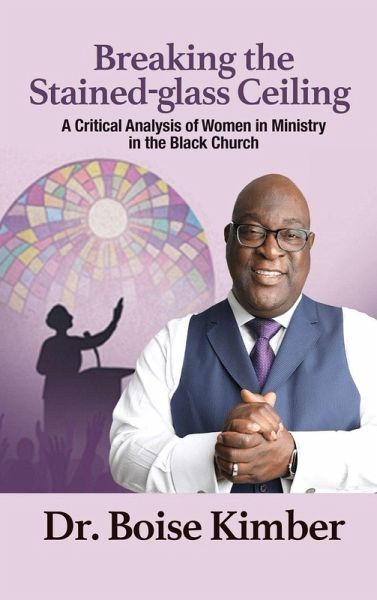
According to The State of the Clergy Woman in the U.S. (2018), women comprise 50 to 75 percent of church membership. They fill the choir stands and pews, fund ministries, and nurture the next generation of believers. Yet, they hold only 10 percent of leadership roles and account for less than 1 percent of senior pastor positions. This disparity is not merely an oversight-it is a theological crisis that raises urgent questions: Can women be licensed to preach if they have demonstrated a divine call to ministry? Can they be ordained after a thorough examination of their Christian experience, call, and doctrine? Can they be appointed as pastors after completing rigorous seminary education and pastoral training? These questions lie at the center of ongoing debates in African American Baptist communities, intensified by the recent Southern Baptist Convention's decision to exclude women from pastoral roles. To deny women full access to ministerial and leadership roles is not only unjust-it is un-Christlike. It reflects the same oppressive spirit that once sought to keep an entire people in bondage and still marginalizes Black women in society and the church.Biblical scholarship affirms that the apostle Paul's-not Jesus'-admonitions in 1 Corinthians 14:34-35 and 1 Timothy 2:11-12 must be read in their historical and cultural contexts, rather than as universal prohibitions against women in ministry. These passages addressed specific challenges in the early church, including maintaining order and curbing disruptions during worship. Taken as timeless commands, they would imply that women should withhold their time, gifts, talents, and treasure-a reality that would be catastrophic for the Black church. Similarly, focusing solely on Paul's requirement that a pastor be "the husband of one wife" (1 Timothy 3:2, KJV) while neglecting other qualifications-being "above reproach," "self-controlled," and "able to teach" (NIV)-is a narrow reading, especially since masculine language was often used exclusively in that culture. Addressing a woman today, Paul might well have said, "the wife of one husband."Throughout the history of the Black church, one truth has remained constant: Black women have been its foundation. They prayed in it, built it, funded it, sang it into revival, and carried the weight of its mission on their shoulders. From the era of slavery to the present day, they have preached, organized, and led-while confronting racial injustice-as living proof that "your sons and your daughters shall prophesy" (Acts 2:17b, KJV). Their ministries testify that the Spirit of God does not discriminate in calling, gifting, or empowering. However, within the National Baptist Convention, USA, Inc., where women are the majority of delegates and members of affiliated churches, there has never been a dedicated space for them to minister with the same recognition and opportunities as men. Past Convention leadership has not only refrained from publicly affirming women in ministry but has, in some cases, actively sought to suppress them. That is why Dr. Kimber's work is both timely and timeless. Breaking the Stained-glass Ceiling: A Critical Analysis of Women in Ministry in the Black Church began as his master's thesis at Yale Divinity School in 2018. Even then, it was a courageous and necessary intervention in the conversation about gender, race, power, and the Black church. Today, it remains both a scholarly contribution and a prophetic challenge.