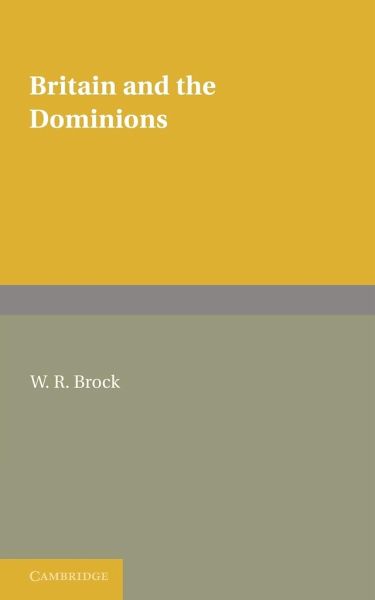
This 1951 book is the history of an idea. The unique concept of dominion status within a Commonwealth of Nations is the result of the need for freedom combined with peace, for independence combined with international obligations, for common action without central control. The attainment has come out of many conflicting forces which can only be studied historically. This book tells the experiences of the different nations of the Commonwealth, to explain how past events have led them into this unprecedented form of association. The British Commonwealth exemplifies a way in which independent and…mehr
This 1951 book is the history of an idea. The unique concept of dominion status within a Commonwealth of Nations is the result of the need for freedom combined with peace, for independence combined with international obligations, for common action without central control. The attainment has come out of many conflicting forces which can only be studied historically. This book tells the experiences of the different nations of the Commonwealth, to explain how past events have led them into this unprecedented form of association. The British Commonwealth exemplifies a way in which independent and self-governing nations may live together, and also how nations that are somewhat politically, socially, or economically undeveloped may be partnered by those who have advanced a little further along the road to civilized society. Attention is also given to the dependent colonial Empire, particularly to those countries already within sight of full Dominion status.
Part I. The Rise of Britain as a World Power from the End of the Middle Ages to the Year 1793: Survey 1. The beginnings of overseas expansion (to 1600) 2. The founding of the British Empire (1600-50) 3. The era of expansion (1650-8) 4. The British political system I (1485-1660) 5. The British political system II (1660-1800) 6. Britain becomes the greatest colonial power (1688-1763) Part II. From the Year 1763 to the Middle of the Nineteenth Century: Survey 7. Revolt and crisis within the Empire 8. The revival of Great Britain (1784-1815) 9. The British Empire in 1815 10. Ideas and influences upon the nineteenth-century Empire 11. Imperial problems in the first half of the nineteenth century I: non-British European races in the Empire 12. Imperial problems in the first half of the nineteenth century II: the new settlers 13. Imperial problems in the first half of the nineteenth century III: non-European races 14. Imperial problems in the first half of the nineteenth century IV: economic prosperity 15. Imperial problems in the first half of the nineteenth century V: the problem of government Part III. From the Middle of the Nineteenth to the Beginning of the Twentieth Century: Survey 16. The British Isles 17. The changing world 18. The dominion of Canada and Newfoundland 19. Self-government in Australia and New Zealand 20. The transformation of India 21. The acquisition of a tropical African Empire 22. Imperialism 23. The old and the new in colonial rule 24. Contrasts in imperial rule. Ceylon, Malaya and Burma 25. South Africa, 1854-1910 26. The bonds of union Part IV. From the Beginning of the Twentieth Century to the Present Day: Survey 27. Political and economic influences upon the twentieth-century empire 28. The First World War 29. From 1918 to 1939: the world situation 30. The Second World War 31. Imperial problems in the twentieth century I: government and organization 32. Imperial problems in the twentieth century II: problems in the art of self-government. Newfoundland, Malta, Kenya, and Southern Rhodesia 33. Imperial problems in the twentieth century III: Ireland 34. Imperial problems in the twentieth century IV: India, Burma, Ceylon, and Malaya 35. Imperial problems in the twentieth century V: the Middle East 36. Imperial problems in the twentieth century VI: the colonial empire 37. Modern Canada 38. Modern Australia 39. Modern New Zealand 40. Modern South Africa Conclusion.
Part I. The Rise of Britain as a World Power from the End of the Middle Ages to the Year 1793: Survey 1. The beginnings of overseas expansion (to 1600) 2. The founding of the British Empire (1600-50) 3. The era of expansion (1650-8) 4. The British political system I (1485-1660) 5. The British political system II (1660-1800) 6. Britain becomes the greatest colonial power (1688-1763) Part II. From the Year 1763 to the Middle of the Nineteenth Century: Survey 7. Revolt and crisis within the Empire 8. The revival of Great Britain (1784-1815) 9. The British Empire in 1815 10. Ideas and influences upon the nineteenth-century Empire 11. Imperial problems in the first half of the nineteenth century I: non-British European races in the Empire 12. Imperial problems in the first half of the nineteenth century II: the new settlers 13. Imperial problems in the first half of the nineteenth century III: non-European races 14. Imperial problems in the first half of the nineteenth century IV: economic prosperity 15. Imperial problems in the first half of the nineteenth century V: the problem of government Part III. From the Middle of the Nineteenth to the Beginning of the Twentieth Century: Survey 16. The British Isles 17. The changing world 18. The dominion of Canada and Newfoundland 19. Self-government in Australia and New Zealand 20. The transformation of India 21. The acquisition of a tropical African Empire 22. Imperialism 23. The old and the new in colonial rule 24. Contrasts in imperial rule. Ceylon, Malaya and Burma 25. South Africa, 1854-1910 26. The bonds of union Part IV. From the Beginning of the Twentieth Century to the Present Day: Survey 27. Political and economic influences upon the twentieth-century empire 28. The First World War 29. From 1918 to 1939: the world situation 30. The Second World War 31. Imperial problems in the twentieth century I: government and organization 32. Imperial problems in the twentieth century II: problems in the art of self-government. Newfoundland, Malta, Kenya, and Southern Rhodesia 33. Imperial problems in the twentieth century III: Ireland 34. Imperial problems in the twentieth century IV: India, Burma, Ceylon, and Malaya 35. Imperial problems in the twentieth century V: the Middle East 36. Imperial problems in the twentieth century VI: the colonial empire 37. Modern Canada 38. Modern Australia 39. Modern New Zealand 40. Modern South Africa Conclusion.
Es gelten unsere Allgemeinen Geschäftsbedingungen: www.buecher.de/agb
Impressum
www.buecher.de ist ein Internetauftritt der buecher.de internetstores GmbH
Geschäftsführung: Monica Sawhney | Roland Kölbl | Günter Hilger
Sitz der Gesellschaft: Batheyer Straße 115 - 117, 58099 Hagen
Postanschrift: Bürgermeister-Wegele-Str. 12, 86167 Augsburg
Amtsgericht Hagen HRB 13257
Steuernummer: 321/5800/1497
USt-IdNr: DE450055826