
Andere Kunden interessierten sich auch für
 Latest Developments in Geographic Information Systems138,99 €
 Spatial Intelligence for a Greener Planet153,99 €
 Introduction to Geographic Information Systems137,99 €
 Geographic Information Systems130,99 €
 Latest Developments in Geographic Information Systems138,99 €
 Latest Developments in Geographic Information Systems137,99 €
 Emerging Trends in Open Source Geographic Information Systems179,99 €



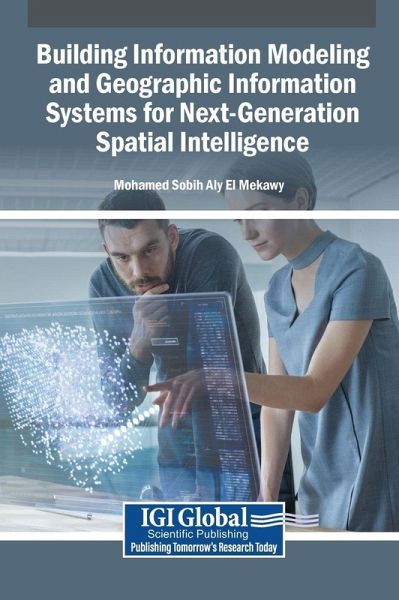
The integration of building information modeling (BIM) and geographic information systems (GIS) develops innovative spatial intelligence. BIM provides detailed representations of built environments, while GIS captures the geographical and environmental context in which these structures exist. When combined, these systems enable a seamless flow of spatial information, from individual buildings to entire cities, enhancing decision-making in urban planning, infrastructure management, and sustainable development. This convergence fosters a more holistic understanding of spatial relationships, supporting smarter, data-driven approaches to design, construction, and governance in an interconnected world. Building Information Modeling and Geographic Information Systems for Next-Generation Spatial Intelligence explores the convergence of BIM and GIS in the field of urban planning. It examines how the integration of these tools revolutionizes the design, analysis, and management of urban environments for smarter, more sustainable cities. This book covers topics such as data science, civil engineering, and environmental science, and is a useful resource for engineers, policymakers, academicians, researchers, and scientists.