
Andere Kunden interessierten sich auch für
 Representative Bureaucracy, Meritocracy, and Nation Building in Nigeria101,99 €
 The Paradox of Nation-Building in Nigeria. Nigeria's Strife and Strivings up to 201617,95 €
 Roots in the African Dust42,99 €
 African Voices on Slavery and the Slave Trade151,99 €
 Church Building and Society in the Later Middle Ages43,99 €
 Text and Authority in the South African Nazaretha Church84,99 €
 Church Building and Society in the Later Middle Ages109,99 €
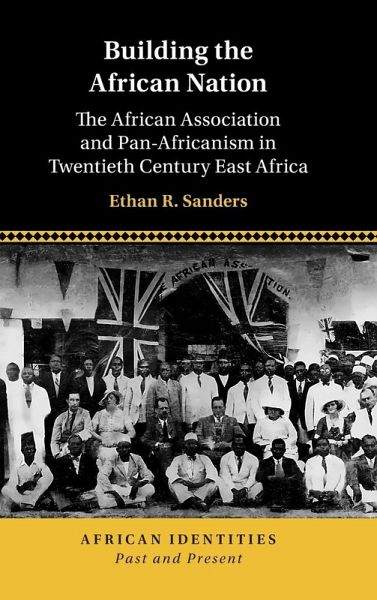
How did people in East Africa come to see themselves as 'Africans,' and where did these concepts originate from? Utilizing a global intellectual history lens, Ethan Sanders traces how ideas stemming from global black intellectuals of the Atlantic, and others, shaped the imaginations of East Africans in the early twentieth century. This study centers on the African Association, a trans-territorial pan-Africanist organization that promoted global visions of African unity. No mere precursor to anti-colonial territorial nationalism, the organization eschewed territorial thinking and sought to build a continental African nation from the 1920s to the 1940s, at odds with later forms of nationalism in Africa. Sanders explores in depth the thought of James Aggrey, Paul Sindi Seme, and Julius Nyerere, three major twentieth-century pan-Africanists. This book rethinks definitions of pan-Africanism, demonstrating how expressions of both practical and redemptive pan-Africanism inspired those who joined the African Association and embraced an African identity.