
Andere Kunden interessierten sich auch für
") Selected Writings from the Journal of the Saskatchewan Mathematics Teachers' Society (hc)116,99 €
Selected Writings from the Journal of the Saskatchewan Mathematics Teachers' Society (hc)116,99 € Selected Writings from the Journal of the British Columbia Association of Mathematics Teachers114,99 €
 Selected Writings from the Journal of the Mathematics Council of the Alberta Teachers' Association125,99 €
 Syllabus of Lectures On the History of Education: With Selected Bibliographies and Suggested Readings, Part 234,99 €
 The Educational Writings of Richard Mulcaster31,99 €
 Assessment of the opportunities and challenges in the implementation of cooperative Training. The case of selected public Technical and Vocational Education and Training Colleges in Addis Ababa City Government47,95 €
 Syllabus of Lectures On the History of Education: With Selected Bibliographies and Suggested Readings, Part 131,99 €
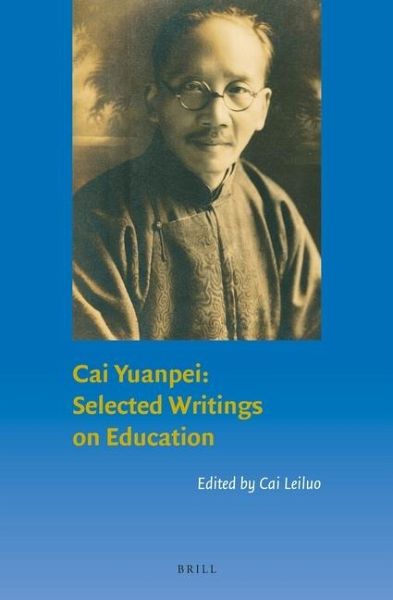
This collection of writings traces the evolution and revolution of Chinese modern education in the early twentieth century initiated by Cai Yuanpei (1868-1940), the first Minister of Education of the Republic of China, President of Peking University (1916-1927) and the founder of Academia Sinica. This volume illustrates Cai Yuanpei's educational thoughts, one of which is known as "freedom of thought and academic inclusiveness"(思想自由,兼容並包), through his own words from his political, social, and academic endeavors. Cai navigated the landscape of Chinese education at the time, bridging the gap between tradition and revolution, East and West, and setting the cornerstone of the Chinese modern education system. His innovative ideology remains significant in the context of Chinese education reforms in the 21st century.