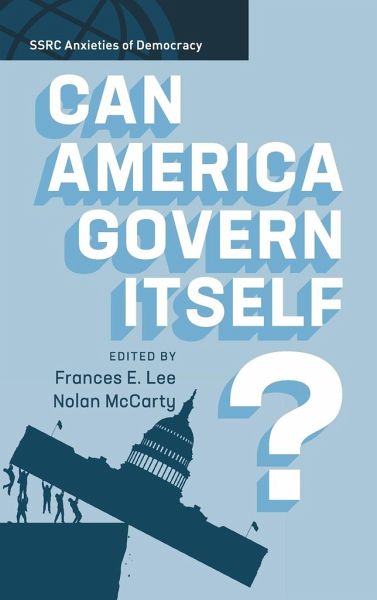
Can America Govern Itself?
Herausgeber: Lee, Frances E.; Mccarty, Nolan
Can America Govern Itself?
Herausgeber: Lee, Frances E.; Mccarty, Nolan
- Gebundenes Buch
- Merkliste
- Auf die Merkliste
- Bewerten Bewerten
- Teilen
- Produkt teilen
- Produkterinnerung
- Produkterinnerung
Analyzes how rising party polarization, unequal representation, and economic inequalities affect the performance of American governing institutions.
Andere Kunden interessierten sich auch für
Peter HansonToo Weak to Govern91,99 €
Tom LongLatin America Confronts the United States114,99 €
The Political Economy of Taxation in Latin America103,99 €
Why Govern?41,99 €
Carol M. SwainContemporary Voices of White Nationalism in America88,99 €
Karen J. Greenberg (ed.)The Torture Debate in America92,99 €
Solutions to Political Polarization in America109,99 €-
-
-
Analyzes how rising party polarization, unequal representation, and economic inequalities affect the performance of American governing institutions.
Produktdetails
- Produktdetails
- Verlag: Cambridge University Press
- Seitenzahl: 372
- Erscheinungstermin: 7. Juni 2019
- Englisch
- Abmessung: 235mm x 157mm x 26mm
- Gewicht: 754g
- ISBN-13: 9781108497299
- ISBN-10: 1108497292
- Artikelnr.: 54606794
- Herstellerkennzeichnung
- Libri GmbH
- Europaallee 1
- 36244 Bad Hersfeld
- gpsr@libri.de
- Verlag: Cambridge University Press
- Seitenzahl: 372
- Erscheinungstermin: 7. Juni 2019
- Englisch
- Abmessung: 235mm x 157mm x 26mm
- Gewicht: 754g
- ISBN-13: 9781108497299
- ISBN-10: 1108497292
- Artikelnr.: 54606794
- Herstellerkennzeichnung
- Libri GmbH
- Europaallee 1
- 36244 Bad Hersfeld
- gpsr@libri.de
1. Anxieties of American democracy Frances E. Lee and Nolan McCarty; Part
I. Anxieties of Power, Influence, and Representation: 2. In the private
interest? Business influence and American democracy Anthony S. Chen; 3. The
interest group top tier: lobbying inequality and American governance Lee
Drutman, Matt Grossmann and Timothy LaPira; 4. Developments in
Congressional responsiveness to donor opinion Brandice Canes-Wrone and
Nathan Gibson; 5. Minority protest and the early stages of governmental
responsiveness in the electoral process Daniel Gillion and Patricia Posey;
6. The hollow parties Daniel Schlozman and Sam Rosenfeld; Part II.
Procedural Anxieties: 7. Does regular order produce a more deliberative
Congress? Evidence from the annual appropriations process Lee Drutman and
Peter Hanson; 8. Congress at work: legislative capacity and
entrepreneurship in the contemporary Congress James Curry and Frances Lee;
9. Dumbing down? Trends in the complexity of political communication
Kenneth Benoit, Kevin Munger and Arthur Spirling; Part III. Anxieties of
Governance: 10. Public policy and political dysfunction: the policyscape,
policy maintenance, and oversight Suzanne Mettler and Claire Leavitt; 11.
The effects of partisan polarization on the bureaucracy David Spence; 12.
Polarization and the changing American constitutional system Nolan McCarty.
I. Anxieties of Power, Influence, and Representation: 2. In the private
interest? Business influence and American democracy Anthony S. Chen; 3. The
interest group top tier: lobbying inequality and American governance Lee
Drutman, Matt Grossmann and Timothy LaPira; 4. Developments in
Congressional responsiveness to donor opinion Brandice Canes-Wrone and
Nathan Gibson; 5. Minority protest and the early stages of governmental
responsiveness in the electoral process Daniel Gillion and Patricia Posey;
6. The hollow parties Daniel Schlozman and Sam Rosenfeld; Part II.
Procedural Anxieties: 7. Does regular order produce a more deliberative
Congress? Evidence from the annual appropriations process Lee Drutman and
Peter Hanson; 8. Congress at work: legislative capacity and
entrepreneurship in the contemporary Congress James Curry and Frances Lee;
9. Dumbing down? Trends in the complexity of political communication
Kenneth Benoit, Kevin Munger and Arthur Spirling; Part III. Anxieties of
Governance: 10. Public policy and political dysfunction: the policyscape,
policy maintenance, and oversight Suzanne Mettler and Claire Leavitt; 11.
The effects of partisan polarization on the bureaucracy David Spence; 12.
Polarization and the changing American constitutional system Nolan McCarty.
1. Anxieties of American democracy Frances E. Lee and Nolan McCarty; Part
I. Anxieties of Power, Influence, and Representation: 2. In the private
interest? Business influence and American democracy Anthony S. Chen; 3. The
interest group top tier: lobbying inequality and American governance Lee
Drutman, Matt Grossmann and Timothy LaPira; 4. Developments in
Congressional responsiveness to donor opinion Brandice Canes-Wrone and
Nathan Gibson; 5. Minority protest and the early stages of governmental
responsiveness in the electoral process Daniel Gillion and Patricia Posey;
6. The hollow parties Daniel Schlozman and Sam Rosenfeld; Part II.
Procedural Anxieties: 7. Does regular order produce a more deliberative
Congress? Evidence from the annual appropriations process Lee Drutman and
Peter Hanson; 8. Congress at work: legislative capacity and
entrepreneurship in the contemporary Congress James Curry and Frances Lee;
9. Dumbing down? Trends in the complexity of political communication
Kenneth Benoit, Kevin Munger and Arthur Spirling; Part III. Anxieties of
Governance: 10. Public policy and political dysfunction: the policyscape,
policy maintenance, and oversight Suzanne Mettler and Claire Leavitt; 11.
The effects of partisan polarization on the bureaucracy David Spence; 12.
Polarization and the changing American constitutional system Nolan McCarty.
I. Anxieties of Power, Influence, and Representation: 2. In the private
interest? Business influence and American democracy Anthony S. Chen; 3. The
interest group top tier: lobbying inequality and American governance Lee
Drutman, Matt Grossmann and Timothy LaPira; 4. Developments in
Congressional responsiveness to donor opinion Brandice Canes-Wrone and
Nathan Gibson; 5. Minority protest and the early stages of governmental
responsiveness in the electoral process Daniel Gillion and Patricia Posey;
6. The hollow parties Daniel Schlozman and Sam Rosenfeld; Part II.
Procedural Anxieties: 7. Does regular order produce a more deliberative
Congress? Evidence from the annual appropriations process Lee Drutman and
Peter Hanson; 8. Congress at work: legislative capacity and
entrepreneurship in the contemporary Congress James Curry and Frances Lee;
9. Dumbing down? Trends in the complexity of political communication
Kenneth Benoit, Kevin Munger and Arthur Spirling; Part III. Anxieties of
Governance: 10. Public policy and political dysfunction: the policyscape,
policy maintenance, and oversight Suzanne Mettler and Claire Leavitt; 11.
The effects of partisan polarization on the bureaucracy David Spence; 12.
Polarization and the changing American constitutional system Nolan McCarty.