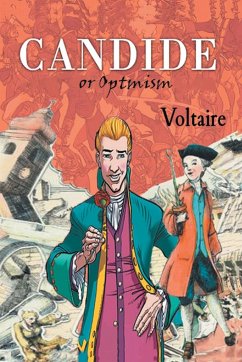
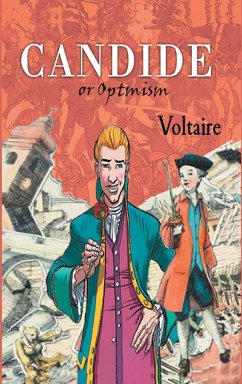
Originally published in 1759, this early work by French philosopher Voltaire is both expensive and hard to find in its first edition. It is a satirical novella about a young man losing his optimism under the pressures and hardships of the world. This seminal work is highly recommended and a must have for all readers of philosophy. Many of the earliest books, particularly those dating back to the 1900s and before, are now extremely scarce. We are republishing these classic works in affordable, high quality, modern editions, using the original text and artwork.
Originally published in 1759, this early work by French philosopher Voltaire is both expensive and hard to find in its first edition. It is a satirical novella about a young man losing his optimism under the pressures and hardships of the world. This seminal work is highly recommended and a must have for all readers of philosophy. Many of the earliest books, particularly those dating back to the 1900s and before, are now extremely scarce. We are republishing these classic works in affordable, high quality, modern editions, using the original text and artwork.
Francois-Marie Arouet was a French Enlightenment writer, philosopher (philosophe), satirist, and historian who lived from November 21, 1694, to May 30, 1778. He was better known by the pen name M. de Voltaire. Voltaire fought for free speech, religious freedom, and the separation of church and state. He was known for his wit and his criticism of Christianity (especially the Roman Catholic Church) and slavery. It is said that Voltaire wrote a lot of different kinds of writing, such as plays, poems, novels, essays, histories, and even science explanations. He wrote greater than twenty thousand letters and two thousand books and leaflets. Voltaire was one of the first writers to become famous and make a lot of money around the world. He spoke out for civil rights and was always in danger because of the strict censorship laws of the Catholic French monarchy. In his polemics, he made fun of prejudice, religious dogma, and the French institutions of the time in a very harsh way. Candide, his most famous and important work, is a short story that makes fun of many events, philosophers, and ideas popular at the time. Its main target is Gottfried Leibniz's idea that our world is the "best of all possible worlds."
Es gelten unsere Allgemeinen Geschäftsbedingungen: www.buecher.de/agb
Impressum
www.buecher.de ist ein Internetauftritt der buecher.de internetstores GmbH
Geschäftsführung: Monica Sawhney | Roland Kölbl | Günter Hilger
Sitz der Gesellschaft: Batheyer Straße 115 - 117, 58099 Hagen
Postanschrift: Bürgermeister-Wegele-Str. 12, 86167 Augsburg
Amtsgericht Hagen HRB 13257
Steuernummer: 321/5800/1497
USt-IdNr: DE450055826