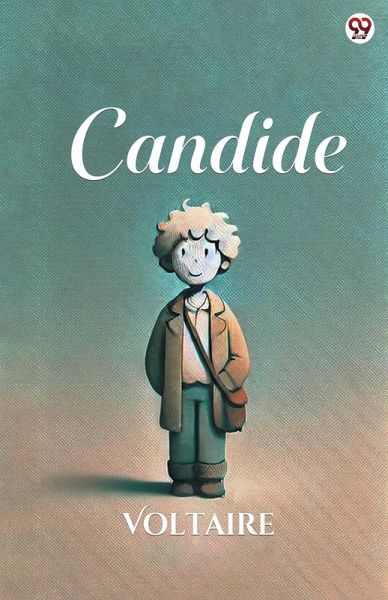
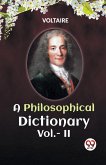
Candide is a satirical novel that critiques the optimistic philosophy prevalent in the 18th century. The story follows a young man, born into privilege, who is abruptly expelled from his sheltered life and exposed to a world of absurdity, violence, and suffering. Through his journey, Candide encounters various characters and faces dire situations that challenge his naive belief in "the best of all possible worlds," taught to him by his mentor. The narrative delves into philosophical questions about the nature of existence, the absurdity of life, and the flaws of blind optimism. As Candide…mehr
Candide is a satirical novel that critiques the optimistic philosophy prevalent in the 18th century. The story follows a young man, born into privilege, who is abruptly expelled from his sheltered life and exposed to a world of absurdity, violence, and suffering. Through his journey, Candide encounters various characters and faces dire situations that challenge his naive belief in "the best of all possible worlds," taught to him by his mentor. The narrative delves into philosophical questions about the nature of existence, the absurdity of life, and the flaws of blind optimism. As Candide travels through different lands, he witnesses the harsh realities of war, human cruelty, and the unpredictability of fate. Voltaire uses sharp wit and irony to highlight the contrast between idealistic beliefs and the brutal realities of life. The novel ultimately questions the value of philosophical ideals when confronted with real-world suffering and advocates for a more practical approach to life, emphasizing the importance of personal action over passive acceptance.
Fran ois-Marie Arouet, better known by his pen name Voltaire, was a French writer, philosopher, and historian born on November 21, 1694, in Paris. He is best remembered for his sharp wit, satirical works, and criticism of institutions such as the Catholic Church and the practice of slavery. Voltaire was a strong advocate for civil liberties, including freedom of speech, freedom of religion, and the separation of church and state, principles that shaped much of his writing. Throughout his life, Voltaire was influenced by thinkers like John Locke and Isaac Newton, and his works left a lasting impact on later Enlightenment figures, such as Jean-Jacques Rousseau and Denis Diderot. Voltaire s writings often challenged authority and sought to promote reason, tolerance, and individual rights. He lived through a time of significant political and social change, and his works were instrumental in shaping modern ideas about governance, religion, and society. Voltaire passed away on May 30, 1778, in Paris, leaving behind a legacy that continues to influence Western thought.
Es gelten unsere Allgemeinen Geschäftsbedingungen: www.buecher.de/agb
Impressum
www.buecher.de ist ein Internetauftritt der buecher.de internetstores GmbH
Geschäftsführung: Monica Sawhney | Roland Kölbl | Günter Hilger
Sitz der Gesellschaft: Batheyer Straße 115 - 117, 58099 Hagen
Postanschrift: Bürgermeister-Wegele-Str. 12, 86167 Augsburg
Amtsgericht Hagen HRB 13257
Steuernummer: 321/5800/1497
USt-IdNr: DE450055826