
Andere Kunden interessierten sich auch für
 Reshaping Urban Conservation137,99 €
 The Archaeology of Vernacular Watercraft38,99 €
 Political Landscapes of the Late Intermediate Period in the Southern Andes76,99 €
 The Archaeology of Vernacular Watercraft38,99 €
 Archaeology of the South Coast of Tierra del Fuego91,99 €
 Cultural Practices and Material Culture in Archaic and Classical Crete60,99 €
 The Landscape and Mobility of Hunter-Gatherer Societies83,99 €
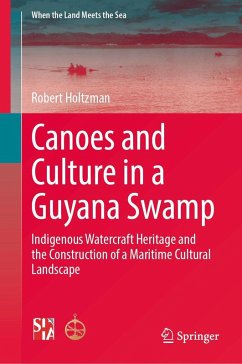
This book explores the interplay between a people, their physical environment, the means of mobility that connect the two, and how these elements combine in the creation of cognitive and cultural landscapes. Specifically, it examines how Indigenous Warrau people in the village of Imbotero, Guyana, use traditional dugout canoes in the surrounding swamp forest and on connecting waterways; how canoes mediate between the Warrau and their landscape; and how the relationship is bi-directional: that is, how people use boats to conceptualise and exploit the landscape while, simultaneously, the landscape influences culture, cognition, and boat use.
The book traces the history of the Warrau canoe from the earliest evidence of prehistoric use to the present. It describes how dugout canoes are built and handled, how they form the basis of Imbotero s economy and culture, and how they enable access to, and exploitation of, the environment. It explores the roles of age, gender, and social status in canoe use, examines the fading spiritual component of canoe construction, and discusses challenges to the Warrau s canoe heritage, with suggestions of how that heritage might be safeguarded. The role of the physical environment upon culture is analysed within Christer Westerdahl s maritime cultural landscape (MCL) framework, which is applied here for the first time to a contemporary swamp society. The swamp is shown to be fully compatible with the MCL concept, in that watercraft and their daily use play central roles in the people s engagement with the environment, their worldview, and their identity.
The book traces the history of the Warrau canoe from the earliest evidence of prehistoric use to the present. It describes how dugout canoes are built and handled, how they form the basis of Imbotero s economy and culture, and how they enable access to, and exploitation of, the environment. It explores the roles of age, gender, and social status in canoe use, examines the fading spiritual component of canoe construction, and discusses challenges to the Warrau s canoe heritage, with suggestions of how that heritage might be safeguarded. The role of the physical environment upon culture is analysed within Christer Westerdahl s maritime cultural landscape (MCL) framework, which is applied here for the first time to a contemporary swamp society. The swamp is shown to be fully compatible with the MCL concept, in that watercraft and their daily use play central roles in the people s engagement with the environment, their worldview, and their identity.