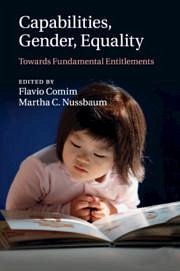
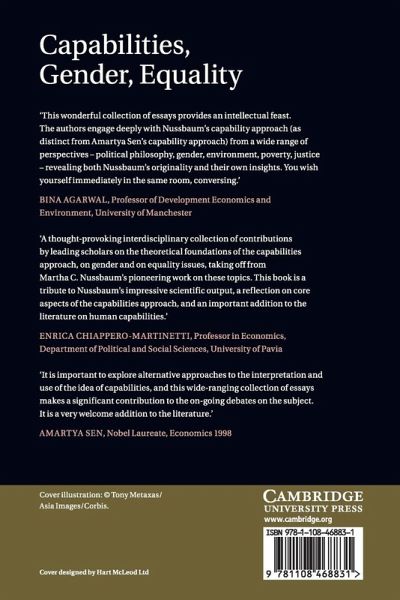
Capabilities, Gender, Equality
Herausgeber: Comim, Flavio; Nussbaum, Martha C
Capabilities, Gender, Equality
Herausgeber: Comim, Flavio; Nussbaum, Martha C
- Broschiertes Buch
- Merkliste
- Auf die Merkliste
- Bewerten Bewerten
- Teilen
- Produkt teilen
- Produkterinnerung
- Produkterinnerung
Provides unique reflections on the capability approach and its relevance to new human development policies and political liberalism.
Andere Kunden interessierten sich auch für
Asian Development BankDeveloping Gender Equality and Social Inclusion Strategies for Sector Agencies in South Asia24,99 €
John E. RoemerDemocracy, Education, and Equality42,99 €
Asian Development BankGender Equality and Social Inclusion Diagnostic of Selected Sectors in Nepal44,99 €
Robert Hermann SchomburgkA Description of British Guiana, Geographical and Statistical: Exhibiting Its Resources and Capabilities, Together With the Present and Future Conditi18,99 €
Barbara Harriss-WhiteIndia Working45,99 €
Jaymin LeeThe Tortuous Path of South Korean Economic Development37,99 €
Edward B BarbierNatural Resources and Economic Development50,99 €-
-
-
Provides unique reflections on the capability approach and its relevance to new human development policies and political liberalism.
Produktdetails
- Produktdetails
- Verlag: Cambridge University Press
- Seitenzahl: 484
- Erscheinungstermin: 30. August 2018
- Englisch
- Abmessung: 229mm x 152mm x 25mm
- Gewicht: 640g
- ISBN-13: 9781108468831
- ISBN-10: 1108468837
- Artikelnr.: 52639290
- Herstellerkennzeichnung
- Libri GmbH
- Europaallee 1
- 36244 Bad Hersfeld
- gpsr@libri.de
- Verlag: Cambridge University Press
- Seitenzahl: 484
- Erscheinungstermin: 30. August 2018
- Englisch
- Abmessung: 229mm x 152mm x 25mm
- Gewicht: 640g
- ISBN-13: 9781108468831
- ISBN-10: 1108468837
- Artikelnr.: 52639290
- Herstellerkennzeichnung
- Libri GmbH
- Europaallee 1
- 36244 Bad Hersfeld
- gpsr@libri.de
Preface; Introduction: capabilities, challenges, and the omnipresence of
political liberalism Martha C. Nussbaum; Part I. The Capabilities Approach:
1. Perfectionist liberalism and political liberalism Martha C. Nussbaum; 2.
Rawlsian social-contract theory and the severely disabled Henry S.
Richardson; 3. Logos, pathos and ethos in Martha C. Nussbaum's capabilities
approach to human development Des Gasper; 4. Building capabilities: a new
paradigm for human development Flavio Comim; 5. Capabilities or
functionings? Anatomy of a debate Marc Fleurbaey; 6. From humans to all of
life: Nussbaum's transformation of dignity Jeremy Bendik-Keymer; Part II.
Gender: 7. Questioning the gender-based division of labour: the
contribution of the capabilities approach to feminist economics Ulrike
Knoblock; 8. Primary goods, capabilities, and the millennium development
target for gender equity in education Elaine Unterhalter and Harry
Brighouse; 9. The weight of institutions on women's capabilities: how far
can microfinance help? Muriel Gilardone, Isabelle Guérin and Jane Palier;
10. The capabilities of women: towards an alternative framework for
development Santosh Mehrotra; 11. Applying the capabilities approach to
disability, poverty, and gender Patricia Welch Saleeby; 12. Educational
transformation, gender justice and Nussbaum's capabilities Melanie Walker;
13. The social contract, unpaid child care and women's income capability
Hilde Bojer; Part III. Equality: 14. Lists and thresholds: comparing the
Doyal-Gough theory of human need with Nussbaum's capabilities approach Ian
Gough; 15. Nussbaum, Rawls, and the ecological limits of justice: using
capability ceilings to resolve capability conflicts Breena Holland; 16.
Social justice and Nussbaum's concept of the person John M. Alexander; 17.
God and Martha C. Nussbaum: towards a Reformed Christian view of
capabilities Jonathan Warner; Index.
political liberalism Martha C. Nussbaum; Part I. The Capabilities Approach:
1. Perfectionist liberalism and political liberalism Martha C. Nussbaum; 2.
Rawlsian social-contract theory and the severely disabled Henry S.
Richardson; 3. Logos, pathos and ethos in Martha C. Nussbaum's capabilities
approach to human development Des Gasper; 4. Building capabilities: a new
paradigm for human development Flavio Comim; 5. Capabilities or
functionings? Anatomy of a debate Marc Fleurbaey; 6. From humans to all of
life: Nussbaum's transformation of dignity Jeremy Bendik-Keymer; Part II.
Gender: 7. Questioning the gender-based division of labour: the
contribution of the capabilities approach to feminist economics Ulrike
Knoblock; 8. Primary goods, capabilities, and the millennium development
target for gender equity in education Elaine Unterhalter and Harry
Brighouse; 9. The weight of institutions on women's capabilities: how far
can microfinance help? Muriel Gilardone, Isabelle Guérin and Jane Palier;
10. The capabilities of women: towards an alternative framework for
development Santosh Mehrotra; 11. Applying the capabilities approach to
disability, poverty, and gender Patricia Welch Saleeby; 12. Educational
transformation, gender justice and Nussbaum's capabilities Melanie Walker;
13. The social contract, unpaid child care and women's income capability
Hilde Bojer; Part III. Equality: 14. Lists and thresholds: comparing the
Doyal-Gough theory of human need with Nussbaum's capabilities approach Ian
Gough; 15. Nussbaum, Rawls, and the ecological limits of justice: using
capability ceilings to resolve capability conflicts Breena Holland; 16.
Social justice and Nussbaum's concept of the person John M. Alexander; 17.
God and Martha C. Nussbaum: towards a Reformed Christian view of
capabilities Jonathan Warner; Index.
Preface; Introduction: capabilities, challenges, and the omnipresence of
political liberalism Martha C. Nussbaum; Part I. The Capabilities Approach:
1. Perfectionist liberalism and political liberalism Martha C. Nussbaum; 2.
Rawlsian social-contract theory and the severely disabled Henry S.
Richardson; 3. Logos, pathos and ethos in Martha C. Nussbaum's capabilities
approach to human development Des Gasper; 4. Building capabilities: a new
paradigm for human development Flavio Comim; 5. Capabilities or
functionings? Anatomy of a debate Marc Fleurbaey; 6. From humans to all of
life: Nussbaum's transformation of dignity Jeremy Bendik-Keymer; Part II.
Gender: 7. Questioning the gender-based division of labour: the
contribution of the capabilities approach to feminist economics Ulrike
Knoblock; 8. Primary goods, capabilities, and the millennium development
target for gender equity in education Elaine Unterhalter and Harry
Brighouse; 9. The weight of institutions on women's capabilities: how far
can microfinance help? Muriel Gilardone, Isabelle Guérin and Jane Palier;
10. The capabilities of women: towards an alternative framework for
development Santosh Mehrotra; 11. Applying the capabilities approach to
disability, poverty, and gender Patricia Welch Saleeby; 12. Educational
transformation, gender justice and Nussbaum's capabilities Melanie Walker;
13. The social contract, unpaid child care and women's income capability
Hilde Bojer; Part III. Equality: 14. Lists and thresholds: comparing the
Doyal-Gough theory of human need with Nussbaum's capabilities approach Ian
Gough; 15. Nussbaum, Rawls, and the ecological limits of justice: using
capability ceilings to resolve capability conflicts Breena Holland; 16.
Social justice and Nussbaum's concept of the person John M. Alexander; 17.
God and Martha C. Nussbaum: towards a Reformed Christian view of
capabilities Jonathan Warner; Index.
political liberalism Martha C. Nussbaum; Part I. The Capabilities Approach:
1. Perfectionist liberalism and political liberalism Martha C. Nussbaum; 2.
Rawlsian social-contract theory and the severely disabled Henry S.
Richardson; 3. Logos, pathos and ethos in Martha C. Nussbaum's capabilities
approach to human development Des Gasper; 4. Building capabilities: a new
paradigm for human development Flavio Comim; 5. Capabilities or
functionings? Anatomy of a debate Marc Fleurbaey; 6. From humans to all of
life: Nussbaum's transformation of dignity Jeremy Bendik-Keymer; Part II.
Gender: 7. Questioning the gender-based division of labour: the
contribution of the capabilities approach to feminist economics Ulrike
Knoblock; 8. Primary goods, capabilities, and the millennium development
target for gender equity in education Elaine Unterhalter and Harry
Brighouse; 9. The weight of institutions on women's capabilities: how far
can microfinance help? Muriel Gilardone, Isabelle Guérin and Jane Palier;
10. The capabilities of women: towards an alternative framework for
development Santosh Mehrotra; 11. Applying the capabilities approach to
disability, poverty, and gender Patricia Welch Saleeby; 12. Educational
transformation, gender justice and Nussbaum's capabilities Melanie Walker;
13. The social contract, unpaid child care and women's income capability
Hilde Bojer; Part III. Equality: 14. Lists and thresholds: comparing the
Doyal-Gough theory of human need with Nussbaum's capabilities approach Ian
Gough; 15. Nussbaum, Rawls, and the ecological limits of justice: using
capability ceilings to resolve capability conflicts Breena Holland; 16.
Social justice and Nussbaum's concept of the person John M. Alexander; 17.
God and Martha C. Nussbaum: towards a Reformed Christian view of
capabilities Jonathan Warner; Index.