
Andere Kunden interessierten sich auch für
 Waikiki Dreams28,99 €
 Pretty-Shield15,99 €
 The Paranormal Ranger15,99 €
 Hound of the Sea16,99 €
 The Paranormal Ranger21,99 €
 Team America22,99 €
 Only God Can Judge Me24,99 €





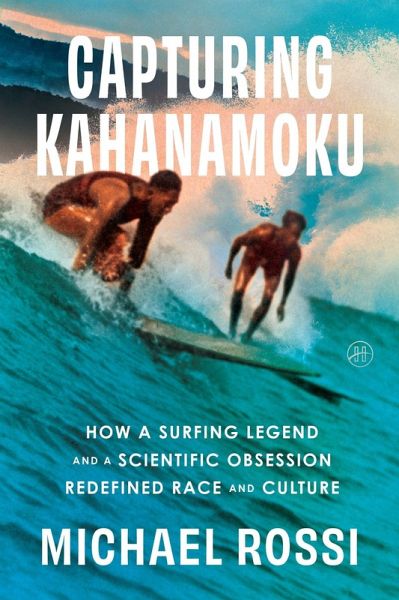
"An engaging romp." — New York Times Book Review "A haunting, quietly devastating excavation of a story we should all know but don’t: how a surfing legend became the target of eugenic obsession... Gorgeously written and brilliantly researched, this book is both a warning and a wonder." — Laurie Gwen Shapiro, author of The Aviator and the Showman The fascinating untold story of one scientist’s pursuit of a legendary surfer in his quest to define human nature, written with the compelling drama and narrative insight of Why Fish Don’t Exist and The Lost City of Z. Deep in the archives of New York’s American Museum of Natural History sits a wardrobe filled with fifty plaster casts of human heads a century old. How they came to be is the story of one of the most consequential, and yet least-known, encounters in the history of science. In 1920, the museum’s director, Henry Fairfield Osborn, traveled to Hawaii on an anthropological research trip. While there, he took a surfing lesson with Duke Kahanamoku, the famous surf-rider and budding movie star. For Osborn, a fervent eugenicist, the tall, muscular Kahanamoku embodied the “pure racial type” he was desperate to understand and, more significantly, preserve, in the human race. Upon his return to New York, Osborn’s fixation grew. He dispatched young scientist Louis Sullivan to Honolulu to measure, photograph, and cast in plaster Kahanamoku and other Hawaiian people. The study touched off a series of events that forever changed how we think about race, culture, science, and the essence of humanity. In Capturing Kahanamoku, historian Michael Rossi draws on archival research and firsthand interviews to weave together a truly fascinating cultural history that is an absorbing account of obsession, a cautionary tale about the subjectivity of science, a warning of the pernicious and lasting impact of eugenics, a meditation on humanity, and the story of a man whose personhood shunned classification. A heady blend of Barbarian Days and The Immortal Life of Henrietta Lacks, Capturing Kahanamoku is a twentieth-century saga with ever-clearer implications for our times. Capturing Kahanamoku includes 16-20 black-and-white photos throughout.