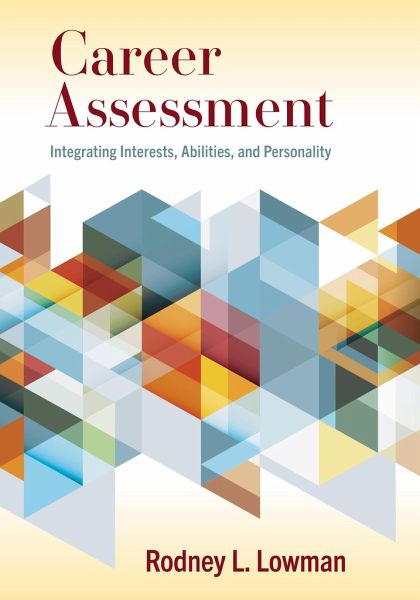
Rodney L. Lowman, PhD, ABAP, is president of Lowman amp amp Richardson/Consulting Psychologists, and a distinguished professor emeritus of CSPP, Alliant International University, San Diego. Dr. Lowman is author/editor of 3 books and monographs and over 3 peer-reviewed articles and chapters and has made presentations worldwide. His research/practice areas include assessment, career/work issues, and professional ethics. He is a fellow of several American Psychological Association divisions ( , , 2, 3, 4, 7, and 52). His books include Counseling and Psychotherapy of Work Dysfunctions An Introduction to Consulting Psychology: Working With Individuals, Groups, and Organizations and Career Assessment: Integrating Interests, Abilities, and Personality.
Inhaltsangabe
Preface Introduction: The Interdomain Model of Career Assessment Chapter 1. Scope of Career Assessment Work I. Assessing Vocational Interests Chapter 2. Defining and Contextualizing Vocational Interests Chapter 3. The “Big Six” RIASEC Interest Types Chapter 4. Applications: Choosing Interest Measures, Interpreting Individual-Level Interest Results, and Case Illustrations II. Assessing Career-Related Abilities Chapter 5. Career-Related Abilities: Conceptual Issues and General Intelligence Chapter 6. Mechanical and Physical Abilities Chapter 7. Spatial Abilities Chapter 8. Artistic and Creative Abilities Chapter 9. Social Abilities: Social and Emotional Intelligence Chapter 10. Managerial and Leadership Abilities Chapter 11. Perceptual, Computational, and Other Abilities Chapter 12. Case Illustrations of Ability Profiles III. Assessing Career-Related Personality Characteristics Chapter 13. Conceptual and Measurement Issues of Career-Related Personality Chapter 14. The Five-Factor Model of Personality Chapter 15. Other Career-Relevant Personality Characteristic Chapter 16. Applications: Case Illustrations of Personality Profiles IV. Applying the Interdimensional Model Chapter 17. Relationships Across Interest, Ability, and Personality Domains
Chapter 18. Applying the Interdomain Model: A Step-by-Step Process for Integrating Career Assessment Data Chapter 19. Client Feedback and Report Preparation Chapter 20. Ethical/Legal and Technological Issues References
Preface Introduction: The Interdomain Model of Career Assessment Chapter 1. Scope of Career Assessment Work I. Assessing Vocational Interests Chapter 2. Defining and Contextualizing Vocational Interests Chapter 3. The “Big Six” RIASEC Interest Types Chapter 4. Applications: Choosing Interest Measures, Interpreting Individual-Level Interest Results, and Case Illustrations II. Assessing Career-Related Abilities Chapter 5. Career-Related Abilities: Conceptual Issues and General Intelligence Chapter 6. Mechanical and Physical Abilities Chapter 7. Spatial Abilities Chapter 8. Artistic and Creative Abilities Chapter 9. Social Abilities: Social and Emotional Intelligence Chapter 10. Managerial and Leadership Abilities Chapter 11. Perceptual, Computational, and Other Abilities Chapter 12. Case Illustrations of Ability Profiles III. Assessing Career-Related Personality Characteristics Chapter 13. Conceptual and Measurement Issues of Career-Related Personality Chapter 14. The Five-Factor Model of Personality Chapter 15. Other Career-Relevant Personality Characteristic Chapter 16. Applications: Case Illustrations of Personality Profiles IV. Applying the Interdimensional Model Chapter 17. Relationships Across Interest, Ability, and Personality Domains
Chapter 18. Applying the Interdomain Model: A Step-by-Step Process for Integrating Career Assessment Data Chapter 19. Client Feedback and Report Preparation Chapter 20. Ethical/Legal and Technological Issues References
Es gelten unsere Allgemeinen Geschäftsbedingungen: www.buecher.de/agb
Impressum
www.buecher.de ist ein Internetauftritt der buecher.de internetstores GmbH
Geschäftsführung: Monica Sawhney | Roland Kölbl | Günter Hilger
Sitz der Gesellschaft: Batheyer Straße 115 - 117, 58099 Hagen
Postanschrift: Bürgermeister-Wegele-Str. 12, 86167 Augsburg
Amtsgericht Hagen HRB 13257
Steuernummer: 321/5800/1497
USt-IdNr: DE450055826