
Andere Kunden interessierten sich auch für
 Casanova, Stendhal, Tolstoy170,99 €
 Tolstoy91,99 €
 Tolstoi: Der lebende Leichnam6,60 €
") LEAVES OF GRASS (The Original 1855 Edition & The 1892 Death Bed Edition)33,20 €
LEAVES OF GRASS (The Original 1855 Edition & The 1892 Death Bed Edition)33,20 € Hadschi Murat10,90 €
 REV NON-VIOL TOLSTOY GANDHI MANDELA C98,99 €
 Leo Tolstoy102,99 €
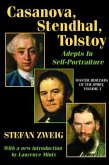
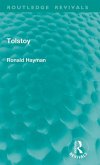
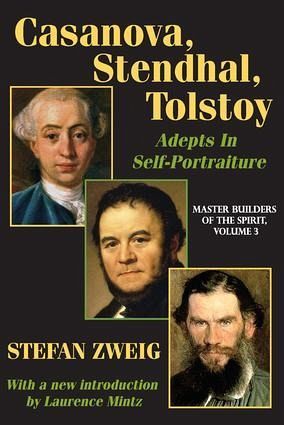
Casanova, Stendhal, Tolstoy: Adepts in Self-Portraiture, the final volume of Stefan Zweig's masterful Master Builders of the Spirit trilogy, discloses the smaller version of a writer's own ego. Unconscious though it is, no reality is as important to the writer as the reality of their own life. Giacomo Casanova, Stendhal (Marie-Henri Beyle), and Leo Tolstoy have different approaches to self-portraiture, but Zweig shows that together they symbolize three levels which represent successively ascending gradations of the same creative function. Casanova is depicted as having a primitive gradation; he simply records deeds and happenings, without any attempt to appraise them or to study the deeper working of the self. Stendhal's self-portraiture is depicted as psychological; he observes himself and investigates his own feelings. Tolstoy has the highest level; he describes his own life, records what led him to his own actions, and focuses on self-reflection in a completely unexaggerated manner. At first glance it might seem as if self-portraiture is an artist's easiest task. With no further trouble than a probing of memory and a description of the facts of life, "the truth" is revealed. The history of literature shows that ordinary autobiographers are no more than commonplace witnesses testifying to facts that chance has brought to their knowledge. A practiced artist is needed to discern the innermost happenings of the soul; few who have attempted autobiography have been successful in this difficult task. The present volume expounds the characteristics of these subjectively minded artists, and of autobiography as their typical method of personal expression.
Stefan Zweig was an Austrian writer born in Vienna on November 28, 1881, in Austria-Hungary. At the height of his career during the 1920s and 1930s, he became one of the most widely translated and popular authors globally. Zweig's literary works, which include novels, short stories, plays, and biographies, were widely acclaimed for their psychological insight and humanist perspective. His early life in Vienna was marked by cultural richness, and he was influenced by key figures such as Sigmund Freud, Knut Hamsun, and Jens Peter Jacobsen, among others. Zweig's writing often explored themes of personal conflict, emotional turmoil, and the struggles of individuals in society. He was married twice, first to Friderike Maria in 1920 and then to Charlotte E. Altmann in 1939. With the rise of Nazism, Zweig became increasingly disillusioned with Europe's future, which led him to move to Brazil. There, he tragically took his life on February 22, 1942, in Petrópolis, Brazil, at the age of 60. Zweig's influence on literature remains significant, and his works continue to be studied and appreciated for their depth and relevance. He was the son of Moritz Zweig and Ida Brettauer.
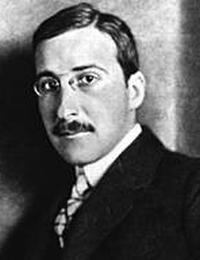
Foto: Wikipedia