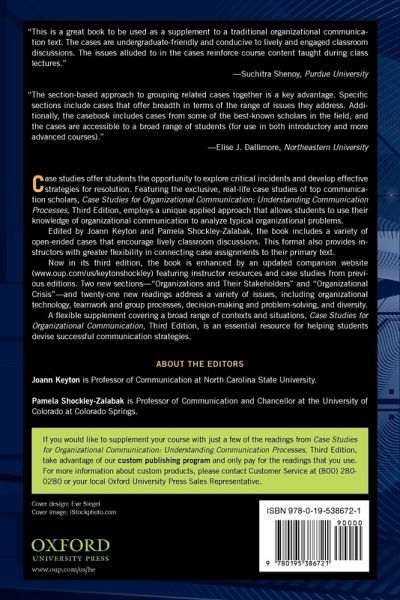
Case studies offer students the opportunity to explore critical incidents and develop effective strategies for resolution. Featuring the exclusive, real-life case studies of top communication scholars, Case Studies for Organizational Communication: Understanding Communication Processes, Third Edition, employs a unique applied approach that allows students to use their knowledge of organizational communication to analyze typical organizational problems. Edited by Joann Keyton and Pamela Shockley-Zalabak, the book includes a variety of open-ended cases that encourage lively classroom…mehr
Case studies offer students the opportunity to explore critical incidents and develop effective strategies for resolution. Featuring the exclusive, real-life case studies of top communication scholars, Case Studies for Organizational Communication: Understanding Communication Processes, Third Edition, employs a unique applied approach that allows students to use their knowledge of organizational communication to analyze typical organizational problems. Edited by Joann Keyton and Pamela Shockley-Zalabak, the book includes a variety of open-ended cases that encourage lively classroom discussions. This format also provides instructors with greater flexibility in connecting case assignments to their primary text. Now in its third edition, the book is enhanced by an updated companion website (www.oup.com/us/keytonshockley) featuring instructor resources and case studies from previous editions. Two new sections--"Organizations and Their Stakeholders" and "Organizational Crisis"--and twenty-one new readings address a variety of issues, including organizational technology, teamwork and group processes, decision-making and problem-solving, and diversity. A flexible supplement covering a broad range of contexts and situations, Case Studies for Organizational Communication, Third Edition, is an essential resource for helping students devise successful communication strategies.
Joann Keyton is Professor of Communication at North Carolina State University. Pamela Shockley-Zalabak is Professor of Communication and Chancellor at the University of Colorado at Colorado Springs.
Inhaltsangabe
Website Cases Acknowledgments Teacher Introduction: The Case Study Method as a Pedagogical Technique Student Introduction: Using Cases to Learn About Organizational Communication Example Case: The Sale, Joann Keyton Example Case Analysis Section 1: Organizational Culture 1. How Do You Get Anything Done Around Here?, Marian L. Houser and Astrid Sheil 2. Communicating and Leading Change in Organizations, Christina M. Bates 3. Managing a Merger, Cheryl Cockburn-Wootten, Mary Simpson, and Theodore E. Zorn 4. Incompatible IT Cultures, Jeanne S. McPherson 5. Your Attitude Determines Your Altitude, Erika Kirby 6. Growing Pains, Jessica Katz Jameson 7. How Dare He Manage Our Talk, Ryan S. Bisel and Amber S. Messersmith Section 2: Organizational Technology 8. Caught in the Intranet, Jensen Chung 9. The Difficulties of Virtual Leaders, Alexander Lyon 10. Knowledge Is Power, Melinda Morris Villagran and Mary Hoffman 11. The E-Mails in the Clinic Initial Services Department, Heather Walter 12. Finding a Home for Communication Technologies, Craig R. Scott, Laurie K. Lewis, Jenn D. Davis, and Scott C. D'Urso Section 3: Teamwork and Group Processes 13. Reorganizing Human Resources at ASP Software, Donald L. Anderson 14. Teaming Up for Change, Maryanne Wanca-Thibault and Adelina Gomez 15. Lessons Learned, MJ Helgerson 16. Taking Charge, Joann Keyton Section 4: Decision Making and Problem Solving 17. How Much Does Passion Count?, Stuart L. Esrock, Joy L. Hart, and Greg B. Leichty 18. Permission to Walk, Michael L. Kramer 19. For the Good of Many, Nancy M. Schullery and Melissa K. Gibson 20. A Matter of Perspective, Paaige K. Turner and Robert L. Krizek 21. The Expert Facilitator, Mary E. Vielhaber 22. Corporate Social Responsibility v. Greenwashing, Astrid Sheil and Heather Gearhart Section 5: The Individual and the Organization 23. Bob's Dilemma, Erica L. Kirby 24. Working Without Papers, Shawn D. Long 25. Corporate Counseling, Steve May 26. Managing Multiple Roles, Caryn E. Medved and Julie Apker 27. No Laughing Matter, Linda Dickmeyer and Scott Dickmeyer 28. Not on my Sabbath, Joy Koesten 29. The Aggrieved Mediator, Christine E. Cooper 30. An Officer First and a Nurse Second, Colleen E. Arendt 31. Finding the Right Associate, Leslie Reynard 32. Conflict Around Performance Reviews, Elayne Shapiro 33. There's a New Sheriff in Town, Lori J. Joseph 34. Resisting Disability, Carol B. Mills Section 6: Organizational Diversity 35. Where Does It Hurt?, Cynthia Irizarry 36. A Case of Mistreatment at Work?, Mary Meares and John Oetzel 37. The Penis People, Diane Kay Sloan 38. Navigating the Limits of a Smile, Sarah J. Tracy 39. Putting My Best Foot Forward, Aparna Hebbani 40. Berating the (Japanese) Bow, Andrew J. Critchfield 41. Islamophobia at Work, Shawn Long Section 7: Organizations and Their Stakeholders 42. Inviting Public Input, Stephen C. Yungbluth and Zachary P. Hart 43. Give Me Information or I'll Blog, Patty C. Malone and Keri K. Stephens 44. Community Civility, Rod Troester 45. The Sago Mine Disaster, Carlos E. Balhana and Deanna F. Womack Section 8: Organizational Crisis 46. More Questions Than Answers, Amanda M. Gunn 47. Ethics in Big Pharma, Alexander Lyon and Robert R. Ulmer 48. Forced Collaboration, Beth Eschenfelder About the Editors About the Contributors Detailed Case Content Index
Website Cases Acknowledgments Teacher Introduction: The Case Study Method as a Pedagogical Technique Student Introduction: Using Cases to Learn About Organizational Communication Example Case: The Sale, Joann Keyton Example Case Analysis Section 1: Organizational Culture 1. How Do You Get Anything Done Around Here?, Marian L. Houser and Astrid Sheil 2. Communicating and Leading Change in Organizations, Christina M. Bates 3. Managing a Merger, Cheryl Cockburn-Wootten, Mary Simpson, and Theodore E. Zorn 4. Incompatible IT Cultures, Jeanne S. McPherson 5. Your Attitude Determines Your Altitude, Erika Kirby 6. Growing Pains, Jessica Katz Jameson 7. How Dare He Manage Our Talk, Ryan S. Bisel and Amber S. Messersmith Section 2: Organizational Technology 8. Caught in the Intranet, Jensen Chung 9. The Difficulties of Virtual Leaders, Alexander Lyon 10. Knowledge Is Power, Melinda Morris Villagran and Mary Hoffman 11. The E-Mails in the Clinic Initial Services Department, Heather Walter 12. Finding a Home for Communication Technologies, Craig R. Scott, Laurie K. Lewis, Jenn D. Davis, and Scott C. D'Urso Section 3: Teamwork and Group Processes 13. Reorganizing Human Resources at ASP Software, Donald L. Anderson 14. Teaming Up for Change, Maryanne Wanca-Thibault and Adelina Gomez 15. Lessons Learned, MJ Helgerson 16. Taking Charge, Joann Keyton Section 4: Decision Making and Problem Solving 17. How Much Does Passion Count?, Stuart L. Esrock, Joy L. Hart, and Greg B. Leichty 18. Permission to Walk, Michael L. Kramer 19. For the Good of Many, Nancy M. Schullery and Melissa K. Gibson 20. A Matter of Perspective, Paaige K. Turner and Robert L. Krizek 21. The Expert Facilitator, Mary E. Vielhaber 22. Corporate Social Responsibility v. Greenwashing, Astrid Sheil and Heather Gearhart Section 5: The Individual and the Organization 23. Bob's Dilemma, Erica L. Kirby 24. Working Without Papers, Shawn D. Long 25. Corporate Counseling, Steve May 26. Managing Multiple Roles, Caryn E. Medved and Julie Apker 27. No Laughing Matter, Linda Dickmeyer and Scott Dickmeyer 28. Not on my Sabbath, Joy Koesten 29. The Aggrieved Mediator, Christine E. Cooper 30. An Officer First and a Nurse Second, Colleen E. Arendt 31. Finding the Right Associate, Leslie Reynard 32. Conflict Around Performance Reviews, Elayne Shapiro 33. There's a New Sheriff in Town, Lori J. Joseph 34. Resisting Disability, Carol B. Mills Section 6: Organizational Diversity 35. Where Does It Hurt?, Cynthia Irizarry 36. A Case of Mistreatment at Work?, Mary Meares and John Oetzel 37. The Penis People, Diane Kay Sloan 38. Navigating the Limits of a Smile, Sarah J. Tracy 39. Putting My Best Foot Forward, Aparna Hebbani 40. Berating the (Japanese) Bow, Andrew J. Critchfield 41. Islamophobia at Work, Shawn Long Section 7: Organizations and Their Stakeholders 42. Inviting Public Input, Stephen C. Yungbluth and Zachary P. Hart 43. Give Me Information or I'll Blog, Patty C. Malone and Keri K. Stephens 44. Community Civility, Rod Troester 45. The Sago Mine Disaster, Carlos E. Balhana and Deanna F. Womack Section 8: Organizational Crisis 46. More Questions Than Answers, Amanda M. Gunn 47. Ethics in Big Pharma, Alexander Lyon and Robert R. Ulmer 48. Forced Collaboration, Beth Eschenfelder About the Editors About the Contributors Detailed Case Content Index
Es gelten unsere Allgemeinen Geschäftsbedingungen: www.buecher.de/agb
Impressum
www.buecher.de ist ein Internetauftritt der buecher.de internetstores GmbH
Geschäftsführung: Monica Sawhney | Roland Kölbl | Günter Hilger
Sitz der Gesellschaft: Batheyer Straße 115 - 117, 58099 Hagen
Postanschrift: Bürgermeister-Wegele-Str. 12, 86167 Augsburg
Amtsgericht Hagen HRB 13257
Steuernummer: 321/5800/1497
USt-IdNr: DE450055826