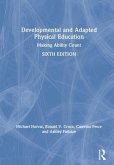
This book presents a series of case studies of teaching individuals of varied ability and disability in physical activity settings. Outlining realistic scenarios, it encourages an interactive, problem-solving teaching and learning style, and the development of critical thinking skills.
This book presents a series of case studies of teaching individuals of varied ability and disability in physical activity settings. Outlining realistic scenarios, it encourages an interactive, problem-solving teaching and learning style, and the development of critical thinking skills.
Samuel R. Hodge is Professor of Kinesiology in the Department of Human Sciences in the College of Education and Human Ecology at The Ohio State University, USA. Nathan M. Murata is Professor and Dean of the College of Education at the University of Hawai'i at M¿noa, USA. Martin E. Block is Professor and Director of the Kinesiology for Individuals With Disabilities (KID) Program at the University of Virginia, USA. Lauren J. Lieberman is Distinguished Service Professor and Director of Camp Abilities in the Department of Kinesiology, Sport Studies and Physical Education at The College at Brockport, State University of New York, USA.
Inhaltsangabe
Introduction: Using the Case Study Method to Empower Critical Thinking 1. Changing Attitudes: Out of the Shadows and Into the Gym 2. Teachers Navigating Placement Decisions 3. Culturally Sustainable and Relevant Pedagogy in Physical Education 4. Inclusion without Accompaniment 5. Support Personnel 6. Creating and Conducting a Self-Contained APE Program 7. Consultation: PE Generalist and APE Specialist 8. Evaluating Skill Development: TGMD-3 9. Evaluating Physical Fitness: Brockport 10. Are Integrated Physical Education Classes Inclusive 11. Peer Tutoring for Physical Education 12. Teaching Children with Speech and Language Impairments 13. Technological Applications in Physical Education 14. A Team Approach to Inclusion 15. Children with Disabilities on the Playground 16. After School Sports 17. Addressing the Motor Domain through the IEP/ITP Process 18. Opportunities for Adults at their Local Recreation Center 19. Taking Advantage of Membership in a Local Health Club 20. Social Inclusion of Students with Physical Disabilities 21. Principles of Behavior Management 22. Reinforcement to Increase Appropriate Behaviors 23. Punishment to Decrease or Eliminate Misbehaviors 24. Strategies in Resolving Conflict 25. Teaching Students with Learning Disabilities 26. Teaching Students with Attention Deficit Disorder and Hyperactivity 27. Teaching Students with Developmental Coordination Disorder 28. Teaching Students with Intellectual Disabilities 29. Teaching Students with Disabilities: The Itinerant APE Teacher 30. Teaching Students who are Hard of Hearing 31. Teaching Students with Visual Impairments 32. Teaching Students with CHARGE Syndrome 33. Teaching Students with Severe Disabilities 34. Teaching Students with Severe Spastic Cerebral Palsy 35. Teaching Students with Autism Spectrum Disorders 36. Teaching Students with Motor Delays and Mobility Difficulties 37. Teaching Students with Seizure Disorders 38. Teaching Students with Physical Disabilities 39. Teaching Students with Asthma 40. Teaching Students with Diabetes and Obesity
Introduction: Using the Case Study Method to Empower Critical Thinking 1. Changing Attitudes: Out of the Shadows and Into the Gym 2. Teachers Navigating Placement Decisions 3. Culturally Sustainable and Relevant Pedagogy in Physical Education 4. Inclusion without Accompaniment 5. Support Personnel 6. Creating and Conducting a Self-Contained APE Program 7. Consultation: PE Generalist and APE Specialist 8. Evaluating Skill Development: TGMD-3 9. Evaluating Physical Fitness: Brockport 10. Are Integrated Physical Education Classes Inclusive 11. Peer Tutoring for Physical Education 12. Teaching Children with Speech and Language Impairments 13. Technological Applications in Physical Education 14. A Team Approach to Inclusion 15. Children with Disabilities on the Playground 16. After School Sports 17. Addressing the Motor Domain through the IEP/ITP Process 18. Opportunities for Adults at their Local Recreation Center 19. Taking Advantage of Membership in a Local Health Club 20. Social Inclusion of Students with Physical Disabilities 21. Principles of Behavior Management 22. Reinforcement to Increase Appropriate Behaviors 23. Punishment to Decrease or Eliminate Misbehaviors 24. Strategies in Resolving Conflict 25. Teaching Students with Learning Disabilities 26. Teaching Students with Attention Deficit Disorder and Hyperactivity 27. Teaching Students with Developmental Coordination Disorder 28. Teaching Students with Intellectual Disabilities 29. Teaching Students with Disabilities: The Itinerant APE Teacher 30. Teaching Students who are Hard of Hearing 31. Teaching Students with Visual Impairments 32. Teaching Students with CHARGE Syndrome 33. Teaching Students with Severe Disabilities 34. Teaching Students with Severe Spastic Cerebral Palsy 35. Teaching Students with Autism Spectrum Disorders 36. Teaching Students with Motor Delays and Mobility Difficulties 37. Teaching Students with Seizure Disorders 38. Teaching Students with Physical Disabilities 39. Teaching Students with Asthma 40. Teaching Students with Diabetes and Obesity
Es gelten unsere Allgemeinen Geschäftsbedingungen: www.buecher.de/agb
Impressum
www.buecher.de ist ein Internetauftritt der buecher.de internetstores GmbH
Geschäftsführung: Monica Sawhney | Roland Kölbl | Günter Hilger
Sitz der Gesellschaft: Batheyer Straße 115 - 117, 58099 Hagen
Postanschrift: Bürgermeister-Wegele-Str. 12, 86167 Augsburg
Amtsgericht Hagen HRB 13257
Steuernummer: 321/5800/1497
USt-IdNr: DE450055826