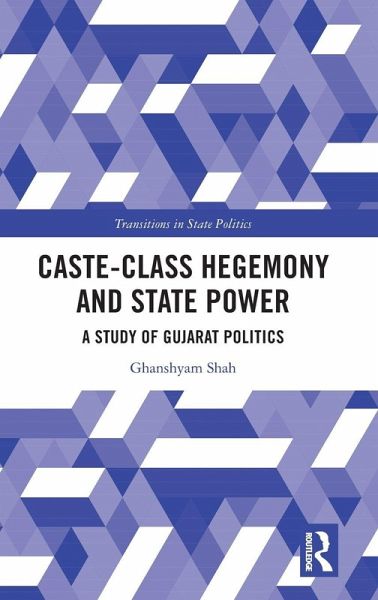
Ghanshyam ShahCaste-Class Hegemony and State Power
A Study of Gujarat Politics
Andere Kunden interessierten sich auch für
The book analyses the politics and socio-cultural forces in Gujarat for the last five decades.
Produktdetails
- Verlag: Routledge India
- Seitenzahl: 286
- Erscheinungstermin: 21. November 2025
- Englisch
- Abmessung: 240mm x 161mm x 20mm
- Gewicht: 596g
- ISBN-13: 9781032700236
- ISBN-10: 1032700238
- Artikelnr.: 74979958
- Libri GmbH
- Europaallee 1
- 36244 Bad Hersfeld
- gpsr@libri.de
- Verlag: Routledge India
- Seitenzahl: 286
- Erscheinungstermin: 21. November 2025
- Englisch
- Abmessung: 240mm x 161mm x 20mm
- Gewicht: 596g
- ISBN-13: 9781032700236
- ISBN-10: 1032700238
- Artikelnr.: 74979958
- Libri GmbH
- Europaallee 1
- 36244 Bad Hersfeld
- gpsr@libri.de
Ghanshyam Shah is retired Professor, Jawaharlal Nehru University, New Delhi, India. He was formerly Director and Professor at the Centre for Social Studies, Surat, India; Dr. Ambedkar Chair Professor at L.B. Shastri National Academy, Mussoorie, India; Fellow in Residence at the Netherlands Institute of Advanced Study, Wassenaar; and National Fellow of the Indian Council of Social Science Research and the Indian Institute of Advanced Study, Shimla, India. The books he has authored or edited include Caste Association and Political Process (1975), Caste and Democratic Politics in India (2001 and 2004), Democracy, Civil society and Governance (2019) and (with Jan Breman) Gujarat, Cradle and Harbinger of Identity Politics (2022).
1. Introduction 2. Dominance and hegemony under the Colonial State 3.
Gujarat Congress system and consolidation of dominant caste-classes 4.
Radical Populist vs Moralist Politics 5. KHAM (OBCs) and Samrasta
(Assimilation) politics 6. Naya Gujarat: Vikas, Asmita and Militant
Hinduism 7. BJP's victory and intra-party power struggle 8. Emergence of
the Hindu Hardya Samrat 9. Vikas Purush: Hindutva-Vikas Synergy 10.
Consolidation of power and marketing Gujarat model 11. Partisan State:
Patidar and Dalit agitations 12. Triumph of Samrasta and Vikas electoral
politics 13. Epilogue
1. Introduction 2. Dominance and hegemony under the Colonial State 3.
Gujarat Congress system and consolidation of dominant caste-classes 4.
Radical Populist vs Moralist Politics 5. KHAM (OBCs) and Samrasta
(Assimilation) politics 6. Naya Gujarat: Vikas, Asmita and Militant
Hinduism 7. BJP's victory and intra-party power struggle 8. Emergence of
the Hindu Hardya Samrat 9. Vikas Purush: Hindutva-Vikas Synergy 10.
Consolidation of power and marketing Gujarat model 11. Partisan State:
Patidar and Dalit agitations 12. Triumph of Samrasta and Vikas electoral
politics 13. Epilogue