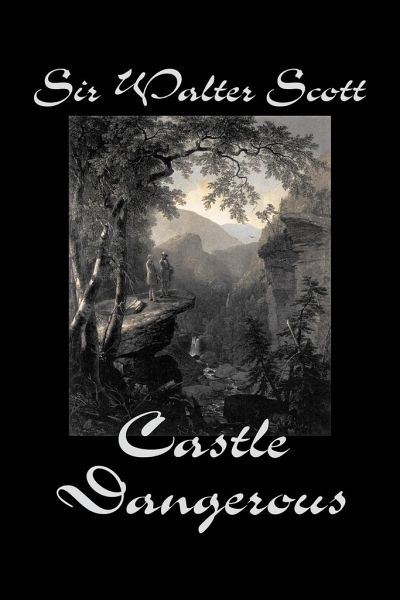
The story is set in Ayrshire and Lanarkshire around 1306, shortly after the death of William Wallace during the Wars of Scottish Independence. From Scott's introduction: "The incidents on which the ensuing Novel mainly turns, are derived from the ancient Metrical Chronicle of The Brace, by Archdeacon Barbour, and from the History of the Houses of Douglas and Angus, by David Hume of Godscroft; and are sustained by the immemorial tradition of the western parts of Scotland. They are so much in consonance with the spirit and manners of the troubled age to which they are referred, that I can see no…mehr
The story is set in Ayrshire and Lanarkshire around 1306, shortly after the death of William Wallace during the Wars of Scottish Independence. From Scott's introduction: "The incidents on which the ensuing Novel mainly turns, are derived from the ancient Metrical Chronicle of The Brace, by Archdeacon Barbour, and from the History of the Houses of Douglas and Angus, by David Hume of Godscroft; and are sustained by the immemorial tradition of the western parts of Scotland. They are so much in consonance with the spirit and manners of the troubled age to which they are referred, that I can see no reason for doubting their being founded in fact; the names, indeed, of numberless localities in the vicinity of Douglas Castle, appear to attest, beyond suspicion, many even of the smallest circumstances embraced in the story of Godscroft."
Sir Walter Scott was born on August 15, 1771, in Edinburgh, Scotland, to Walter Scott, a Writer to the Signet, and Anne Rutherford, a descendant of both the Clan Swinton and the Haliburton family. As the ninth child in the family, Scott faced significant challenges early on, including the death of six siblings in infancy. A bout of polio in 1773 left him lame, leading to his relocation to the Scottish Borders for treatment. His time spent in the rural area with his paternal grandparents exposed him to local tales, legends, and folklore, which greatly influenced his later writing. Scott returned to Edinburgh in 1775, and after further education, he attended the Royal High School and later Kelso Grammar School, where he met key future business partners. His experiences in these formative years shaped his deep interest in history, literature, and storytelling, laying the foundation for his later work as a novelist, poet, and historian. Throughout his life, Scott made significant contributions to European Romanticism and is remembered for works such as "Ivanhoe," "Rob Roy," and "Waverley," which remain classics of Scottish and European literature.
Es gelten unsere Allgemeinen Geschäftsbedingungen: www.buecher.de/agb
Impressum
www.buecher.de ist ein Internetauftritt der buecher.de internetstores GmbH
Geschäftsführung: Monica Sawhney | Roland Kölbl | Günter Hilger
Sitz der Gesellschaft: Batheyer Straße 115 - 117, 58099 Hagen
Postanschrift: Bürgermeister-Wegele-Str. 12, 86167 Augsburg
Amtsgericht Hagen HRB 13257
Steuernummer: 321/5800/1497
USt-IdNr: DE450055826