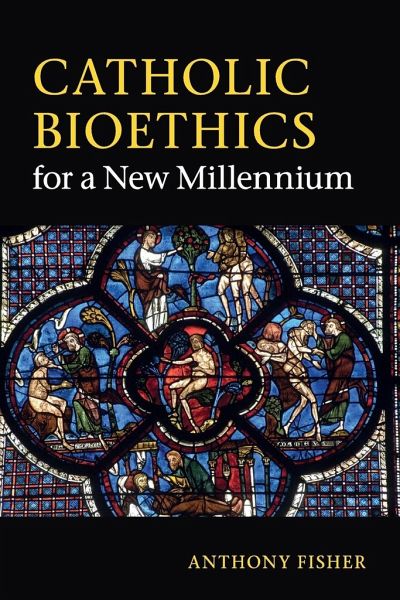
Can the Hippocratic and Judeo-Christian traditions be synthesized with contemporary thought about practical reason, virtue and community to provide real-life answers to the dilemmas of healthcare today? Bishop Anthony Fisher discusses conscience, relationships and law in relation to the modern-day controversies surrounding stem cell research, abortion, transplants, artificial feeding and euthanasia, using case studies to offer insight and illumination. What emerges is a reason-based bioethics for the twenty-first century; a bioethics that treats faith and reason with equal seriousness, that…mehr
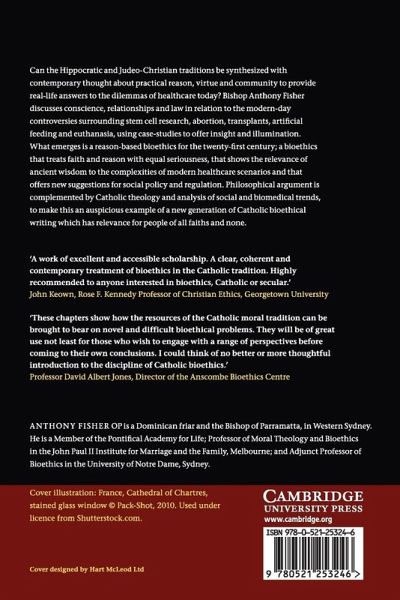
Can the Hippocratic and Judeo-Christian traditions be synthesized with contemporary thought about practical reason, virtue and community to provide real-life answers to the dilemmas of healthcare today? Bishop Anthony Fisher discusses conscience, relationships and law in relation to the modern-day controversies surrounding stem cell research, abortion, transplants, artificial feeding and euthanasia, using case studies to offer insight and illumination. What emerges is a reason-based bioethics for the twenty-first century; a bioethics that treats faith and reason with equal seriousness, that shows the relevance of ancient wisdom to the complexities of modern healthcare scenarios and that offers new suggestions for social policy and regulation. Philosophical argument is complemented by Catholic theology and analysis of social and biomedical trends, to make this an auspicious example of a new generation of Catholic bioethical writing which has relevance for people of all faiths and none.
Anthony Fisher, OP is a Dominican friar and the Bishop of Parramatta, in Western Sydney. He is a Member of the Pontifical Academy for Life, Professor of Moral Theology and Bioethics in the John Paul II Institute for Marriage and the Family, Melbourne and Adjunct Professor of Bioethics in the University of Notre Dame, Sydney.
Inhaltsangabe
Abbreviations Preface Introduction Part I. How Are We to Do Bioethics?: Section 1. Context: Challenges and Resources of a New Millennium: 1. Sex and life in post-modernity 2. Catholic engagement with the culture of modernity 3. Promising developments 4. Conclusion Section 2. Conscience: The Crisis of Authority: 5. The voice of conscience 6. The voice of the magisterium 7. Conscience in post-modernity 8. Where to from here? Section 3. Cooperation: Should We Ever Collaborate with Wrongdoing?: 9. Traditional example 10. Five modern examples 11. Some fundamental issues raised by these examples 12. Why it matters so much 13. Conclusion Part II. Beginning-of-Life: Section 4. Beginnings: When Do People Begin?: 14. Method, thesis and implications 15. A closer look at Ford's science 16. A closer look at Ford's philosophy 17. Individuality criteria 18. Conclusions Section 5. Stem Cells: What's All the Fuss About?: 19. Scientific potential and concerns about stem cells 20. Ethical concerns about embryonic stem cells 21. Social concerns about embryonic stem cells Section 6. Abortion - and the New Eugenics: 22. The perennial debate about abortion 23. Pre-natal screening: a search and destroy mission? 24. The new abortion debate Part III. Later Life: Section 7. Transplants: Bodies, Relationships and Ethics: 25. Love beyond death 26. Conceptions of the body and relationships in organ transplantation 27. Fashionable bioethical approaches to organ procurement 28. Better bioethical approaches to organ procurement 29. Ethical issues in organ reception 30. Conclusion Section 8. Artificial Nutrition: Why do Unresponsive Patients Matter?: 31. Civilisation after Schiavo? 32. Why the unresponsive still matter: a philosophical account 33. Why the unresponsive still matter: a theological account 34. Some final questions Section 9. Endings: Suicide and Euthanasia in the Bible: 35. The problem of suicide and euthanasia in the Bible 36. Suicides and euthanasias in the Bible 37. The Scriptural basis of Judeo-Christian opposition to suicide and euthanasia Part IV. Protecting Life: Section 10. Identity: What Role for a Catholic Hospital?: 38. A tale of two hospitals 39. Current challenges for Catholic hospitals 40. Catholic hospitals as diakonia 41. Catholic hospitals as martyria 42. Catholic hospitals as leitourgia 43. Conclusion: six tasks for a new century Section 11. Regulation: What Kinds of Laws and Social Policies?: 44. A tale of three politicians 45. Catholic principles for politicians 46. Reasonable stances for a pro-life politician 47. Some virtues of a pro-life politician.
Abbreviations Preface Introduction Part I. How Are We to Do Bioethics?: Section 1. Context: Challenges and Resources of a New Millennium: 1. Sex and life in post-modernity 2. Catholic engagement with the culture of modernity 3. Promising developments 4. Conclusion Section 2. Conscience: The Crisis of Authority: 5. The voice of conscience 6. The voice of the magisterium 7. Conscience in post-modernity 8. Where to from here? Section 3. Cooperation: Should We Ever Collaborate with Wrongdoing?: 9. Traditional example 10. Five modern examples 11. Some fundamental issues raised by these examples 12. Why it matters so much 13. Conclusion Part II. Beginning-of-Life: Section 4. Beginnings: When Do People Begin?: 14. Method, thesis and implications 15. A closer look at Ford's science 16. A closer look at Ford's philosophy 17. Individuality criteria 18. Conclusions Section 5. Stem Cells: What's All the Fuss About?: 19. Scientific potential and concerns about stem cells 20. Ethical concerns about embryonic stem cells 21. Social concerns about embryonic stem cells Section 6. Abortion - and the New Eugenics: 22. The perennial debate about abortion 23. Pre-natal screening: a search and destroy mission? 24. The new abortion debate Part III. Later Life: Section 7. Transplants: Bodies, Relationships and Ethics: 25. Love beyond death 26. Conceptions of the body and relationships in organ transplantation 27. Fashionable bioethical approaches to organ procurement 28. Better bioethical approaches to organ procurement 29. Ethical issues in organ reception 30. Conclusion Section 8. Artificial Nutrition: Why do Unresponsive Patients Matter?: 31. Civilisation after Schiavo? 32. Why the unresponsive still matter: a philosophical account 33. Why the unresponsive still matter: a theological account 34. Some final questions Section 9. Endings: Suicide and Euthanasia in the Bible: 35. The problem of suicide and euthanasia in the Bible 36. Suicides and euthanasias in the Bible 37. The Scriptural basis of Judeo-Christian opposition to suicide and euthanasia Part IV. Protecting Life: Section 10. Identity: What Role for a Catholic Hospital?: 38. A tale of two hospitals 39. Current challenges for Catholic hospitals 40. Catholic hospitals as diakonia 41. Catholic hospitals as martyria 42. Catholic hospitals as leitourgia 43. Conclusion: six tasks for a new century Section 11. Regulation: What Kinds of Laws and Social Policies?: 44. A tale of three politicians 45. Catholic principles for politicians 46. Reasonable stances for a pro-life politician 47. Some virtues of a pro-life politician.
Es gelten unsere Allgemeinen Geschäftsbedingungen: www.buecher.de/agb
Impressum
www.buecher.de ist ein Internetauftritt der buecher.de internetstores GmbH
Geschäftsführung: Monica Sawhney | Roland Kölbl | Günter Hilger
Sitz der Gesellschaft: Batheyer Straße 115 - 117, 58099 Hagen
Postanschrift: Bürgermeister-Wegele-Str. 12, 86167 Augsburg
Amtsgericht Hagen HRB 13257
Steuernummer: 321/5800/1497
USt-IdNr: DE450055826