As the re-emergence of nuclear power as an acceptable energy source on an international basis continues, the need for safe and reliable ways to dispose of radioactive waste becomes ever more critical. The ultimate goal for designing a predisposal waste-management system depends on producing waste containers suitable for storage, transportation and permanent disposal. Cement-Based Materials for Nuclear-Waste Storage provides a roadmap for the use of cementation as an applied technique for the treatment of low- and intermediate-level radioactive wastes. Coverage includes, but is not limited to,…mehr
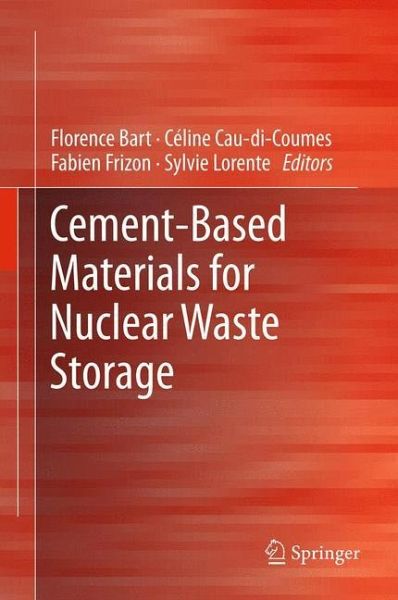
As the re-emergence of nuclear power as an acceptable energy source on an international basis continues, the need for safe and reliable ways to dispose of radioactive waste becomes ever more critical. The ultimate goal for designing a predisposal waste-management system depends on producing waste containers suitable for storage, transportation and permanent disposal. Cement-Based Materials for Nuclear-Waste Storage provides a roadmap for the use of cementation as an applied technique for the treatment of low- and intermediate-level radioactive wastes. Coverage includes, but is not limited to, a comparison of cementation with other solidification techniques, advantages of calcium-silicate cements over other materials and a discussion of the long-term suitability and safety of waste packages as well as cement barriers.
Part I: Methods of Production of Cement-Waste Forms.- A Summary of IAEA-Coordinated Research Project on Cementitious Materials for Radioactive Waste Management.- R&D on Cementation of Pulp with Complex Physical and Chemical Composition Stored in Tanksat the Mining Chemical Combine.- Cementation in High Energy Mixer of ILW Surrogate Slurry: Demonstration of the Process at Semi-Industrial Scale.- Part II: Physico-Chemical Processes Occurring in Cement-Waste Forms at Early Age.- Hydration of Blended Cements.- Application of a Sub-Lattice Model to Predictions of Cement Hydrate Chemistry.-Characterization and Solubility Determination of the Solid-Solution Between AFm-I2 and AFm-SO4.- Part III:Influence of External and Internal Factors on Long-Term Properties of Cement-Waste Package and Cement Barriers.- Coupling Between Leaching and Mechanical Behavior of Concrete.- Coupled Mechanical and Chemo-Transport Model for the Simulation of Cementitious Materials Subjected to External Sulfate Attack.- Micro- and Macroscopic Investigations of Actinide Binding in Cementitious Materials.- A New Radionuclide Sorption Database for Benchmark Cement Accounting for Geochemical Evolution of Cement.- On the Determination of the Diffusion Coefficient of Ionic Species Through Porous Materials.-Moisture Transport Properties of Cement-Based Materials for Engineered Barriers in Radioactive Waste Disposal.- Simulation of Gas Hydrogen Diffusion through Partially Water-Saturated Mono-Modal Materials.- Microbial Catalysis of Redox Reactions in Concrete Cells of Nuclear Waste Repositories: A Review and Introduction.- Leaching of Nuclear Waste Glass in Cement Pore Water: Effect of Calcium in Solution.- Emerging and Alternative Cementitious Systems.- Alternative Binders to Ordinary Portland Cement for Radwaste Solidification and Stabilization.- Leaching of a simulated ZnCl2-Rich Radwaste Stabilized with Calcium Sulfoaluminate Cement: Experimental Investigation and First Attempt ofModelling.- Conditioning Highly Concentrated Borate Solutions with Calcium Sulfoaluminate Cement.- The Effect of Supplementary Pulverized Fuel Ash on Calcium Aluminate Phosphate Cement for Intermediate-Level Waste Encapsulation.- Rheological Behavior of Alkali-Activated Metakaolin During Geopolymerization.- Prediction of Long-Term Chemical Evolution of a Low-pH Cement Designed for Underground Radioactive Waste Repositories.-Round Robin Test for Define an Accurate Protocol to Measure the Pore Fluid pH of low-pH Cementitious Materials.
Part I: Methods of Production of Cement-Waste Forms.- A Summary of IAEA-Coordinated Research Project on Cementitious Materials for Radioactive Waste Management.- R&D on Cementation of Pulp with Complex Physical and Chemical Composition Stored in Tanksat the Mining Chemical Combine.- Cementation in High Energy Mixer of ILW Surrogate Slurry: Demonstration of the Process at Semi-Industrial Scale.- Part II: Physico-Chemical Processes Occurring in Cement-Waste Forms at Early Age.- Hydration of Blended Cements.- Application of a Sub-Lattice Model to Predictions of Cement Hydrate Chemistry.-Characterization and Solubility Determination of the Solid-Solution Between AFm-I2 and AFm-SO4.- Part III:Influence of External and Internal Factors on Long-Term Properties of Cement-Waste Package and Cement Barriers.- Coupling Between Leaching and Mechanical Behavior of Concrete.- Coupled Mechanical and Chemo-Transport Model for the Simulation of Cementitious Materials Subjected to External Sulfate Attack.- Micro- and Macroscopic Investigations of Actinide Binding in Cementitious Materials.- A New Radionuclide Sorption Database for Benchmark Cement Accounting for Geochemical Evolution of Cement.- On the Determination of the Diffusion Coefficient of Ionic Species Through Porous Materials.-Moisture Transport Properties of Cement-Based Materials for Engineered Barriers in Radioactive Waste Disposal.- Simulation of Gas Hydrogen Diffusion through Partially Water-Saturated Mono-Modal Materials.- Microbial Catalysis of Redox Reactions in Concrete Cells of Nuclear Waste Repositories: A Review and Introduction.- Leaching of Nuclear Waste Glass in Cement Pore Water: Effect of Calcium in Solution.- Emerging and Alternative Cementitious Systems.- Alternative Binders to Ordinary Portland Cement for Radwaste Solidification and Stabilization.- Leaching of a simulated ZnCl2-Rich Radwaste Stabilized with Calcium Sulfoaluminate Cement: Experimental Investigation and First Attempt ofModelling.- Conditioning Highly Concentrated Borate Solutions with Calcium Sulfoaluminate Cement.- The Effect of Supplementary Pulverized Fuel Ash on Calcium Aluminate Phosphate Cement for Intermediate-Level Waste Encapsulation.- Rheological Behavior of Alkali-Activated Metakaolin During Geopolymerization.- Prediction of Long-Term Chemical Evolution of a Low-pH Cement Designed for Underground Radioactive Waste Repositories.-Round Robin Test for Define an Accurate Protocol to Measure the Pore Fluid pH of low-pH Cementitious Materials.
Es gelten unsere Allgemeinen Geschäftsbedingungen: www.buecher.de/agb
Impressum
www.buecher.de ist ein Internetauftritt der buecher.de internetstores GmbH
Geschäftsführung: Monica Sawhney | Roland Kölbl | Günter Hilger
Sitz der Gesellschaft: Batheyer Straße 115 - 117, 58099 Hagen
Postanschrift: Bürgermeister-Wegele-Str. 12, 86167 Augsburg
Amtsgericht Hagen HRB 13257
Steuernummer: 321/5800/1497
USt-IdNr: DE450055826