
Andere Kunden interessierten sich auch für
 Chambers's Journal of Popular Literature, Science, and Art14,99 €
 Chambers's Journal of Popular Literature, Science, and Art14,99 €
 Chambers's Journal of Popular Literature, Science, and Art14,99 €
 Chambers's Journal of Popular Literature, Science, and Art14,99 €
 Chambers's Journal of Popular Literature, Science, and Art14,99 €
 Chambers's Journal of Popular Literature, Science, and Art14,99 €
 Chambers's Journal of Popular Literature, Science, and Art14,99 €
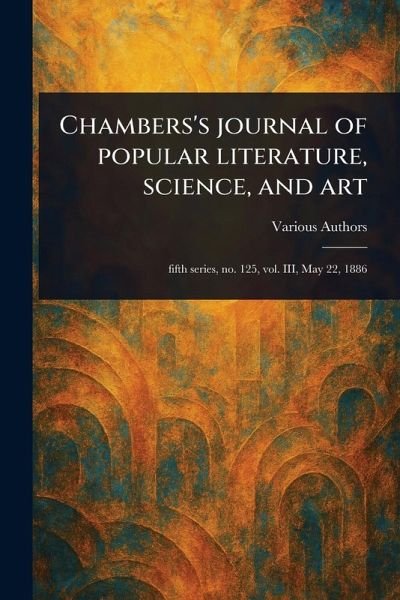
Delve into the past with "Chambers's Journal of Popular Literature, Science, and Art, fifth series, Vol. 3, No. 125, May 22, 1886," a fascinating window into Victorian Britain. This meticulously reproduced periodical offers a diverse collection of essays and articles reflecting the intellectual and cultural currents of the time. Explore British history through contemporary eyes, engaging with discussions on literature, science, and art. This volume provides a unique glimpse into the popular thought and artistic expression of the late 19th century. A treasure trove for historians and literature enthusiasts alike, this collection of essays captures the spirit of an era. Discover captivating insights into the world as it was perceived by those who lived it, preserved in this timeless journal. This work has been selected by scholars as being culturally important, and is part of the knowledge base of civilization as we know it. This work is in the public domain in the United States of America, and possibly other nations. Within the United States, you may freely copy and distribute this work, as no entity (individual or corporate) has a copyright on the body of the work. Scholars believe, and we concur, that this work is important enough to be preserved, reproduced, and made generally available to the public. We appreciate your support of the preservation process, and thank you for being an important part of keeping this knowledge alive and relevant.