

Andere Kunden interessierten sich auch für
 Primary Well-Being: Case Studies for the Growing Child34,99 €
 Forensic Interviews Regarding Child Sexual Abuse136,99 €
 Integrating Behaviorism and Attachment Theory in Parent Coaching53,99 €
 Media Exposure During Infancy and Early Childhood121,99 €
 Preventive Mental Health at School68,99 €
 Resilience Interventions for Youth in Diverse Populations113,99 €
 Preventive Mental Health at School76,99 €






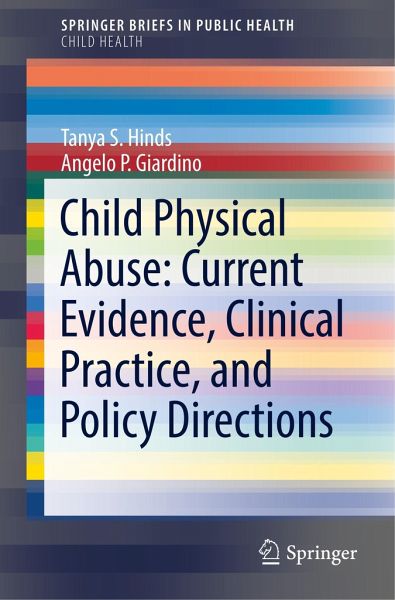
This eye-opening monograph challenges professionals across disciplines to take a more thorough and focused approach to addressing child physical abuse at the practice and policy levels. Positing child physical abuse as a public health crisis (as opposed to a more vague "social" one), the authors use empirical findings and clinical insights to advocate for wide-scale reforms in screening, assessment, responses, treatment, and prevention. The book's social/ecological perspective delves into root causes of physical maltreatment, analyzes the role of family and community risk and support factors, and notes forms of discomfort keeping many professionals from meeting the issue head-on. From there, chapters describe coordinated multidisciplinary efforts for intervention and prevention with the potential to avert all forms of child abuse.
Included in the coverage:
· Adverse childhood experiences (ACEs)
· The non-verbal child: obtaining a history for caregiver(s)
· Clinical perspectives on multidisciplinary collaboration
Corporal punishment and risk for child physical abuse
Intimate partner violence (IPV) and risk for child physical abuse
Evolution of child maltreatment prevention
Complementary dynamic prevention approach
Child Physical Abuse sets out the scope of this ongoing crisis for a wide audience including healthcare providers, child advocates, clinical social workers, public health officials, mental health providers, legislative staff professionals, and members of the lay public, with clear guidelines for effective long-term solutions.
Included in the coverage:
· Adverse childhood experiences (ACEs)
· The non-verbal child: obtaining a history for caregiver(s)
· Clinical perspectives on multidisciplinary collaboration
Corporal punishment and risk for child physical abuse
Intimate partner violence (IPV) and risk for child physical abuse
Evolution of child maltreatment prevention
Complementary dynamic prevention approach
Child Physical Abuse sets out the scope of this ongoing crisis for a wide audience including healthcare providers, child advocates, clinical social workers, public health officials, mental health providers, legislative staff professionals, and members of the lay public, with clear guidelines for effective long-term solutions.
"The book is written for a medically informed community, but those working in the child welfare arena and others can read this book and comprehend its content. ... This book adds to the current resources addressing the need to appreciate that child abuse must be viewed in paradigm similar to all other medical entities ... and how important these components are to encourage the medical community's embrace of its role in diagnosis, intervention, and prevention." (Jill Glick, Doody's Book Reviews, January, 2018)