
Andere Kunden interessierten sich auch für
 Building Resilience Through Outdoor Adventure39,99 €
 Advances in Human Factors in Sports and Outdoor Recreation76,99 €
 Shame and Gender in Transcultural Contexts113,99 €
 Family Psychodynamics in Organizational Contexts32,99 €
 Working in Statutory Contexts25,99 €
 Mental Health in Indigenous Contexts in the Brazilian Territory22,99 €
 Psychology in Legal Contexts16,99 €


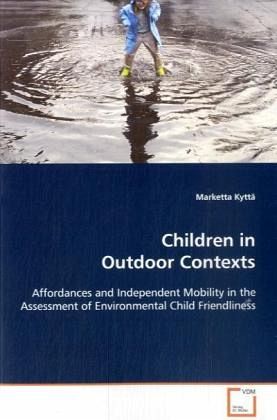
Environmental psychology concerning child-environmentrelationships has too often forgotten the environmentitself. Place based child-environment research isneeded to anchor children's experiences and behaviourto actual physical settings. This book introduces anew assessment model for a child-friendlyenvironment, based on two central criteria:children's possibilities for independent mobility andtheir opportunities to actualize environmentalaffordances. Four hypothetical types of environmentare distinguished: Bullerby, Wasteland, Cell, andGlasshouse. The Bullerby represents a child-friendlyenvironment, as it allows a positive interactivecycle to develop between a child and the environment.The empirical results from almost 250 childrenindicate that the model is sensitive enough to assessthe child friendliness of different communities inFinland and Belarus. In general, the proportion ofBullerby settings decreases and that of Glasshousesettings increases as the degree of urbanizationrises. The Bullerby-model allows the integration ofchildren's experiences with the material world, andit provides information that can be used in planningof child-friendly environments.