
Andere Kunden interessierten sich auch für
 China: from Qing Monarchy to Market Socialism61,99 €
 China: van semi-koloniaal tot supermacht65,99 €
 Belarus-China: a vector of trust27,99 €
 Belarus - China: a vector of trust27,99 €
 Turkey as a New Semi-periphery in the Age of Globalization27,99 €
 EU and China: really comprehensive partnership?27,99 €
 China: From Poverty to World Power91,99 €



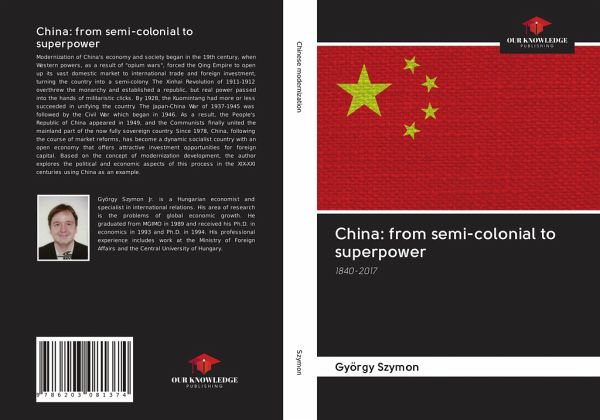
Modernization of China's economy and society began in the 19th century, when Western powers, as a result of "opium wars", forced the Qing Empire to open up its vast domestic market to international trade and foreign investment, turning the country into a semi-colony. The Xinhai Revolution of 1911-1912 overthrew the monarchy and established a republic, but real power passed into the hands of militaristic clicks. By 1928, the Kuomintang had more or less succeeded in unifying the country. The Japan-China War of 1937-1945 was followed by the Civil War which began in 1946. As a result, the People's Republic of China appeared in 1949, and the Communists finally united the mainland part of the now fully sovereign country. Since 1978, China, following the course of market reforms, has become a dynamic socialist country with an open economy that offers attractive investment opportunities for foreign capital. Based on the concept of modernization development, the author explores the political and economic aspects of this process in the XIX-XXI centuries using China as an example.